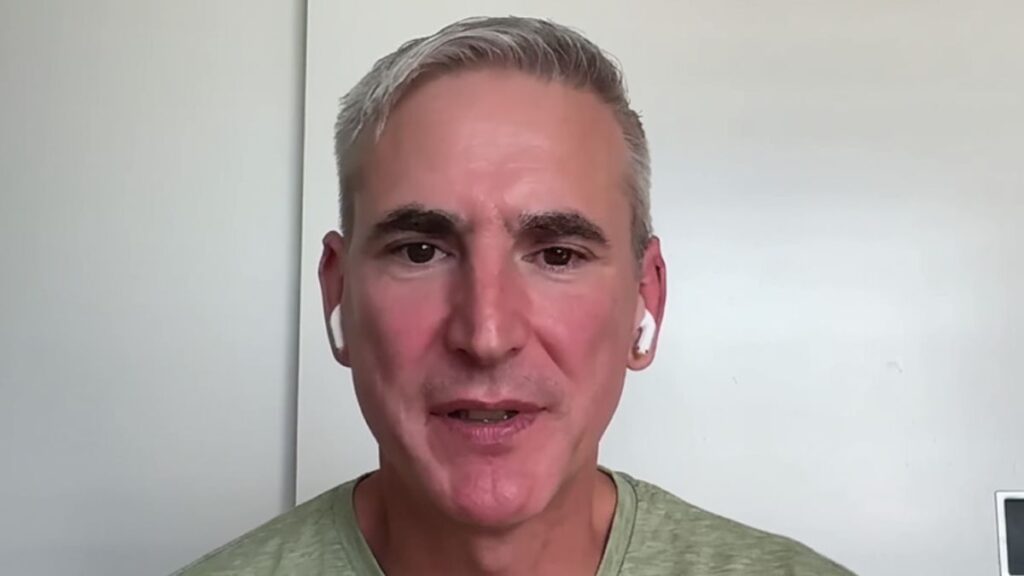
Retirement is usually related to a specific age set by law and with a pension after years of workbut for those who manage to retire before 60, the experience has more to do with a personal decision than with an official calendar. This is the case of Darren, an American professional who left his job at the age of 54 after three decades of career and who has told on James Conole’s YouTube channel how he experienced his first weeks without a job.
Eight months after taking the step, he explains that everything seems “surreal” to him. Not so much because of the happiness he feels, but because of the difficulty of assimilating that after so many years he had met his financial goal, which has allowed him to stop working and change his life completely. “For decades, retirement was just a number,” he explains in the interview.
That number, achieved after years of saving and planning, was the figure he had set so he could stop working with peace of mind. When he finally reached it and also finished paying the mortgage, he knew he could do it now. However, he did not leave immediately. He preferred to wait four more years, until a reorganization in his company gave him the opportunity to leave at a time that he considered appropriate and that would not cause problems for his team.
This was his first Monday without work
Aside from the numbers and financial plans, the decisive moment was much simpler. Darren remembers that whenever he walked to work on a sunny day he thought the same thing: “I just want to keep walking. I want to spend the day exploring,” and that’s exactly what he did. “In that first week I walked a lot,” he says.
The change was not in the weekend, since “the weekends have always been there,” but in being able to go for a walk on a Tuesday or Wednesday afternoon without worrying about looking at the clock in case it was late. “For the first month I walked around with a goofy smile on my face. I couldn’t believe this was basically what I was going to do now.”
Although it may seem simple, Darren celebrates having time for himself. “If I want, I can go for a walk, go anywhere, do anything,” he says. A feeling that other early retirees also share that highlight the value of recovered time.
The moment when the accounts were balanced
Darren worked for 30 years and, as he explains, always considered his investments as money that could not be touched. I just put in more and more, but never got anything out. For him it was simply a number that grew over time. Therefore, when he reached the goal he had set with his financial advisor, the feeling was strange. “It was something very abstract. And one day that number tells you that you don’t need to work anymore,” he says.
Adding to that feeling of security was the fact that he had finished paying the mortgage, something he describes as “a great weight” that disappeared. He did not want to start this new stage with a significant monthly debt and, when he paid it off, he felt that he had already met his last financial goal.
Although he stopped working at the age of 54, he was clear that he did not want to continue beyond the age of 55 under any circumstances. “At some point you have to stop. You don’t know how long you’ll be healthy,” he reflects. For him, continuing to work just out of habit, when he no longer needed it financially, made no sense.
A routine without an office
Eight months later, his routine is similar to that of the first weeks. He usually exercises in the morning, spends time on personal projects on the computer, goes for a walk in the afternoon, and sometimes goes to the movies during the week. “My job now is to be as healthy as possible,” he explains.
He acknowledges that most of his friends still work, so their weeks are different than before. From Monday to Friday he usually spends more time alone, although he says it is not a problem for him. “I’m fine with my thoughts,” he says.
He also assures that he does not miss the office. He liked his job and his colleagues, and in fact returns once a month to see them, but he is not as homesick for the daily routine as he thought before he left.
“I don’t like to call it retirement.”
One of the most striking aspects of his testimony is that he does not like the word “retirement.” He prefers to say that he has “stopped working” or that he has “taken a year off.” In fact, when he announced it to his company, he explained that he was going to take a sabbatical, without closing the door to returning later. He does not rule out working again in the future, perhaps part-time or on specific projects. Thinking like this helped him make the decision with less pressure, he explains.
For those who are in the same economic situation but are hesitant, he recommends having your accounts very clear and, if you really don’t need to continue working, consider taking the step. “If you can do it, you owe it to yourself,” he says.