Sumar has registered a Non-Law Proposition (PNL) in Congress so that cabin crew, a group that includes flight attendants, can access early retirement without a cut in their pension, that is, they have access on equal terms with pilots. The party maintains that both share exposure to radiation, pressure changes and sleep disturbances and denounces “discrimination” that, in its opinion, has a gender bias by affecting a “highly feminized” group in which “70%” of the workforce are women.
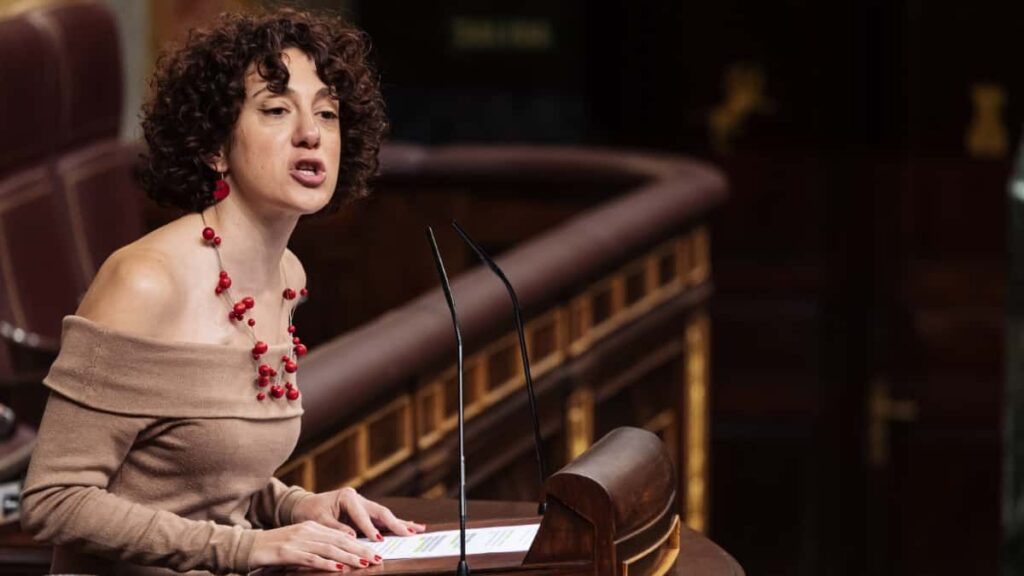
The initiative, promoted by deputy Aina Vidal, from En Comú integrated into Sumar, focuses on the gap between professions with historical recognition of reducing coefficients and others with pending demands. The text recalls that “currently, a pilot with a coefficient of 0.4 per year worked and with 30 years in that category, can anticipate his retirement by twelve years and receive 100% of the pension”, while the cabin crew have been demanding similar treatment for “years”.
Early retirement without cuts
The core of the debate is in article 206 of the General Social Security Law, which allows the minimum retirement age to be lowered by royal decree for “groups or professional activities” of an “exceptionally painful, toxic, dangerous or unhealthy” nature and with “high rates of morbidity or mortality”, provided that a minimum of activity in that profession is accredited. The standard adds that the system must be based on previous studies on accidents, hardship, danger and toxicity, as well as on its impact on work incapacity and physical or psychological demands.
The law also sets limits and conditions that usually remain outside the political focus. The establishment of these coefficients “will only proceed when modification of working conditions is not possible,” and their application cannot lead to retirement below a minimum age, which in the general procedure is 52 years.
Furthermore, the scheme incorporates a sensitive piece, financing, because the application of reducing coefficients “will entail an increase in the contribution” through an additional rate on the base for common contingencies, borne by the company and the worker.
Same job same retirement
Sumar frames his proposal in a broader criticism of the current map of professions with early retirement. In his writing, he maintains that “it does not seem like a coincidence” that “a large part” of the groups that already enjoy reducing coefficients correspond to activities “carried out mainly by men” and cites, among others, miners, railway workers, bullfighting professionals, firefighters or local police. The training calls for “urgently expediting” the review of files from “feminized groups” that meet the requirements to access this instrument.
The non-legal proposal is also supported by the change in the procedural framework that, according to the initiative itself, has “come into force as of 2025” for the recognition of early retirement due to activity. Along these lines, it asks to “recover and contact ex officio” feminized jobs that had already submitted applications in the procedure established in 2011 and prioritize them in the new method, arguing that the grievance is not only health or labor, but also administrative.
The discussion, in any case, is not resolved in a single parliamentary gesture. Article 206 places the final decision in a royal decree, that is, in the Executive, and requires technically justifying the hardship and risk with indicators and evaluations. The current mechanism incorporates an evaluation commission with the participation of several ministries and social agents, called to evaluate data on sick leave, permanent disabilities or deaths associated with the activity.
Sumar’s movement therefore opens a double negotiation. On the one hand, the recognition that the working conditions in the cabin fit, or do not, within the legal threshold of “dangerousness” or “toxicity” and “high rates” of morbidity. On the other hand, the cost of the eventual advancement of the retirement age, which the law links to an additional contribution specific to the group. The training wants to bring this debate to the foreground with a simple political message, “same exposure, same right”, in a field where technical nuances are usually decisive.