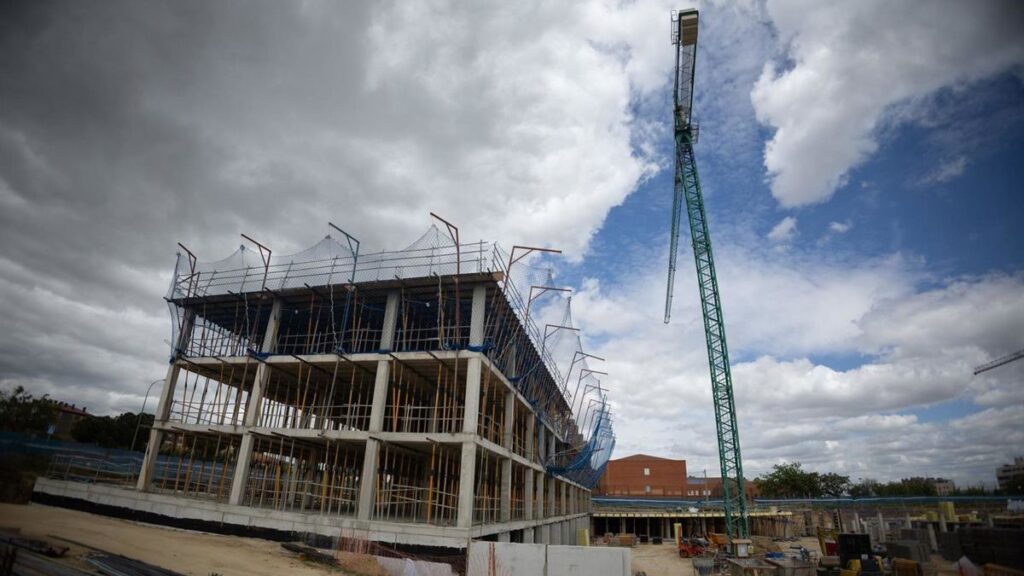
If there is a problem that worries almost everyone in Spain, it is housing, since we see how increasingly young people and not so young people find it more difficult to access the purchase of a house. Although the problem is not only due to prices, which are skyrocketing, but also to other causes. The lack of supply, which the Bank of Spain estimates at around 700,000 homes, is another important factor in this problem.
The housing shortage, to make matters worse, now faces yet another obstacle: the scarce electricity supply. And the housing developers are receiving a negative response from the distribution companies in their supply requests, which is causing an ‘energy plug’ that prevents construction from being completed. Large cities such as Madrid, Barcelona, Seville and Valencia, which already have a very tense real estate market, are the ones that are suffering the most.
But this problem does not only affect large cities. According to the debate in the program ‘Herrera en COPE’ with Jorge Bustos, the energy jam reaches entire provinces such as Albacete, Gerona and Salamanca. The figures are worrying: in Guadalajara, a project of 10,000 new homes lacks a guarantee of electricity supply; in Valencia, 87% of the network points have already exhausted their capacity; and in Castellón the situation is extreme, with 100% of the electrical network saturated.
The employers warn of a possible blockade
The Association of Real Estate Developers of Madrid (ASPRIMA) has warned of the impact that this situation may have. Its general director, Jorge Ginés, has conveyed the sector’s concerns to COPE: “It usually takes 20 years from when we start until we get that final land, and in some areas, not having sufficient guaranteed power could further delay making it available.”
According to their estimates, the problem could delay the construction of around 60,000 homes in the Community of Madrid alone.
Families that cannot move in
The problem also has direct consequences for citizens. In Estepona (Málaga), 72 families have not been able to settle in their homes, already completed, due to the absence of electricity supply. Paco López, one of those affected, explains that the work was completed in May of last year, but they still do not have electricity due to “a management failure that we understand occurred in 2021, which when trying to resolve it in 2024, Endesa had already set the red line that it would suspend all connections greater than one megawatt.”
A regulatory bottleneck
To delve deeper into the causes of the collapse, the energy expert Vicente López-Ibor has participated in ‘Herrera in COPE’. Remember that the electricity supply is “an essential service” within a regulated sector, but warns that “there is a blockage in the network”, where “approximately 8 or 9 out of every 10 requests are ignored because there is a lack of capacity in the system.”
The specialist points to various factors behind this situation, including a regulatory brake. “There is an obstacle, some regulatory difficulties that should be resolved,” he noted. In his opinion, “certain limits on investments” and inflexible network planning also influence, which not only delays housing projects, but also harms industrial competitiveness and the arrival of data centers.