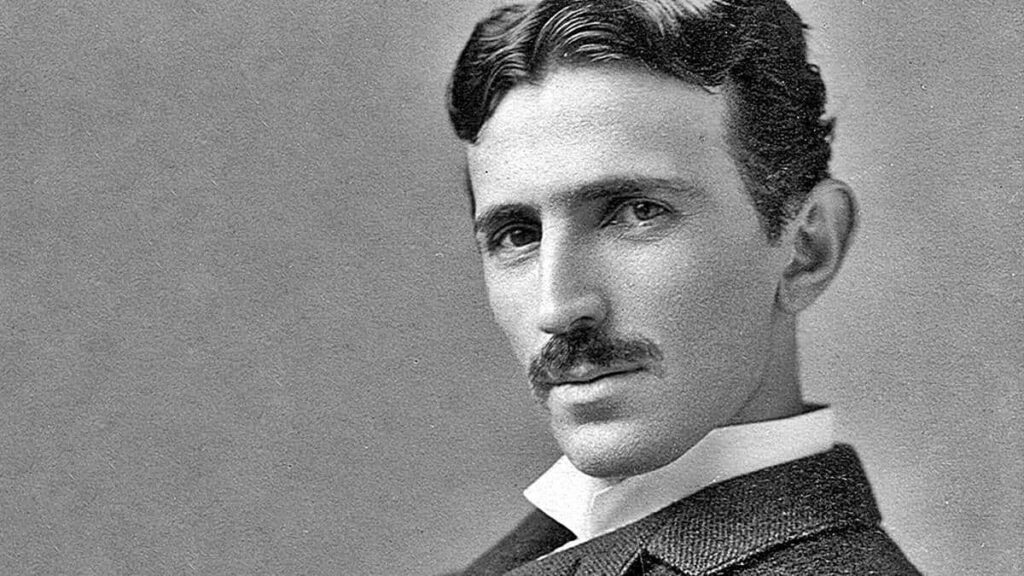
Nikola Tesla once quoted that “intelligent people tend to have fewer friends than the average person. The smarter you are, the more selective you become.” Although it is not always cited with a clear primary source, it still works for a simple reason and that is, it describes something that many people have felt at some point. “It’s not that I don’t love anyone.” “Relationships that only fill time are of no use to me.”
Tesla fits that mold because his life was largely about “concentration” and “chosen isolation.” He is not remembered for being the life of a party, but for obsessing over problems that others didn’t even see. “Alternating current” was not a topic for light talk and his induction motor, his coil and his experiments with wireless communication belonged to a mental routine that asked for silence, repetition and patience. When a job requires that level of intensity, the social changes naturally, because “there is no time left and what is left is heavy.”
Stephen Hawking, scientist: “Calm and quiet people have the strongest and loudest minds”
Scientists apply nicotine for 22 months to mice and discover that it delays age-related aging
The phrase that makes us be more selective and careful
Converted into a wall phrase, the idea may sound like an excuse to isolate yourself, but the central nuance is different. Having few friends does not equal being alone. There are those who enjoy solitude as a space for internal order, creativity and self-knowledge. That loneliness does not look like abandonment. It looks like a quiet room where the mind can finally work.
At that point, high intelligence usually brings a lower tolerance for empty talk and repetitive social dynamics, but making it clear that it is not arrogance. It is mental fatigue in the face of the superficial. And there the selection appears. Over time, many people understand that not all relationships contribute, that emotional energy is limited and that choosing who to share it with is also a way of taking care of yourself.
Tesla took that personal economy to the limit and his focus was not decorative, it was the engine of his impact. He promoted the alternating current system to generate and distribute electricity over long distances, key to electrifying cities and moving energy efficiently. He developed the induction motor, capable of converting electricity into mechanical energy through rotating magnetic fields, a principle that still supports much of the industry.
He designed the Tesla coil, a high-frequency, high-voltage resonant transformer used in electricity and communications experiments. He also performed early demonstrations linked to radio and wireless communication, and showed a radio-controlled boat in 1898, one of the first examples of wireless remote control. None of that is built from constant noise. It is built from the chosen insulation.
What to do with Nikola Telsa’s phrase
The real usefulness of this idea is not to use it as an alibi to close yourself off from the world. It is using it as a compass to relate better. If intelligence becomes more selective, the question is not how many friends one has, but what type of bond is built with those who remain. It is not about reducing the world, but about avoiding relationships that drain, distract or require pretending.
Seen this way, the phrase stops being a slogan and becomes a well-being strategy. Choose compatible company, protect your own time and accept that loneliness, when conscious, can be fertile. Tesla does not encourage having fewer people around by system. Remember that an intense mental life changes the conditions of friendship, and that there is nothing necessarily sad in that. Sometimes, the circle becomes small not because there is a lack of humanity, but because there is too much judgment.