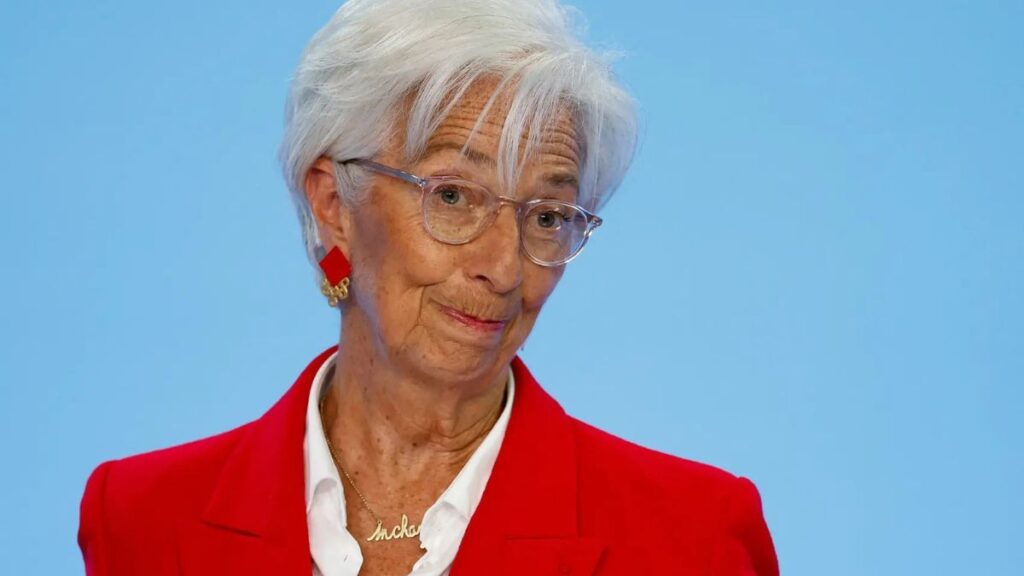
The president of the European Central Bank (ECB), Christine Lagarde, said this Saturday that the economic recovery of Spain after the pandemic has been strongly supported by the contribution of foreign labor. During his speech at the Jackson Hole symposium, in the United States, Lagarde stressed that the Eurozone labor market has shown a remarkable resistance, largely thanks to immigration, and highlighted Spain and Germany as two of the countries where this phenomenon has had a greater impact.
“The solid performance of the GDP of Spain after the pandemic, which has contributed to sustaining the aggregate of the euro zone, is also largely due to the contribution of foreign labor.”
In his speech, according to Europa Press, Lagarde explained that immigration has been responsible for about 50% of the growth of employment in the eurozone during the last three years, despite a context marked by the hardening of monetary policy. In his words, this phenomenon has allowed to contain the negative impact that historically is associated with the rise in interest rates.
The president of the ECB added that, despite the economic cooling caused by the measures against inflation, employment has grown above expectations.
Spain and Germany, examples of the positive impact of immigration
Spain and Germany have been two of the countries as an example in which foreign workers have helped in the impulse of the economy.
In the case of Germany, Lagarde warns that its GDP would be 6% lower since 2019 without the contribution of foreign workers. As for Spain, he remarked that his recovery after the Covid-19 crisis has been one of the most solid of the European bloc, and that immigration has played a key role in sustaining the growth of GDP and the labor market.
In the Eurozone as a whole, these employees barely represented 9% of the workforce in 2022, but were responsible for almost half of the increase in employment in the analyzed period.