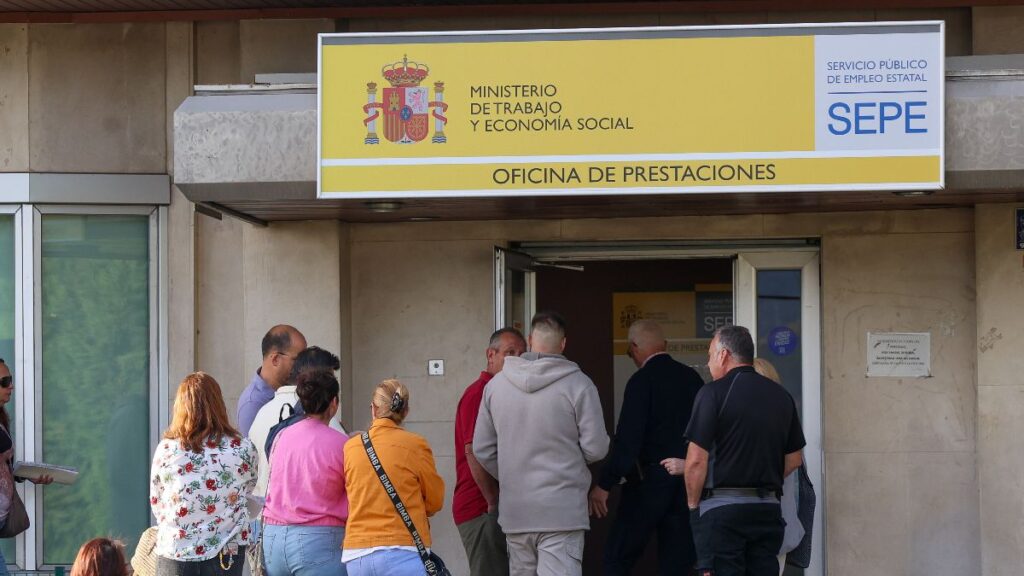
The Superior Court of Justice of Andalusia rules in favor of a worker to continue receiving the subsidy for those over 52 years of age at the same time as a pension for total permanent disability after the SEPE wanted to take it away from him. The State Public Employment Service alleged that both benefits were incompatible with each other, but the court determined that both benefits could be collected at the same time.
The man had a recognized total permanent disability due to a common illness since August 2012 and in November 2018 he requested the SEPE for subsidy for those over 52 years of age. According to him, the work that gave him the right to the benefit was compatible with his disability.
On November 10, 2022 and after having collected 20,380.43 euros, the SEPE told him that total permanent disability was incompatible with the subsidy for those over 52 years of age, so he had to choose between one of the two. Six days later, the SEPE sued him in order to cancel his subsidy.
The SEPE alleged that it had been granted by mistake, since the years that had served to give him permanent disability could not also be used for the subsidy for those over 52 years of age. Despite these allegations, the Social Court of Córdoba did not agree with the SEPE, explaining that “one thing is the deficiency and another is the contribution.” Despite the setback, the SEPE went to the TSJ.
Article 280 of the General Law of Social Security (available at this link) says that in order to collect the subsidy for those over 52 years of age It is necessary to meet “all the requirements, except age, to access any type of contributory retirement pension.” Among these requirements is having a minimum of 15 years of contributions.
The 15 years that the subsidy requests are those of retirement
The Superior Court of Justice is based on what the Supreme Court itself says, where it points out that the 15-year requirement “is not designed as a necessary deficiency to access the subsidy”, so “all contributions made during the person’s working life are valid, even if they are prior” to a total permanent disability.
Now, another thing is contributory unemployment benefit (unemployment) where only subsequent contributions count to collect it after a total disability, because the two benefits cover the loss of the same job.
The Supreme Court explains what this aid is, which “serves to cover the needs of the beneficiary in a situation of unemployment during such period of life after age 52 until he or she has the right to retire.” That is why it ends by saying that total disability and the subsidy are compatible “without the beneficiary having to choose one of the two.”
In this way, the TSJ dismisses the SEPE appeal and this person retains both the subsidy for those over 52 years of age and the total permanent disability at the same time, according to the ruling (available at this link of the Judiciary).
The permanent disability pension would rise by an average of 45 euros per month in 2027 and the maximum of the new ones would reach 3,484 euros per month

Social Security denies him a disability pension for an inheritance of 10 million euros that he never received: they could not prove that it existed and they will have to pay him
That doesn’t mean you can always charge both. The Supreme Court itself requests that the rest of the requirements be met, “especially those related to the regime after the recognition of the subsidy and, where appropriate, the income limit.” The disability pension counts as income and, added to the rest, cannot exceed 75% of the minimum wage, which in 2026 is 915.75 euros per month.