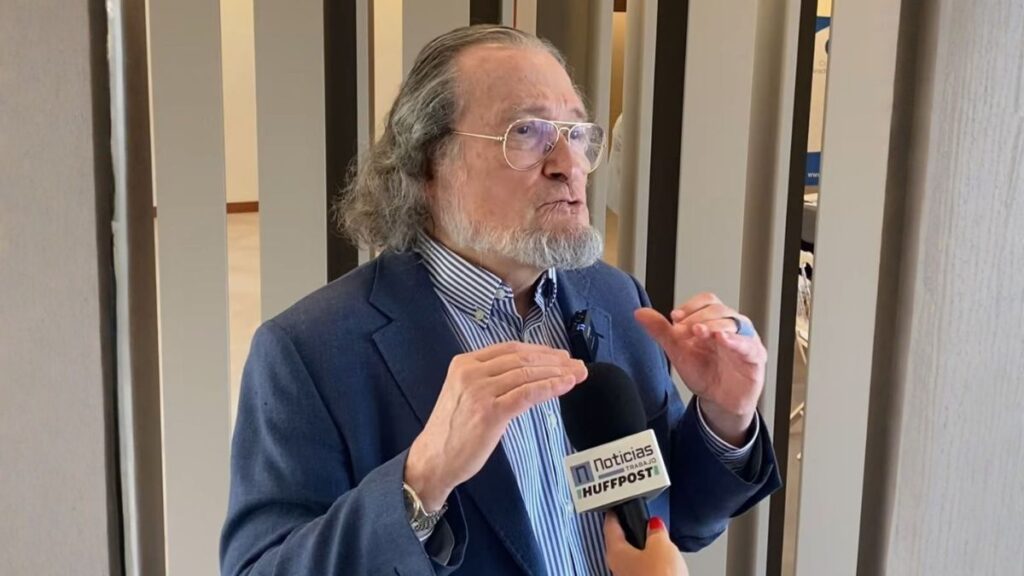
If there is a truly important challenge for Spain in the future, it is the sustainability of the pension system. Perhaps, along with housing, it is one of the issues that most worries Spaniards and that generates the greatest uncertainty. That is why many economic experts are coming forward to explain whether current pensions are sustainable over time.
One of them is Santiago Niño Becerra, an economist and authorized voice to speak about both pensions and other financial issues that concern Spanish society. In fact, it is not the first time that it analyzes the evolution of the economy and the future of our country in terms of financial sustainability.
The latest reports from international organizations also point to important changes in the coming decades, at a time when the ‘baby boom’ generation begins to progressively enter retirement. Well, Niño Becerra has once again analyzed the situation in an interview on ‘La Ventana’, on Cadena SER.
“Social Security does not earn enough”
The economist starts from a fact that he considers fundamental. “Currently, the Social Security debt exceeds 130,000 million euros,” he explains. The reason is that the State makes periodic transfers to be able to pay pensions and other benefits.
Consequently, he assures that “Social Security, through its system of income, contributions, contributions, etc., does not earn enough.” Of course, Niño Becerra rejects the idea that the system is going to suddenly disappear. “To say that the pension system is going to go bankrupt tomorrow is not true,” he says.
The problem is in long-term evolution. He cites a Fedea projection according to which in 2055 there could be 1.8 members per pensioner, compared to the three that it considers a more appropriate ratio.
Furthermore, it points out that those who now join the system receive an average pension approximately 20% higher than the salary of the average young person entering the labor market.
“Brussels has already said that this is not sustainable”
For Niño Becerra, the problem is not that pensions are too high either. “Objectively, they are not high,” he maintains, although he remembers that the cost of living changes a lot depending on where the pensioner resides. His conclusion goes another way.
“The problem with pensions is not one of spending, it is one of income.” And he adds that “debt is already being used to make Social Security payments” and that “Brussels has already said that this is not sustainable.”
Santiago Niño Becerra, economist, on housing in Spain: “The problem began on May 2, 1956”

Santiago Niño Becerra, economist, on pensions: “The average pensioner who is joining the pension system today has an average pension that is 20% higher than the salary of the average young person who is currently joining the labor market”
Among the possible ways to increase resources, it mentions the fight against fraud and tax avoidance, which amounts to around 60 billion euros. “Why don’t we get into this?” he asks. For the economist, therefore, pensions will not stop being paid tomorrow. The real challenge is finding enough income to sustain them for decades to come.