Farmers and ranchers know that the countryside is unpredictable. One day the crops are going well, and soon a DANA or a storm causes a disaster. Therefore, it is good to have a reserve fund that helps them recover from these possible crises that affect not only production but the pockets of these agricultural professionals. The Common Agricultural Policy (CAP) It seeks to guarantee a stable income to farmers and ranchers while ensuring the supply of food at an affordable price and taking care of the environment.
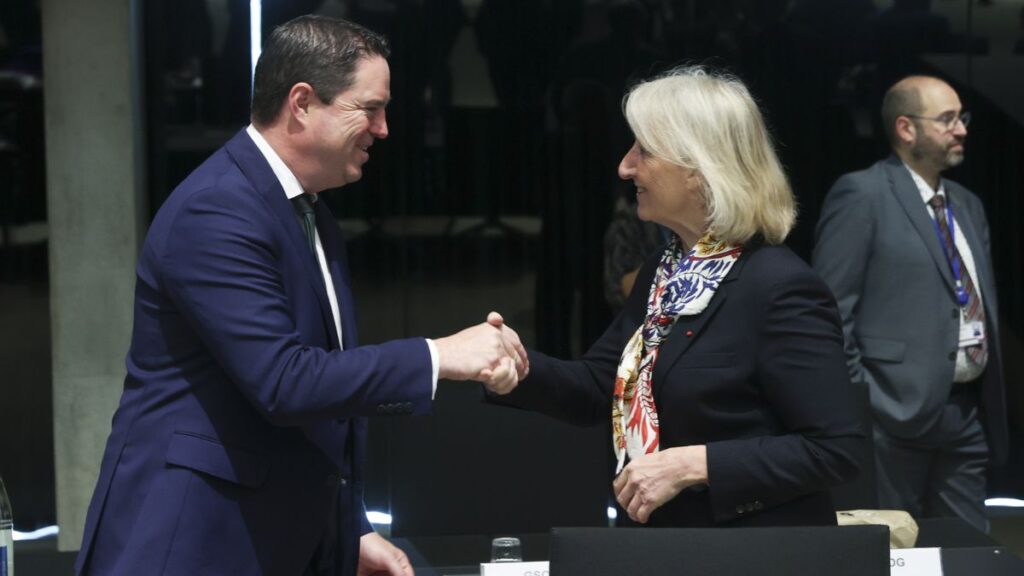
This is done thanks to the distribution of aid that is currently the focus of negotiations in the European Union (EU). At the beginning of this week it was the Minister of Agriculture, Fisheries and Food, Luis Planas, who welcomed a pre-agreement with Europe after more than 12 hours of negotiations. And, despite the fact that the total budget is still up in the air, he assured that “we have managed to maintain the CAP as a European policy and what appeared blurred in the initial EC proposal is now a solid and European regulation.”
But what is happening now within the Union? The agriculture ministers of the 27 member countries maintain a partial negotiating position because, for the moment, they keep aside everything related to finances and the limits on income support that are based on the area for individual agricultural holdings.
The CAP, they highlight, serves to give farmers support so that they can maintain their farms, strengthen the resilience of the sector and respond to challenges that may arise in the future.
Flexibility and tools to meet the needs of farmers
The new CAP (CAP) stands out for being “specific and effective support” that provides Member States with “flexibility and tools” to address “the specific needs of farmers.” Although the one that ends in 2027 is currently in force, it is expected that the main line will not change and that it will continue to “contribute to the specific needs of farmers” as well as to the protection of the environment and giving more life to rural spaces.
Martin Heydon, Minister for Agriculture, Food and the Marine in Ireland, called the agreement “an important milestone for the Irish Presidency because we have agreed the Council’s negotiating position on a CAP framework that will provide farmers with the stability and predictability they need while giving Member States the flexibility to address the special needs of farmers in a national and regional context.”
He explains that the future CAP will support active farmers, “empower the next generation and help them face crises and risks. It will have to guarantee the economic viability of agriculture, while meeting climate and environmental objectives, the agreement we have achieved is an important step to ensure that the CAP continues to benefit farmers, support rural communities and safeguard the food security of all Europeans.”
Even so, there remain issues to be addressed due to what this first agreement has been described as “partial” since “financial and cross-cutting issues remain to be covered” that are being debated in the negotiations for the Multiannual Financial Framework (MPF) that covers the period 2028-2030.
Financing will have to wait for the European budget
Within this Multiannual Financial Framework, the funds that already exist, including those from the CAP, would go into a new National and Regional Association Plan (PNRA) in which each Member State would prepare a single document in which changes to current programs and plans as well as the Social Climate Fund would be contemplated.
To maintain assistance to farmers in the scheduled period, the 27 ministers have agreed to reserve 300 billion euros ($336.1 billion) to support the CAP’s income and crisis measures. A unit safety net is also included to help in case there are problems in the market.
Luis Planas, for his part, in an interview for RNE, pointed out that “it is a miracle” that there is an agreement between the 27 because there are “different realities, with different governments and political thoughts.”
The ECB maintains interest rates at 2.5% despite the rise in inflation and the rise in energy prices
Christine Lagarde confirms her departure from the ECB in 2027 and Hernández de Cos is the favorite to occupy the position
It points out that the “main lines” defended by Spain and previously agreed upon with the CCAA, professional agricultural organizations and agri-food cooperatives have been included.