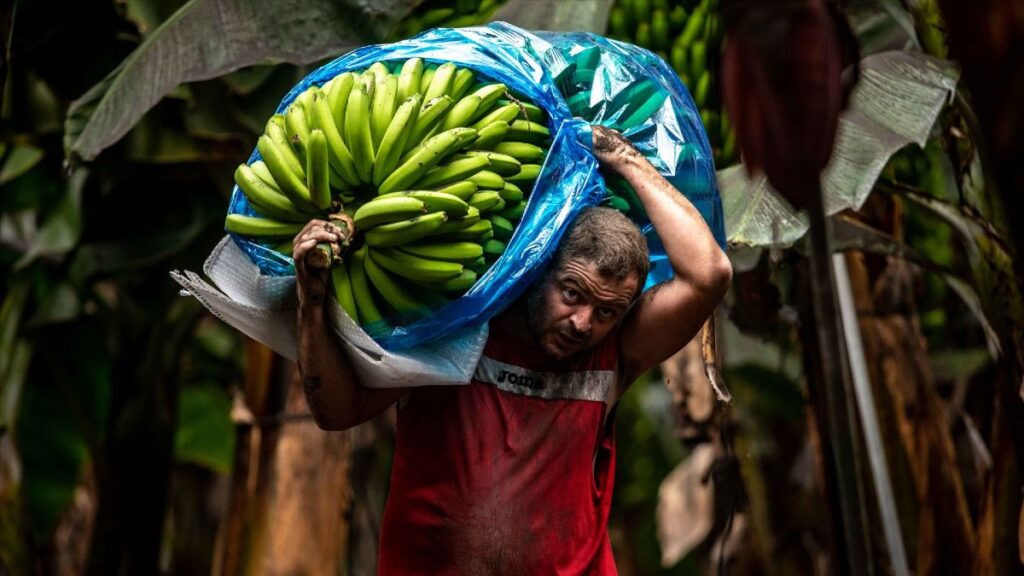


According to the BOE published on May 12, 2026, the Ministry of Agriculture has updated the insurance for banana farms, including specific coverage to protect the crop from heat stroke, hurricane winds and hail.
This measure is a respite for the more than 6,200 producers who have to fight against adverse weather situations in order to keep one of the economic engines of the country, especially in the Canary Islands, an area where there is a greater number of producers.
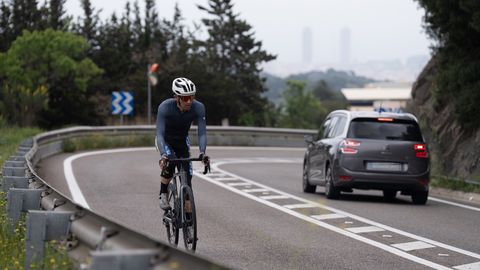
The BOE changes the roads: Transport confirms that it may reduce or eliminate shoulders and will directly affect cyclists

Confirmed by the Government: pensioners with a minimum supplement will not pay for their medications
What the BOE says
The new regulation, detailed in Annex I of the official document, makes no distinctions and protects the complete cycle of the banana tree. Textually, the insurance covers damage from extreme heat, wind and stones for both mother plants and daughter plants.
Furthermore, Article 7 sets the protection calendar: the guarantee for production is activated with the signing of the insurance, although never before July 1. This ensures that the plantations are covered just when the months of greatest risk for heat waves begin in the country.
Profitability in the red
The banana is much more than a fruit. For example, in the Canary Islands it is a way of life that is currently going through a critical moment:
- Small farmers on the limit: 94% of producers are small or medium-sized (about 5,831), with productions that do not reach 200,000 kilos per year. For them, a single gust of hurricane-force wind can mean the closure of the farm.
- La Palma in the spotlight: With more than 4,000 banana trees, the “beautiful island” continues to be the most sensitive area after the ravages of volcanic ash.
- Production at minimum levels: 2025 closed with 374.6 million kilos, one of the lowest figures in a quarter of a century. The goal for 2026 is to recover volume, but the weather is not making it easy.
The urgency of this insurance is best understood by looking at farmers’ portfolios. So far in 2026, the average price received for bananas has been just €0.64/kg, while production costs have skyrocketed to between €0.70 and €0.80/kg.
Without these climate protections and direct aid, many producers would be working at a loss. With the new insurance, at least, the risk of heat stroke destroying an entire harvest is no longer an economic death sentence.
What do you need to know about insurance?
Regarding the technical details of this new regulation, there are three key points that every producer should know. First of all, a maximum yield is established, which means that the law allows the harvest to be ensured up to a maximum of 68,500 kg per hectare.
In addition, the system works through increasing coverage, a flexible format that gives the farmer the possibility of expanding the guarantees of his policy according to what his farm needs at any given time.
Finally, it is worth remembering that, although the BOE is national in scope, the geographical area affected is very specific: the rule protects 100% of Spanish production, much of which is located in the Canary Islands.