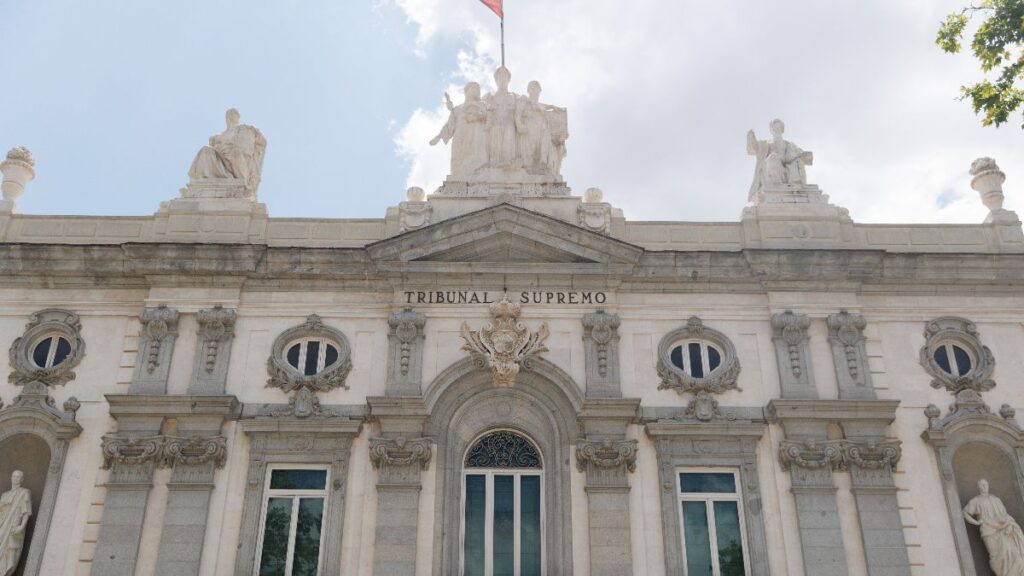
The Supreme Court has ruled that compensation can be claimed from the State for the municipal capital gain after the Constitutional Court will declare part of the tax unconstitutional. However, it makes it clear that the nullity of the rule does not automatically give the right to recover what was paid for the sale of a property; it is necessary to demonstrate that there really was economic damage.
This is established in its ruling of April 20, 2026, in which it analyzes the claim presented by a company that requested more than 574,000 euros from the State for patrimonial liability derived from the Tax on the Increase in the Value of Urban Land (IIVTNU)known as municipal capital gains.
The PSOE asks in Congress for a temporary tax on the extraordinary profits of energy companies

The National Court stops the Treasury: agreeing on compensation after dismissal does not imply paying personal income tax
The company defended that it had paid the tax applying certain articles that were later annulled by the Constitutional Court and that, in addition, the real estate operations had generated losses. To prove this, he provided expert appraisal reports, with which he intended to demonstrate that there was no increase in value in the transferred land.
However, the Supreme Court considers that this evidence was not sufficient, since the company did not provide the purchase and sale deeds of the properties or accounting documentation that would allow the real acquisition and transfer price to be verified. Therefore, it concludes that the existence of losses or the economic damage necessary to recognize compensation was not proven.
The Supreme Court remembers that the unconstitutionality of the tax is not enough to collect compensation
In its ruling, the Supreme Court recalls that the Constitutional Court annulled the automatic system for calculating municipal capital gains because it could cause taxes to be paid even when there was no real profit or when taxation was excessive.
However, the High Court clarifies that the declaration of unconstitutionality does not mean that all tax assessments are automatically illegal nor that there is an automatic right to be compensated.
The Supreme Court explains that the tax continues to tax the increase in the value of urban land and that, therefore, it is up to the taxpayer to prove that in their specific case there was no such gain or even an economic loss occurred.
In this sense, it points out that to assess the patrimonial responsibility of the State it is not enough to refer to the rulings of the Constitutional Court, but all legal requirements must be met, especially the existence of effective damage, economically evaluable and that the affected person has no legal obligation to endure.
The purchase and sale deeds remain the main evidence
The High Court recognizes that expert reports can serve as a means of proof to prove losses in the transfer of real estate. However, it specifies that these reports are complementary in nature and do not replace the main documentation of the operation.
For this reason, it is considered essential to provide the public deeds of purchase and sale, since they are the ones that make it possible to prove essential aspects such as the real existence of the transfer, the date on which it was carried out and the effective price paid in the acquisition and sale.
Furthermore, in the case of companies, the Supreme Court recalls that this type of operations must also be reflected in the company’s accounting, documentation that was not provided in this procedure either.
According to the court, the absence of this evidence makes it impossible to sufficiently verify whether a handicap really existed and, therefore, does not allow recognition of the right to be compensated for the patrimonial responsibility of the legislative State.