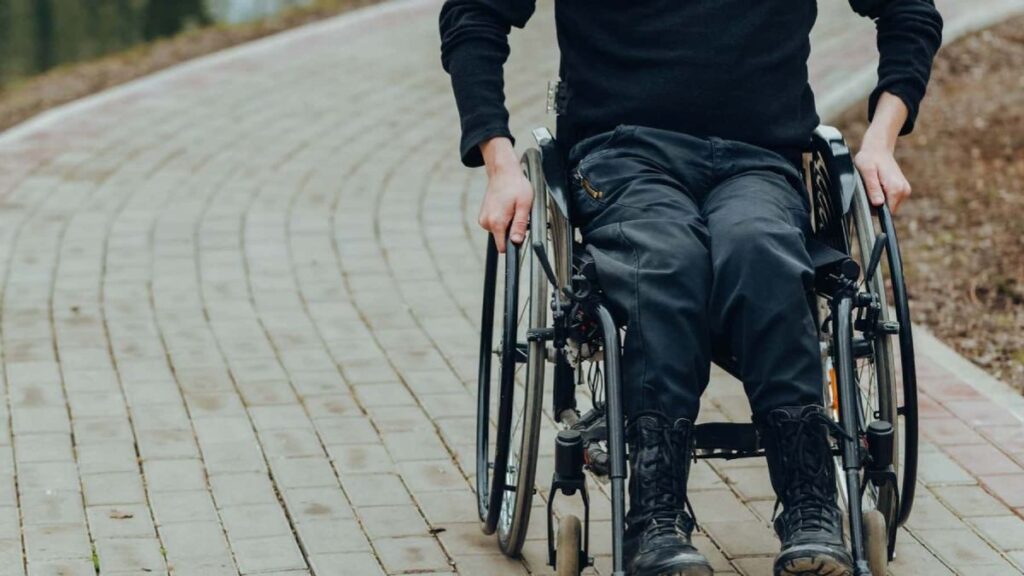
“Retirement due to illness” is not regulated as an independent modality in our public pension system, since when an illness prevents continuing to work before the legal age, the way is to request permanent disability, and when the legal retirement age is reached, that pension is automatically transformed into an ordinary retirement without money being lost with the amount.
This is because workers tend to confuse “sickness retirement” with “early disability retirement.” The first, permanent disability, is regulated in articles 193 to 200 of the General Social Security Law (LGSS).
Early retirement due to disability does allow the retirement age to be advanced for health reasons, provided that a degree of disability equal to or greater than 65% is recognized, or equal to or greater than 45% when any of the specific pathologies provided for in the regulations occur. In addition, there are coefficients that reduce the retirement age due to painful, toxic, dangerous or unhealthy activities, regulated in article 206 of the LGSS and applicable to specific professions, such as miners, firefighters, sea workers or local police officers. Outside of these cases, anyone who cannot continue working due to illness must apply for permanent disability, not retirement.
Is there early retirement for serious illness?
There is no generic route for early retirement due to illness or health problems. Even if the person suffers from cancer, a degenerative disease or a serious injury, Social Security does not grant early retirement for this reason, since in these cases, a permanent disability is processed in one of its four degrees (partial, total, absolute or major disability). That is, the pension is recognized if the illness definitively prevents working in the usual profession (total) or in any profession (absolute or major disability).
To understand it, when someone gets sick, they first receive temporary disability (the popular sick leave), with a maximum duration of 12 months, extendable for another 6 (545 days). If it does not improve in that time, the medical court (Disability Assessment Team or EVI) considers the transition to a permanent disability.
The amount of the pension is calculated on the regulatory basis of the last contribution period and with a percentage that depends on the grade. In the total degree, 55% is charged, which rises to 75% when you are over 55 years of age and do not have a job, and 100% is charged in the absolute degree.
In severe disability, a supplement is added to the 100% pension to remunerate the caregiver which, in accordance with article 196.4 of the LGSS, results from applying 45% to the current minimum contribution base plus 30% of the worker’s last contribution base.
What happens when the disabled person reaches the legal retirement age?
Article 200.4 of the LGSS explains that, upon reaching the ordinary retirement age, the permanent disability pension is automatically transformed into a retirement pension. In 2026, that age is 66 years and 10 months (gradual application of the 4th transitional provision of the LGSS, which takes the highest ordinary age each year). From 2027 it will be set at 67 years.
The amount and conditions do not change, that is, the pensioner continues to receive the same amount, but the name of the benefit becomes “retirement”. The procedure is ex officio; You don’t have to request anything.
Regarding the change, three things must be clear:
- Fiscally: Absolute disability and severe disability pensions are exempt from personal income tax by article 7.f of Law 35/2006, on personal income tax; When they become retired, they begin to be taxed as income from work, although many pensioners remain below the age-exempt minimum thanks to the reductions planned for those over 65 and 75 years of age.
- For the purposes of the minimum supplement: the minimum retirement amount is applied, which in 2026 is 936.20 euros per month for a single person and 1,256.60 euros with a dependent spouse, according to the amount revalued by Royal Decree 39/2026.
- For the widow’s pension: the surviving spouse agrees with the rules of retirement, not disability.
The transformation into retirement does not imply a loss or penalty. It is purely administrative.
Can you choose between disability and early retirement?
In exceptional cases yes, when the worker meets the requirements of both figures. Permanent disability, especially in its absolute and severe disability degrees, is usually more advantageous because:
- It does not have a reducing coefficient: it pays 100% of the regulatory base (absolute) or 100% plus the major disability supplement.
- It is exempt from personal income tax in the degrees of absolute and severe disability (until transformation into retirement).
- It does not require a minimum age, although the qualifying regime changes depending on the age of the worker.
Voluntary early retirement, on the other hand, applies reduction coefficients that range between 2.81% and 21% per month in advance, depending on the years contributed and the months advanced, and the cut is permanent. The same worker may be better off requesting absolute permanent disability at age 58 than waiting for early retirement at age 63 with a reducing coefficient.
The calculation depends on the specific case. The usual recommendation of labor advisors and Social Security officials, such as Alfonso Muñoz Cuenca, is to first try for disability and, if the medical court does not recognize it, opt for the option of continuing to work and request voluntary early retirement upon reaching age.
What diseases can give rise to permanent disability?
There is no list of diseases for which permanent disability is given by Social Security. The EVI assesses each case taking into account the functional limitations that the disease produces for work, not the disease itself. The same pathology can lead to total disability in one profession (bricklayer) and not be recognized in another (teleworking).
The pathologies that most frequently lead to recognition are:
- Cardiovascular diseases (myocardial infarction with sequelae, severe heart failure).
- Cancers with prolonged treatment or metastasis.
- Neurodegenerative diseases (ALS, advanced Parkinson’s, multiple sclerosis).
- .Serious mental illnesses (bipolar disorder, schizophrenia, resistant major depression)
- Musculoskeletal diseases (disabling herniated discs, severe osteoarthritis).
- Rheumatic diseases (fibromyalgia, lupus, rheumatoid arthritis with severe functional impairment).
The key is not the diagnosis, but documentary evidence (medical reports, diagnostic tests, prolonged treatments) that proves the functional impact on the ability to work.
To understand it, let’s take an example. A 55-year-old administrative worker with chronic low back pain might not receive total disability because his job does not require physical effort; The same diagnosis in a warehouse worker who carries boxes all day would charge it. The disease is the same; What the medical court assesses is whether it prevents you from continuing to carry out your usual profession.
Are there jobs with early retirement due to hardship or illness?
Yes. Article 206 of the LGSS allows the application of age-reducing coefficients in especially painful, toxic, dangerous or unhealthy professions, and its development is found in the specific royal decrees of each activity (coal mining, sea, railways, flight personnel, firefighters, local police, artists). It is not a retirement due to individual illness, but rather a general recognition of activities whose life expectancy or health is statistically reduced.
The groups that currently enjoy these coefficients are:
| Profession | Reducing coefficient | Minimum age |
|---|---|---|
| coal miners | 0.05 to 0.50 | 52 years |
| Sea workers | 0.10 to 0.40 | 52 years |
| Railways (certain categories) | 0.05 to 0.15 | 60 years |
| Aviation flight personnel | 0.30 to 0.40 | 50-55 years |
| Firefighters | 0.20 | 59 years |
| Local police and Ertzaintza | Variable | 59 years |
| Bullfighting artists and professionals | 0.15 | 60 years |
Social Security is processing the extension of this list to other groups (healthcare personnel, armed forces, aluminum workers) according to epidemiological studies and negotiations with unions and autonomous communities.
How do you apply for permanent disability?
The application is processed before the INSS, it can be done through the Social Security electronic headquarters with a digital certificate or Cl@ve. The procedure has four phases:
- Initiative: it is initiated by the INSS ex officio (after exhausting the temporary disability), the mutual insurance company, the worker themselves or the health services.
- Medical inspector’s report: evaluates the clinical documentation and prepares an opinion.
- EVI meeting: issues a grade proposal (partial, total, absolute, major disability or no grade).
- Resolution of the provincial director of the INSS: notified to the worker, opens the way for a prior claim in 30 days if they are not satisfied.
The INSS has 135 days to resolve from the beginning of the file. If it is denied, the worker can file a prior claim and then sue before the Social Court within 30 business days.
What happens if the illness is work-related and not common?
If the illness results from a work accident or occupational disease (occupational contingency), the pension is higher than the common contingency pension. The regulatory base is calculated with the real salary of the last year and a higher percentage applies. In addition, a benefit surcharge (from 30% to 50%) can be claimed if the company failed to comply with occupational risk prevention regulations.
For those who have a recognized occupational disease (silicosis, asbestosis, contact dermatitis, hearing loss due to noise, musculoskeletal diseases due to repetitive movements), the route is always permanent disability due to professional contingency, not retirement. The mutual company that collaborates with Social Security pays the temporary disability benefit and collects the clinical documentation, but the person who declares and recognizes the permanent disability is the National Social Security Institute (INSS), in accordance with article 200.1 of the LGSS.