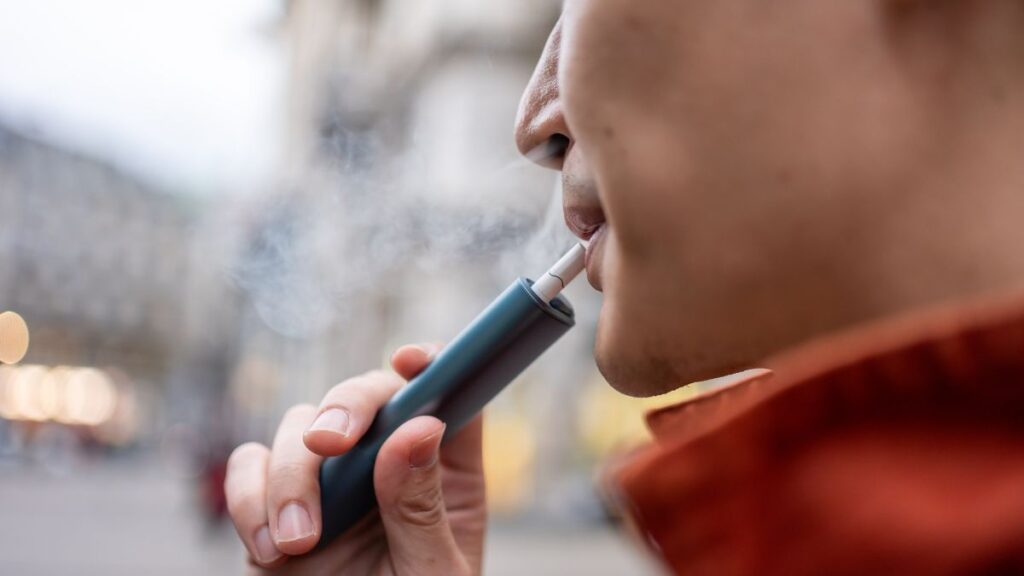
The decision by the United States Food and Drug Administration (FDA) to renew the authorization of IQOS (a Philip Morris electronic device that heats units of real tobacco instead of burning them) as a modified risk tobacco product has already become a key move to demonstrate the effectiveness of these devices when it comes to, for example, quitting smoking. Because, in addition, it is a step forward for other countries to do the same since it is essential to know that this organization does not evaluate by category but by brands, so this authorization only corresponds to IQOS.
In the text of the order, the FDA notes that “studies have shown that completely switching from conventional cigarettes to the IQOS system significantly reduces your body’s exposure to harmful or potentially harmful chemicals.”
Furthermore, it highlights that the scientific evidence available “without conducting long-term epidemiological studies demonstrates that a measurable and substantial reduction in morbidity or mortality among individual tobacco users is reasonably likely.”
The option that other countries can follow this line and do the same in Europe or Spain would mean especially relevant changes in Extremadura, which is the axis of national tobacco production, which now sees how these movements can boost the employment of thousands of people and give them stability.
This recognition consolidates IQOS as the only heated tobacco product that has this authorization in the United States. But this relevance goes beyond health, because the economy could be boosted as a result of the decision made by this American organization.
Heated tobacco as a transition route
In Spain, heated tobacco represents a minority portion of the market, approximately 3.5%, but it is seeing its strong entry into large cities. Its growth can be translated as a transition path against the decline in traditional cigarette consumption, which continues to account for 80% of the total.
Extremadura concentrates the focus of production with nearly 98% of Spanish tobacco, placing it very close to the head in terms of crops in Europe. Part of the production is destined to the production of tobacco for heating devices, always complying with quality standards.
The change in demand guarantees continuity for an agricultural activity that has always depended on the traditional cigarette.
Job stability for farmers
For farmers, the key lies in stability and if Spain replicates the movement carried out by the FDA, its consequences will be seen both in employment and in the sector.
Certification of crops for use in heated tobacco requires investments and technical adaptation, which makes the regulatory framework especially sensitive. In this sense, the FDA’s decision reinforces, according to sector sources, expectations of continuity in demand and, by extension, in the maintenance of employment.
International experience provides references on the possible path of this transition. In Japan, the introduction of heated tobacco has coincided with an accelerated decline in cigarette sales, close to 50% in recent years. In Europe, Italy has the highest degree of penetration of these products, accompanied by a sustained decline in conventional tobacco consumption.