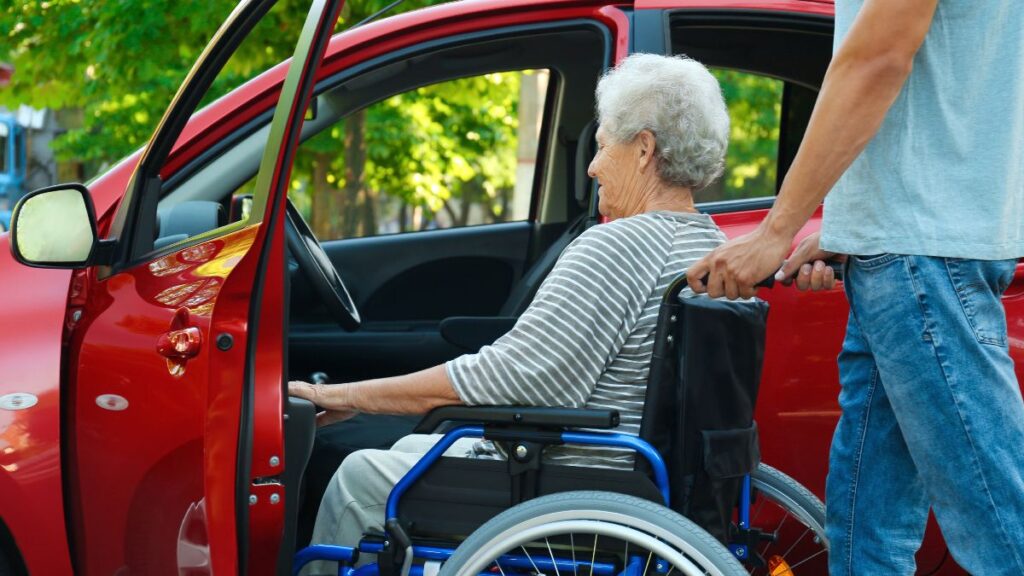
The General Directorate of Taxes (DGT), an organization dependent on the Ministry of Finance, has clarified that it is possible to apply the reduced VAT of 4% on the purchase of a car intended for a person with a disability, even if they are not the one driving it. This is stated in the binding consultation V0072-25, of February 3, 2025, in which it analyzes the case of a father with 75% disability and reduced mobility whose vehicle would be used by his children.
The main question was whether the super-reduced rate of VAT could be applied in the vehicle acquisition under these circumstances. The Treasury answers yes, but only if the requirements established in the tax regulations are met, which provides for this tax benefit for certain vehicles intended for the regular transportation of people with disabilities.
Specifically, the applicable regulations are article 91.Dos.1.4º of Law 37/1992 on Value Added Tax, which allows the application of the 4% rate to vehicles intended for the transport of people with reduced mobility or in wheelchairs. This exception would apply compared to the general rate of 21% included in article 90 of the same law. However, the DGT makes it clear that this tax advantage does not apply automatically.
The use of the vehicle is the key, not who drives it
In its analysis, the DGT explains that the determining element is not who drives the vehicle, but its destination. That is, it must be proven that the car is used on a regular basis to transport the person with a disability.
To justify this, remember that article 91.Dos.1.4 of the VAT Law itself establishes that these vehicles can be used “regardless of who the driver is”, as long as their purpose is the habitual transportation of people with disabilities.
In addition, the DGT uses the definition of a motor vehicle included in Annex II of Royal Decree 2822/1998 (General Vehicle Regulations) and in Royal Legislative Decree 6/2015, to specify what type of vehicles can benefit from this measure. In this sense, it clarifies that not all vehicles are valid, since they must be suitable for the transport of people with reduced mobility, which excludes, for example, motorcycles.
Only 4% applies if all requirements are met
The DGT concludes that the application of the reduced VAT requires compliance with a series of requirements established in article 26 bis of the VAT Regulation (Royal Decree 1624/1992).
Among them, at least four years have passed since the purchase of another vehicle in similar conditions, that the car is not transferred within the same period and that the degree of disability is officially accredited by a certificate from IMSERSO or the competent body of the autonomous community.
Furthermore, it is essential to previously request recognition of the right before the Tax Agency, as required by the regulations themselves. Without this authorization, the 4% rate cannot be applied and the operation will be taxed at the general rate of 21%.
The DGT also remembers that accreditation of the use of the vehicle can be carried out by different means, such as relationship with the person with a disability, cohabitation or even ownership of the car, although this last aspect is not mandatory.
In any case, the Treasury insists that the existence of a disability or the fact that the car is used by family members is not enough. It is necessary to prove the destination of the vehicle and comply with all the legal requirements provided for in Law 37/1992 on VAT and its implementing regulations. Otherwise, as occurs in these cases, the purchase of the car will be taxed at the general tax rate.