Who has not ever entered a bar just to use their bathroom, without actually consuming anything? This practice is becoming more and more common, especially in central places or where crowds occur too frequently. And not only that, with the rise in the use of scooters we see more and more of them taking up space on the floor of hospitality establishments, something that makes the work of waiters even more difficult, who sometimes have to avoid them in order to provide their service. Because of all this, bars can’t take it anymore and are starting to take increasingly harsh measures.
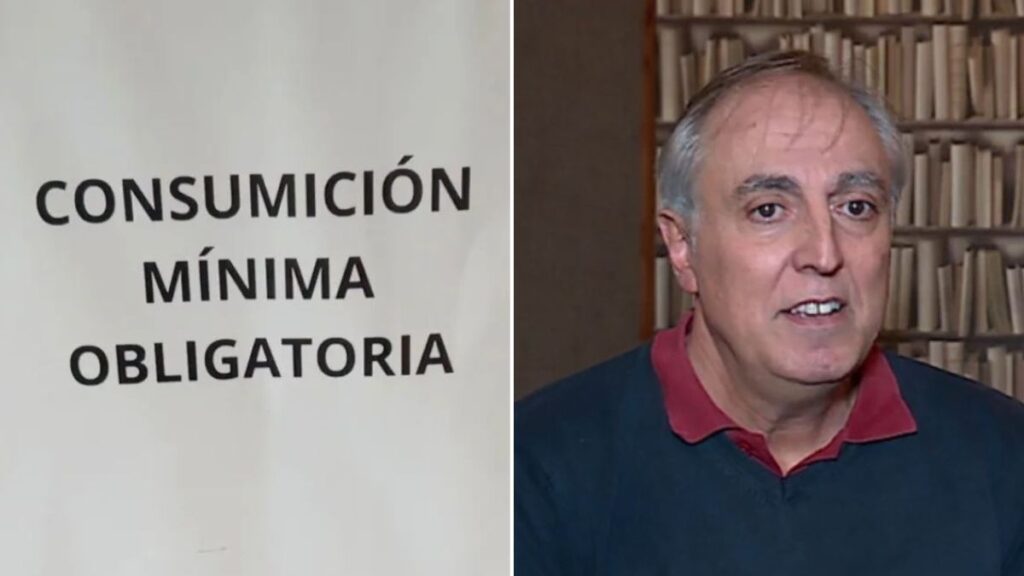
Signs with messages as basic as they are necessary that bar owners are increasingly forced to post say “minimum consumption”, “bathrooms for customers only” or “no scooters.” The idea is just to organize the space and avoid conflicts, especially in places with a large influx of people or in busy cities.
“They are not new rules, but reminders of common sense,” commented a customer for Antena 3. On the door of many establishments you can see letters or menus and there are also signs that remind you of basic rules.
This regulation responds, above all, to social transformations and new consumer habits. The massive influx in certain establishments, the arrival of large groups or the increase in the use of electric scooters have meant that behaviors that were previously understood without the need to explain them must now be made clear: sitting without asking for anything, taking up more space than necessary or introducing objects that make passage difficult.
A trend that spreads throughout Spain
This phenomenon is already observed in different cities, from Vigo to Madrid or Barcelona, where the establishments with the highest volume of customers have had to adapt. In Vigo, Café Van Gogh is an example. Its owner and administrator, Jordi Casado, explains the reason for these notices in a recent interview with Antena 3: “There are times when 10 people come in and only order 3 coffees. This is a business: we have to cover expenses and pay the staff. The signs help avoid misunderstandings and unnecessary conflicts.”
Casado gives as an example the limitation of carts, which responds mainly to security reasons. At times of high traffic, bulky objects can hinder movement within the premises and complicate an evacuation. “Limiting strollers in certain areas is not on a whim, but to guarantee safety and evacuation in case of emergency,” he clarifies.
The economic context also influences
The current situation of the hospitality industry in Spain has also prompted us to take these types of measures. Following the closures resulting from the pandemic, many businesses have had to face debt, increased costs and greater tourist pressure at certain times. In this scenario, better organizing the space and remembering certain basic rules has become essential.
Customer reaction
Among customers, the answer is usually quite practical. A young man drinking a beer sums it up like this: “If you’re not going to consume, why are you going to the bar?” A couple having breakfast nearby agrees: “It’s fine with us, as long as they let you know beforehand.” Another client adds: “It’s not fair to occupy a table if you don’t consume; you take away space from those who do want to consume.”
Even the limitations on carts are generally well understood. Many customers consider this to be a matter of organization and security, rather than convenience.
From habit to having to see it in writing
Casado remembers that before the pandemic and the rise of mass tourism, these rules did not need to be explained: the relationship between client and establishment was based on trust. “Something was ordered, the table was occupied and everything flowed,” he says.
However, changes in social habits, the presence of scooters and the saturation of some spaces have altered this dynamic. “This has always existed. The difference is that now, it seems necessary to remember it for everyone,” he concludes.
Along these lines, the Organization of Consumers and Users (OCU) reminds that establishments can set the conditions of their service, as long as they do not violate fundamental rights or contravene regulations. Within this framework, measures such as requiring a minimum consumption or limiting the length of stay can be considered valid, as long as they are previously communicated to the client.