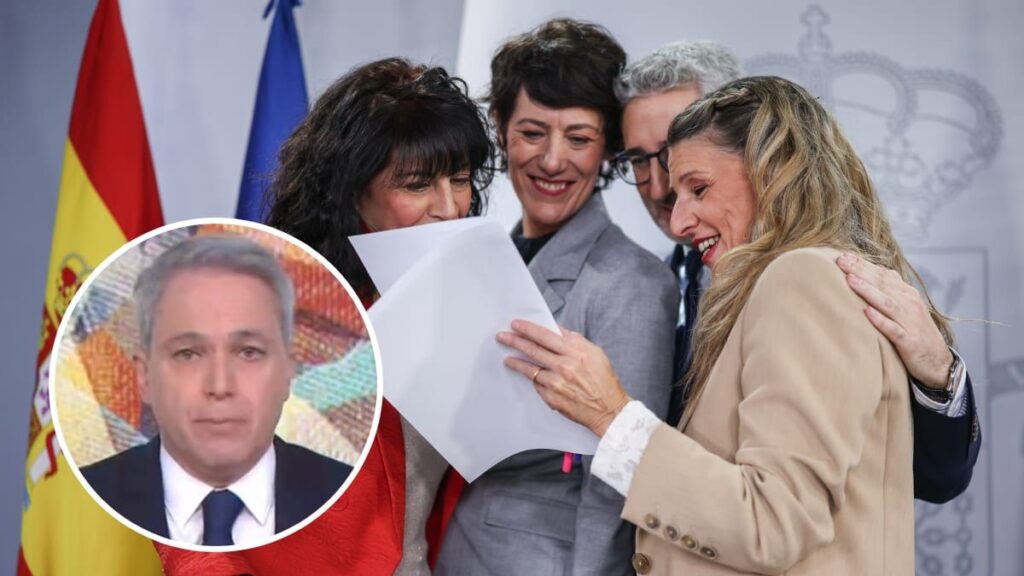
There are four days left until the general elections on Sunday, November 29 and the Government of Pedro Sánchez does not rest approving measures in both ordinary and extraordinary Councils of Ministers. Without going any further, this Tuesday it approved four other royal decree-laws (rules with the rank of law that the Government dictates out of urgency) with more permits for workers, a tax reduction for the self-employed and transport aid for 2027, among other measures.
Of all, the one that affects workers the most is Royal Decree-Law 42/2026 (published in this BOE), which changes the paid leave of the Workers’ Statute. The death leave, whose extension the Government had already announced on Monday, is now called bereavement leave and increases from two days (four with travel) to 10 working days for the death of the spouse, common-law partner, parents or children, and to three days (five with travel) for the rest of relatives up to the second degree, such as in-laws, sons and daughters-in-law, grandparents, siblings, grandchildren or brothers-in-law. In both cases you can start enjoying it in the following four weeks.
The same decree extends the birth permit from 19 to 20 weeks per parent, although the new week is one of those that are kept until the child turns eight years old and, for those born since this Thursday (the previous ones continue with 19), it can only be requested from March 1, 2027. In another of the decrees published (on 43/2026) the Treasury increases the deduction for expenses that are difficult to justify from 5% to 10% to the self-employed (with a limit of 3,000 euros) and extends the banking tax to 2027.
Since the Cortes are dissolved, these decrees must be validated or repealed by the Permanent Deputation of Congress, which is the one that votes on the decree-laws with the Chambers dissolved (article 78.2 of the Constitution). The deadline is 30 days from its promulgation, so if the Provincial Council does not vote on them before December 23, when the new Cortes are constituted, the new Congress will have to do so.
Many of these measures involve significant expenditure and, although Brussels has not yet taken them into account, Europe did draw Spain’s attention this Tuesday. The European Commission warned Spain that it is exposed to an excessive deficit procedure being opened in 2027 if it is confirmed that spending has grown more than agreed. It is estimated that the GDP at the end of 2026 is 0.9%, while it should be 0.6%, which is what Europe marks, which in figures represents an excess of 5.1 billion euros.
This is how Vicente Vallés spoke about the measures of the Council of Ministers
Vicente Vallés dedicated his comment to this package in the evening edition of Antena 3 Noticias on Tuesday. He began by recalling that “all governments, no matter what party, have taken advantage of the advice of ministers in electoral campaigns” and placed the difference in this campaign in “how and how much.”
“This time it has been done without any shame and with an availability of money that is surprising for a Government that has not even fulfilled its constitutional obligation to present a draft budget for four years,” he added. And just before showing a sign with the nine measures of the day: “Some social benefits that the Government has decreed today are not going to be paid with State money, but will be paid by businessmen and the self-employed. It is a kind of invitation for me, but you pay.”
In the distribution that Antena 3 later showed, transportation (1,213 million euros, according to Moncloa) and the railway safety plan (19,000 million euros in five years) are paid for by the Administration. Bereavement leave, maternity and paternity leave and the bank tax remain on the side of private companies.
In the case of mourning, it is the company or the self-employed person who must pay it (not the Government), since this is stated in article 37.3 of the Workers’ Statute and that the employers already rejected last year to extend it for a cost that they saw as unaffordable. The same does not happen with the weeks due to birth, because they are covered by Social Security with a subsidy of 100% of the regulatory base, although the company continues to contribute for the worker.
After recalling that Moncloa denies any relationship with the elections (“nothing to do with it,” he repeated), Vallés described what was approved as “a kind of desperate trawling, consisting of casting a large net with measures for different social sectors in the hope of catching all possible voters.”
The presenter estimated the spending of everything approved in the campaign at “tens and tens of billions of euros” and, from the notice from Brussels, he highlighted that the cuts he requests for 2027 will have to be made by the Government that comes out of the polls on Sunday: “If Pedro Sánchez continues governing, it will be Sánchez who will have to make cuts caused by his expenses, his own expenses.”
The Government approves ‘through the back door’ a Royal Decree on tobacco that hits SMEs, female employment and leaves minors unprotected
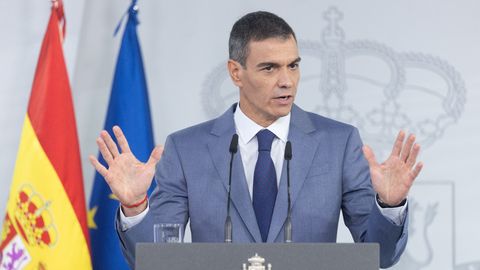
Brussels warns Sánchez of a possible sanction for excess spending after an entire legislature without presenting new Budgets
And the Brussels figure, more than 5 billion, falls short for him. “Those 5,000 million do not include everything that has been decided in the councils of ministers of this electoral campaign,” Vicente Vallés warned.