In Spain, we have always thought that he who has a gas station or a tobacconist has a business with a very high profitability, that is, that he earns a lot of money compared to the investment and expenses to be assumed. But, nothing is further from reality, since it is a sector with reduced margins, which requires constant management and daily dedication to be viable.
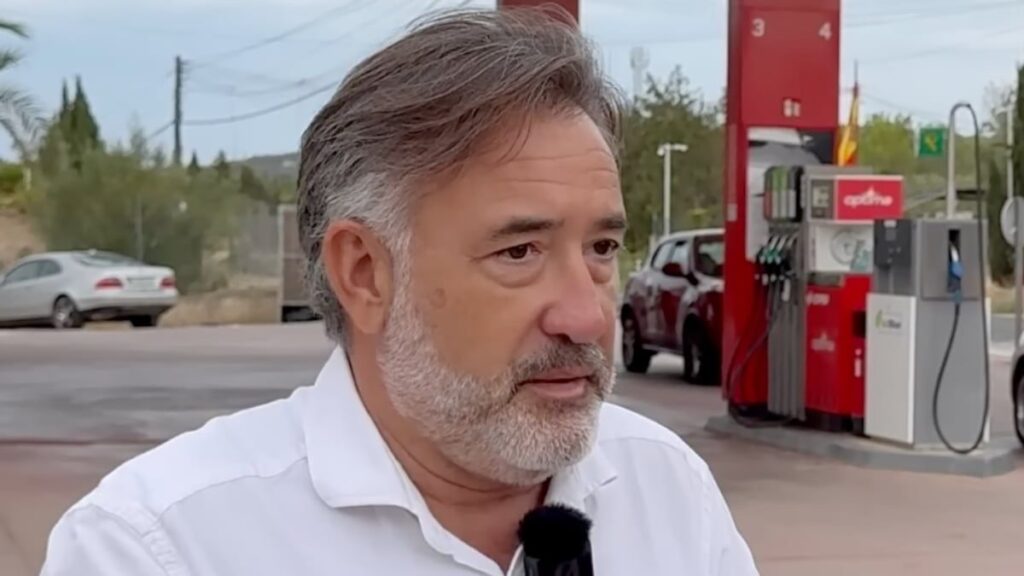
In this sense, the influencer Adrián G.Martin has conducted an interview with Tomeu Clar, which directs a family group that has seven gas stations, a distribution company of gasoli at home and agreements with large brands such as Cepsa and Carrefour. In this interview it reveals the secrets of the profitability of the gas stations, how much it is earned for each liter of fuel and how the business has become multiservice centers with stores, coffee shops and now, service stations for electric cars.
You may be interested
A Spanish expansion without filters with all those who have savings in the bank: “The day I break …”
The price of light today Friday, August 29, 2025: the cheapest hours and faces within the PVPC
“From each liter of gasoline the gross margin is between 10 and 25 cents. If a customer pays 1.70 euros, more than half goes directly in taxes,” he explains. With annual sales of more than 15 million liters, its group invoices around 20 million euros a year, although it insists that the key is not profitability per liter, but the volume.
“From a station in 1962 to seven gas stations with 60 employees”
Clar recalls the difficulties that has been expanding in such a regulated sector. Only administrative licenses can be delayed between four and five years, and reduced margins force working with large volumes. Today, its template adds about 60 people.
The expansion model is divided into two. On the one hand, there are the stations in property and, on the other, those that work under the management of oil. In their case, they maintain the property of four gas stations, something unusual in a market dominated by management contracts.
The services have also diversified. In addition to refueling, they have incorporated car washed, Carrefour Express stores, solar panels to reduce costs, and coffee corners. In one of their stations they have already tried to open 24 hours with automatic payment, which has allowed them to increase income without shooting personnel.
A business with small margins
Although the impressing business and accounts are public (with a turnover close to 20 million euros), Clar insists that it is a business with tight profitability. “Between 8% and 10% of the total turnover. Of each liter sold, about 55% are taxes, 30% corresponds to the cost of the raw material and the rest is distributed between distribution and benefit,” he explains.
The biggest expense, he acknowledges, is the staff. “We have a template of about 60 people and we have never stopped paying a payroll since 1962,” he says with pride.
In addition to the fuel, your company distributes bonus diesel for farmers (B) and heating diesel (c) throughout Mallorca through its own company, Balearic Oil. They have also incorporated the Adblue deposit, a mandatory additive in modern diesel engines to reduce polluting emissions.
The benefit for the consumer to have a supermarket inside the gas station
On the incorporation of supermarkets within the service stations, Clar explains that, where appropriate, Carrefour Express stores represent between 6% and 6.5% of the total turnover, a figure that is not negligible in a business where each half account. This model allows diversifying income beyond fuel and providing stability to the accounts.
The businessman remembers that there was the perception that buying in a gas station was more expensive. “Before, a simple refresh bottle could cost much more than in a supermarket. Now that has changed completely thanks to agreements with large chains, which guarantee competitive prices and an attractive offer,” he says.
For the consumer, the benefit is double: comfort and fair price. The customer is not only going to refuel, but can solve a quick purchase with the peace of mind of paying the same as in any other Carrefour establishment. In this way, the gas station ceases to be a simple fuel loading point to become a multifunctional space, where to repost, buy, have coffee or even wash the car are part of an integrated experience.
The future of hydrogen to subscriptions
In the face of the next few years, Clar is clear and gas stations can no longer be refueling points. Its bet goes through fast electric charge, green hydrogen and new complementary services such as laundry or fast food dispensers.
“The stations must become authentic service centers. We want the customer to reproduce, wash their car, buy in the store or even load with hydrogen in the future,” he explains.
In this process, he ensures that the support of a great brand is key: “Cepsa gives us security. If I need electric or hydrogen charging tomorrow, I will have it.”
What began with the vision of a grandfather in the 60s is today a group that invoices millions and uses dozens of people, although with margins that force to innovate and look for additional income. “If my grandfather saw what we have turned a gas station today, he would not believe it,” says Clar in the interview with Adrian G. Martín.