

Add NewsWork in 
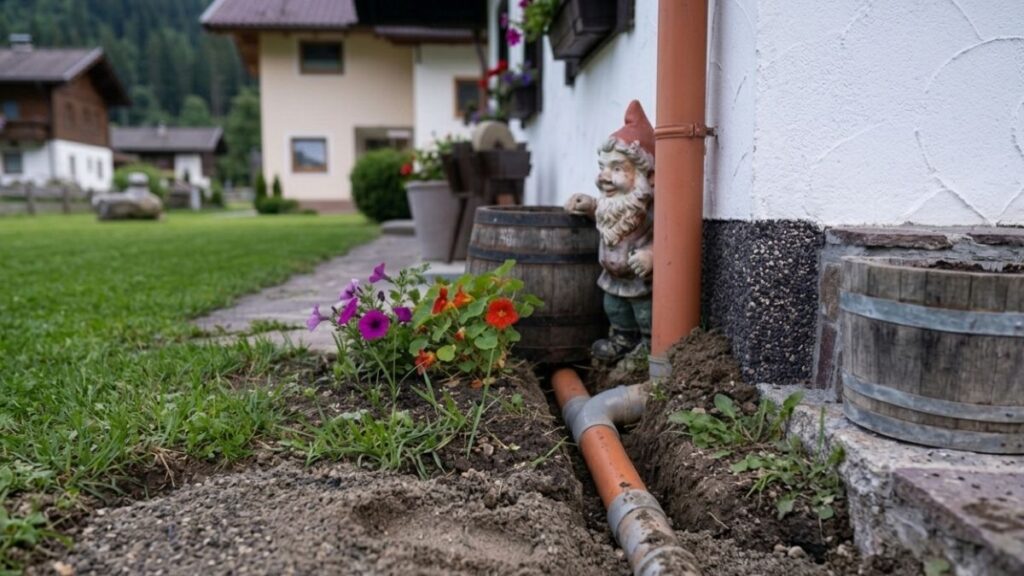
The Provincial Court of Santa Cruz de Tenerife has forced some neighbors to eliminate the river and waste water pipes that passed without title or consent through the house of another owner, causing humidity, leaks and damage to your home derived from these wastewaters. For years, the buildings located at the top of the street used a sanitation network that crossed the subsoil of the property, without the building being aware of it.
According to the ruling of February 4, 2026, the problem came to light in 2019, when the owner detected these humidity and spills in her home. After carrying out various checks and tastings, the existence of underground pipes from the neighboring properties was discovered that carried their water to the general sewage network through their plot. The neighbors argued that it was an old and shared facility, and even claimed to have acquired that right over time.
Confirmed by justice: if your air conditioner bothers the neighbors, you will have to move it

Confirmed by law: the regulations allow the community to raise common expenses for owners who rent their homes in this way
The Court of First Instance ruled in favor of the owner, considering that she was not obliged to endure the passage of the pipes through her home. In its resolution, it forced the neighbors to carry out the necessary works to evacuate their water directly to the sewer, without going through the affected property, and imposed on them the payment of the costs.
A buried pipeline does not create a right: without title or appearance, there is no easement
The Provincial Court of Santa Cruz de Tenerife confirmed the ruling in the first instance, based on a basic idea of civil law, which is that the property is presumed free of encumbrances, so it is up to whoever invokes an easement to prove its existence. In this case, the neighbors did not prove any valid title that would legitimize the passage of their drains through another person’s home, an essential requirement in accordance with articles 539 and 540 of the Civil Code.
It was also ruled out that this supposed right could have been acquired through the passage of time. According to article 537 of the Civil Code, only continuous and apparent easements can be acquired by usucapion (acquisition of property through continued possession). However, the facility analyzed was underground and completely hidden, with no external signs that would allow its existence to be noticed, so it is a non-apparent easement that cannot be acquired by prescription.
The claim that it was a pre-existing community network was also not accepted. The Court stressed that no constitutive agreement nor the participation or consent of the owner had been proven, so the use of her property was considered an imposed burden without legal support.
Despite the age of the pipes, the ruling made it clear that according to article 1969 of the Civil Code on the prescription of the action, the period does not begin until the injured party has effective knowledge of the problem. In this case, it was not until 2019, after the pipes were discovered through tastings, when the owner was able to exercise her right, thus ruling out that the action was time-barred.
Damage to the home was also proven, such as humidity, leaks and deterioration resulting from the poor condition of the pipes, which reinforced the need to eliminate an installation that, in addition to lacking title, generated real damages.
For all these reasons, the Court concluded that there was no easement and that the neighbors could not continue using the property to evacuate their water, and were obliged to carry out the necessary works to connect their drains to the public network through their own land. However, the sentence was not final and could be appealed in cassation before the Supreme Court.