


The debate on smoking in Spain is still topical, first of all because of the size and health spending, although now the economy also comes into play. Because the cost that cigarette consumption represents for the State’s accounts makes us consider, once again, the use of alternative products such as heated tobacco or vaper to reduce budget impact.
According to data from the Tax Agency (AEAT), income derived from excise taxes and VAT on tobacco products reached a record of 8,965 million euros in 2024, compared to the 8,508 million recorded a year before. In an average pack that costs 6 euros, around 80% corresponds to taxes.
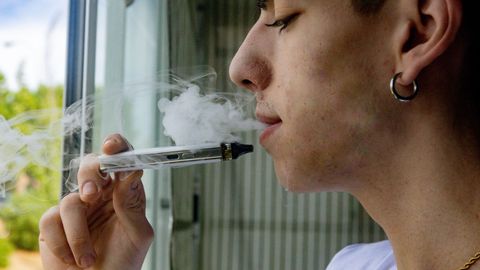
Illegal vaping soars in Spain and puts 1,000 jobs in check: the rise of an uncontrolled market that sneaks into bazaars and gas stations

The price of tobacco changes this Saturday in all tobacconists: up to 10 brands affected
Despite this fiscal return, the impact of smoking on the health system remains important. Many studies have associated the cost linked to diagnoses of diseases linked to cigarette consumption (cancer, cardiovascular or respiratory pathologies) in thousands of euros per year. In addition to everything that has to do with the decrease in productivity and sick leave.
A study explains what happens when you change cigarettes for alternatives
A study presented by Foment de Treball and prepared by the College of Economists of Catalonia proposes a new scenario of potential savings when some smokers replace the usual cigarette with alternative products such as nicotine bags, heated tobacco or vaping devices.
The report estimates that the economic impact could be very favorable for Spain, ranging between 21,400 and 31,000 million euros, that is, 2.3% of GDP if this substitution is quite extensive.
Proposing another hypothesis, that half of smokers decided to make this change, the study shows an improvement in economic well-being of between 10,700 and 15,500 million euros.
This approach assumes that giving up nicotine is still the healthiest option but there are other products on the market whose health impact could be less than that of combustion cigarettes.
Real examples in European countries
In Italy, a study published in ScienceDirect estimated that if 50% of smokers replaced cigarettes with reduced-risk products, the Italian health system could save around 722 million euros in expenses associated with smoking.
In the United Kingdom, researchers at Brunel University estimated that a similar transition to vaping would allow the NHS, the British public health system, to reduce costs by more than half a billion pounds annually.
The most reference recurrent in the European debate is Sweden. According to the OECD report on cancer in Europe published in 2025, the Scandinavian country has the lowest incidence of male lung cancer among EU Member States, in addition to Norway and Iceland. It is also among the countries with the lowest expected growth in oncology healthcare spending per capita until 2050.
The OECD attributes a good part of these differences to the lower historical rates of smoking. In Sweden, less than 4% of the population smokes cigarettes regularly, although nicotine consumption remains close to the European average through alternative products such as snus or nicotine pouches.
The WHO warns that there is no safe level of consumption
Although the WHO warns of a probable risk that these alternatives could act as a gateway to nicotine consumption, the truth is that in the case of nicotine bags in Sweden, the passage of decades has confirmed their effectiveness for smoking cessation and the serious diseases associated with this habit. Alternatives such as heated tobacco, vapers or nicotine bags, without being harmless, and with studies in hand, are less harmful products that, in addition to being less harmful to health, can help with health spending in less prohibitionist countries.