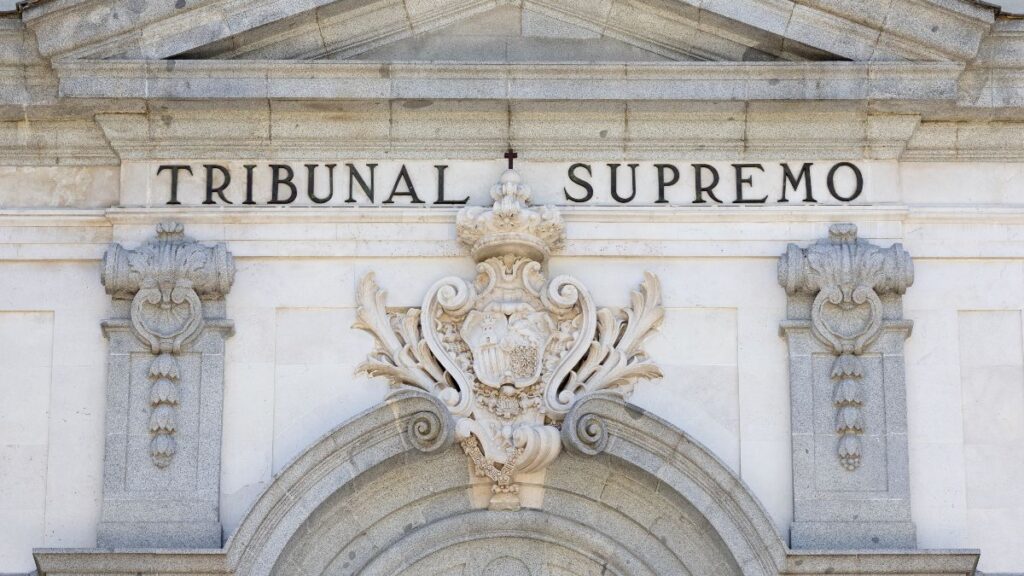
The Supreme Court has ruled that the retirement contributions paid by the State Public Employment Service (SEPE) for beneficiaries of the subsidy for those over 52 years of age should not be counted as income of the family unit when calculating a non-contributory pension, as has been the case until now. The High Court determines that these contributions cannot reduce the amount of the pension or prevent access to it.
First of all, it is worth remembering that during the time that the beneficiary receives the subsidy for those over 52 years of age, he continues to contribute towards retirement. Specifically, it does so for a contribution base equivalent to 125% of the minimum contribution ceiling in force at any given time. Until now, Social Security had been computing these contributions as “income or income” when calculating the amount of a non-contributory retirement pension. Something that harmed applicants who lived with beneficiaries of the subsidy.
This is what happens in the case judged by the Supreme Court. It all begins when, in 2020, the Xunta de Galicia recognized the affected person with a non-contributory retirement pension of 98.90 euros per month. The Administration, when calculating the amount, counted as the income of her family unit not only the unemployment benefit that her spouse received, but also the contributions (297.15 euros per month) that the SEPE made on her behalf for her future retirement.
The man claimed that his pension not be reduced for this reason but, initially, the Social Court number 4 of A Coruña rejected his claim, agreeing with the Xunta. Subsequently, the Superior Court of Justice of Galicia, in March 2024, confirmed this decision, arguing that the unemployment benefit includes both the subsidy itself and the contribution, which is why it should be considered a computable gross income.
Appeal to the Supreme Court
After these two judicial ‘defeats’, the affected person appealed to the Supreme Court, providing a contrasting ruling from the TSJ of Galicia itself (dated July 31, 2019) that ruled exactly the opposite: that said contributions are not computable income or income.
The Supreme Court determines that subsidy contributions do not count as income
The Supreme Court agreed with the affected party and established that the contributions paid by the SEPE should not be counted as income when calculating the amount of the non-contributory pension. The High Court clarifies that the contribution is not money that is given to the worker or beneficiary, but is paid in favor of a state organization (the General Treasury of Social Security). Since there is no attribution of direct “assets and rights” to the beneficiary, there can be no income.
Although the law qualifies these contributions as a benefit within the unemployment protection action, this adjective criterion is not sufficient to consider it income. The Supreme Court warns that, if this literal logic is followed, public healthcare should also be counted as income, which would deprive beneficiaries who become seriously ill of the pension.
It also points out that for a benefit to be considered income, it must be a substitute for work income (as is the subsidy itself). In this sense, the contribution does not replace income from work and equating it would lead to the extreme of having to count as income the employer contributions that companies pay for their employees, something that does not occur in any sector of the legal system.
Furthermore, the Supreme Court adds that the employee has no right to these contributions, they do not go to a fund that he can use. For this reason, it unifies doctrine and establishes that “the contributions for the retirement contingency made by the managing entity of the unemployment benefit for those over 52/55 years of age lack the nature of ‘income’ that can be computed for the purposes of earning a non-contributory pension and should not be computed as income.”
Consequently, they upheld the appeal of the affected person, annulling the two previous sentences, and ordered the Xunta de Galicia to pay him the non-contributory pension without taking into account the contributions made by the SEPE for his spouse. Thus, his pension went from 98.90 to 395.60 euros per month.
The change of the Supreme Court
To make it better understood, Social Security, when calculating the income of the family unit to access or calculate the amount of the non-contributory retirement pension, took into account not only what was collected from the subsidy itself, but also the contributions. That is, it added both things.
As the total amounted to more money, the Administration drastically cut the non-contributory pension to the spouse (in this case, for example, the affected person received only 98 euros per month) or even denied it for exceeding the legal income limit. This is what the Supreme Court has prohibited, which has ruled that subsidy contributions for those over 52 years of age do not count as income.