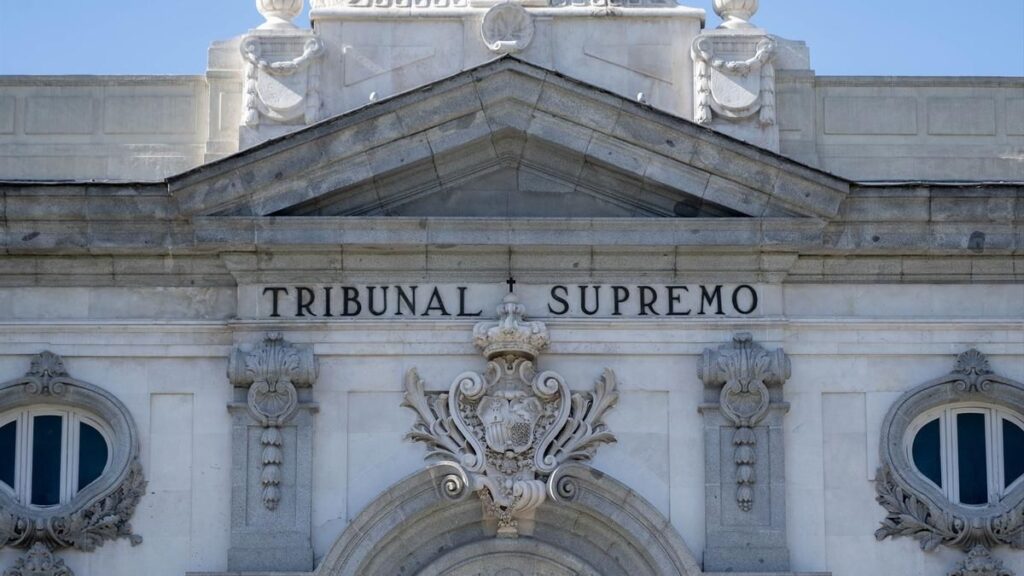
The Supreme Court has initiated the procedure for forced execution of the ruling that forces the Government to regulate the early retirement of National Police agents integrated into the General Social Security Regime, after verifying that the Administration has not complied with the judicial ruling issued in May 2025. This comes after the Interior promised to advance the early retirement of this body and the Civil Guard last November, something that seems not to have been fulfilled.
According to the judicial resolution, the Executive had to initiate the regulatory procedure to allow the application of reducing coefficients in the retirement age of these agents, in a similar way to what already happens with other police forces such as the Mossos d’Esquadra, the Ertzaintza, the Foral Police and the local police forces.
The high court’s decision comes after the legal deadlines have passed without the regulation required by the ruling having materialized. Given this situation, the Supreme Court has required the Government to identify the body responsible for executing the ruling and detail the actions carried out to comply with the judicial resolution.
Judicial ultimatum after months of inaction
The police union JUPOL, which promoted the appeal, defends that the activation of the execution mechanism shows the lack of progress on the part of the Executive. According to its general secretary, Aarón Rivero, the situation goes beyond a simple administrative delay.
“We are facing a very serious fact: the Supreme Court has had to intervene again because the Government has done absolutely nothing to comply with a final ruling. We are not talking about a recommendation, but rather a clear and direct legal obligation,” he noted.
The ruling, handed down on May 21, 2025 by the Contentious-Administrative Chamber of the Supreme Court, upheld the appeal presented by the union against the rejection due to administrative silence by the Council of Ministers of the request to apply those retirement reduction coefficients.
The high court considered that the lack of regulation violated the principle of equality, by leaving national police officers in a worse situation compared to other regional and local police forces that do have this early retirement mechanism.
Union demands and debate on the risk profession
From JUPOL they maintain that the recognition of early retirement responds to the characteristics of a profession marked by danger, hardship and physical exhaustion. In fact, the union asked that it be considered a risky profession, even calling on the EU to recognize it as such. JUPOL defends that the measure should not be interpreted as a privilege, but rather as labor protection in line with the nature of police work.
Rivero has stated that the sentence represents “a historic victory” for the national police officers who joined the force in 2011 and opens the way to extend this right to all agents under conditions similar to those of other police forces in Spain.
The union organization has also warned that it will continue to use all legal avenues to ensure that the regulation is materialized through a royal decree that allows early retirement to be effectively applied. Meanwhile, the execution procedure opened by the Supreme Court increases institutional pressure on the Government to comply with the judicial mandate.