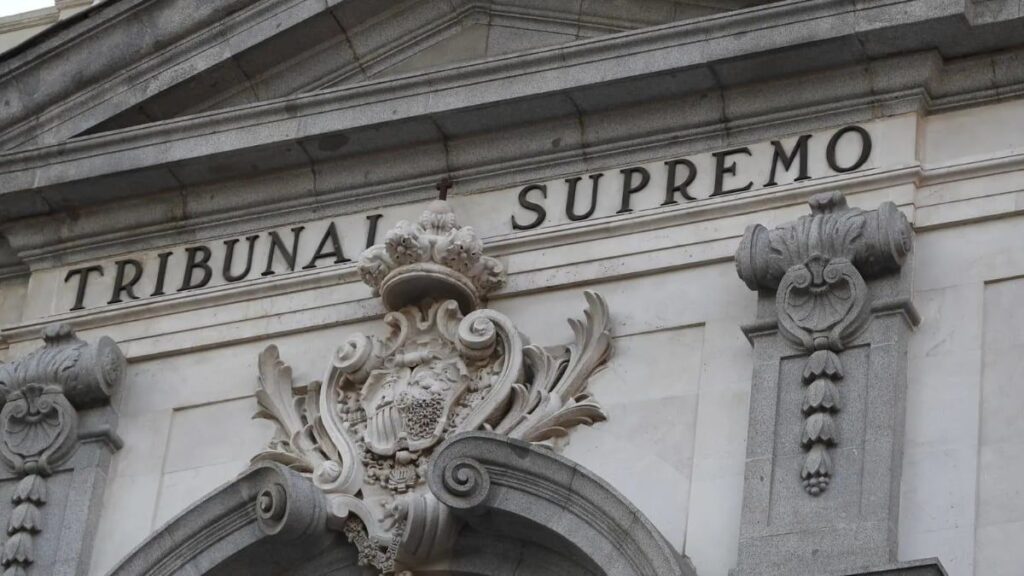
The Supreme Court establishes that the company must assume the difference in the retirement pension when the worker was classified as falsely self-employed. According to the ruling, although this lack of contributions does not prevent access to the pension, it can reduce its amount. Therefore, the company must respond for the part that is left out of what is paid by Social Security.
The ruling STS 1201/2026 (available at this link from the Judiciary) analyzes the case of a worker who was working as a freelancer for an audiovisual company between 1996 and 2013. Years later, a ruling declared that in reality their relationship was employment and Social Security discharged him ex officio for that period. In this way, when he requested a retirement pension, Social Security recognized him a pension calculated with a regulatory base of 1,360.83 euros, but the worker claimed because he considered that his real salary should be taken into account and not the contribution derived from his situation as a false self-employed person.
The court agreed with the worker and set the regulatory base at 2,324.93 euros, that is, he would earn 964.10 euros more. Later, the Superior Court of Justice of Catalonia confirmed this criterion, although it rejected that the company had to respond directly for the differences, understanding that there was a real controversy about the employment nature or not of the relationship and that there was no bad faith or will to breach.
Finally, Social Security appealed to the Supreme Court to clarify who should assume this pension difference.
The Supreme Court remembers that it is one thing to access a pension and another to charge less due to under-payment
The Supreme Court explains that the key is not whether the lack of contributions prevented access to retirement, but rather whether it reduced its amount. For this reason, it recovers the doctrine established in a previous ruling of July 22, 2020 and explains that in these cases there is proportional corporate responsibility.
The Court says it clearly by stating that “in the event of under-quotation, the company is, in effect, liable for the difference in the regulatory base of the retirement pension insofar as it exceeds the part recognized by the INSS.” That is the central idea of the ruling and what corrects the criteria followed by the Catalan court.
The Supreme Court also recalls that its jurisprudence had already been pointing out that, if the lack of contributions does not affect the waiting period but does cause “a lower amount of the benefit”, the principle of proportionality must be applied, with responsibility for the company according to the real impact of this non-compliance on the pension.
Regarding the specific case, the ruling adds a particularly relevant fragment to understand the legal reasoning. The High Court recognizes that the company paid the non-prescribed period once employment was declared and that this proves that there was no rebellious attitude. Even so, he emphasizes that “the lack of contributions was projected, not on the waiting period and the requirements for access to the benefit, but on the amount of the regulatory base which, without the contributions not made, was much lower and projected a pension lower than what the worker would have received.”
In this way, the Supreme Court upholds the appeal of the INSS, partially overturns the ruling of the TSJ of Catalonia and declares that the company is responsible “for the payment of the difference in the regulatory base of the retirement pension” in everything that exceeds the part recognized by Social Security.