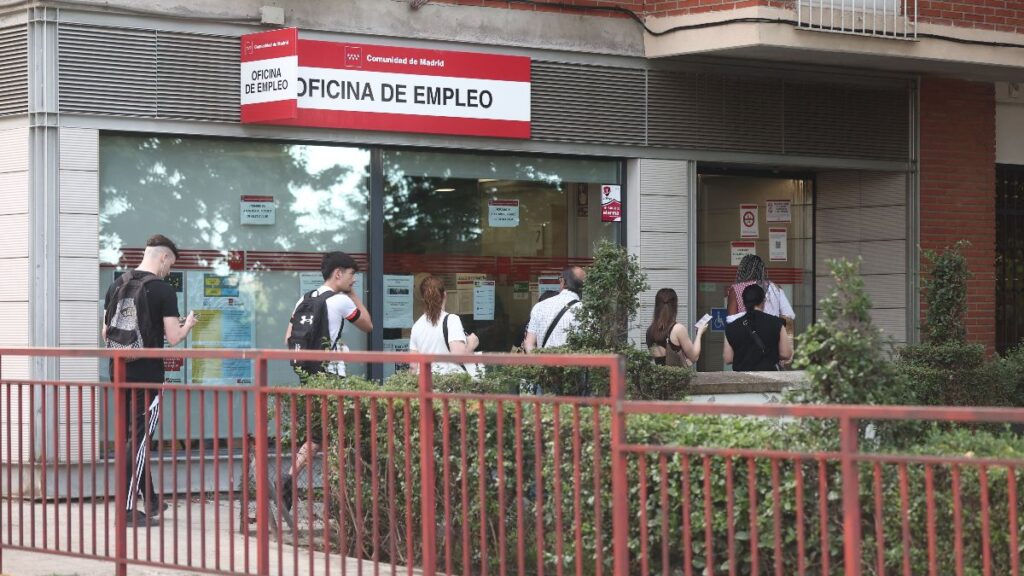
The subsidy for those over 52 years of age requires compliance, except for being of ordinary age, with all the requirements requested to access the retirement pension, including a specific deficiency or having contributed for at least two years within the last fifteen. The SEPE (State Public Employment Service) denies the benefit even if you have 20 or 30 years of contributions, although the Supreme Court deducts from those fifteen years the time in which the worker was unemployed due to dismissal or end of contract, as long as he did not fail to renew the job application.
This is stated in article 280 of the General Social Security Law (can be read in this BOE) where it states that those who “meet all the requirements, except age, to access any type of contributory retirement pension” and have paid unemployment contributions for at least six years, access the subsidy for unemployed people over 52 years of age.
These requirements are included in article 205 of the same law, which requires a minimum of 15 years of contributions “of which at least two must be included within the fifteen years immediately preceding the moment the right accrues.” The SEPE website explains that the “date of the corresponding causal event (exhaustion of the contributory benefit or legal unemployment status)”, not the date of the application.
Now, the exception that the courts point out and which is known as the “parenthesis doctrine” comes from the same article 205, which occurs when the worker no longer contributes, but continues in a situation “of registration or assimilated to that of registration, without obligation to contribute”, the fifteen years are counted backwards from the day on which he/she stopped contributing. Involuntary unemployment with high demand for employment is one of those situations, according to article 36 of the Membership Regulation (Royal Decree 84/1996), so that time is discounted and the fifteen years are considered from when contributions stopped.
The Supreme Court applied the parenthesis in April 2009 to a stop that had continued to be registered without interruption, to which the subsidy was confirmed. He denied it in March 2026 to a woman who had gone 42 months without a job application and to whom the SEPE had denied the subsidy with a Social Security report, because, for the Supreme Court, whoever fails to renew it for years loses the parenthesis.
The contributions of the subsidy itself are not useful to reach the two years
Articles 205 and 280 establish what is valid for that account:
- The years worked and the time of contributory unemployment are valid, in which the SEPE contributes for retirement (article 273).
- The contributions of the subsidy itself are not valid for those over 52 years of age: article 280 establishes that in no case do they serve to prove that minimum period, although they do increase the future pension.
- The proportional part of the extra pay does not count either, which article 205 leaves out.
In this way, a 54-year-old unemployed person with 22 contributions between 1988 and 2010 who spent 16 years without working or registering and signs a four-month contract in 2026 is left out and could not apply for the subsidy for those over 52 years of age, because in the previous fifteen years he added 120 days of the 730 (two years) that he needs.
Another thing would be if in 2010 he had become unemployed, he would have collected it until 2012 and since then he would not have stopped renewing the claim: with the doctrine of the Supreme Court, the fifteen years would be counted backwards from 2012 and what he had worked until 2010 would be enough.
The SEPE denies the subsidy for those over 52 years of age if, after exhausting unemployment benefits before completing them, they go 90 days in a row without renewing their job application, even if they have 35 years of contributions.
Starting in 2027, the SEPE will grant the subsidy for those over 52 years of age to workers with incomes of less than 964 euros gross per month, if the increase in the minimum wage is approved.
In Galicia, the Superior Court of Justice went further in January 2026 and recognized a mother who spent almost ten years without registering because she was taking care of her daughtersalthough that sentence allowed appeal and is not doctrine of the Supreme Court.