He oil price has exceeded $100 per barrel at the opening of international markets due to the increase in military tension in the Middle East and the Near East. Texas West Texas Intermediate (WTI), which is the reference in the United States, has risen 15%, reaching $104.61 per barrel. This rise occurs after oil had already increased by 36% during the past week, following the start of the bombings by the United States and Israel on Iran.
Brent, which is the reference oil in Europe, is also rising and is already selling above $102 per barrel. This rise is mainly due to two reasons. On the one hand, the United Arab Emirates, Kuwait and Iraq have decided to produce less oil, which reduces the supply available on the market. On the other hand, the transportation of oil through the Strait of Hormuz, one of the most important routes for its trade, has been greatly reduced.
Although the strait is not officially closed, many ships transporting oil from the countries of the Persian Gulf have stopped passing through there, according to the Bloomberg agency, in information collected by Europa Press. This has raised fears of supply problems and driven prices higher.
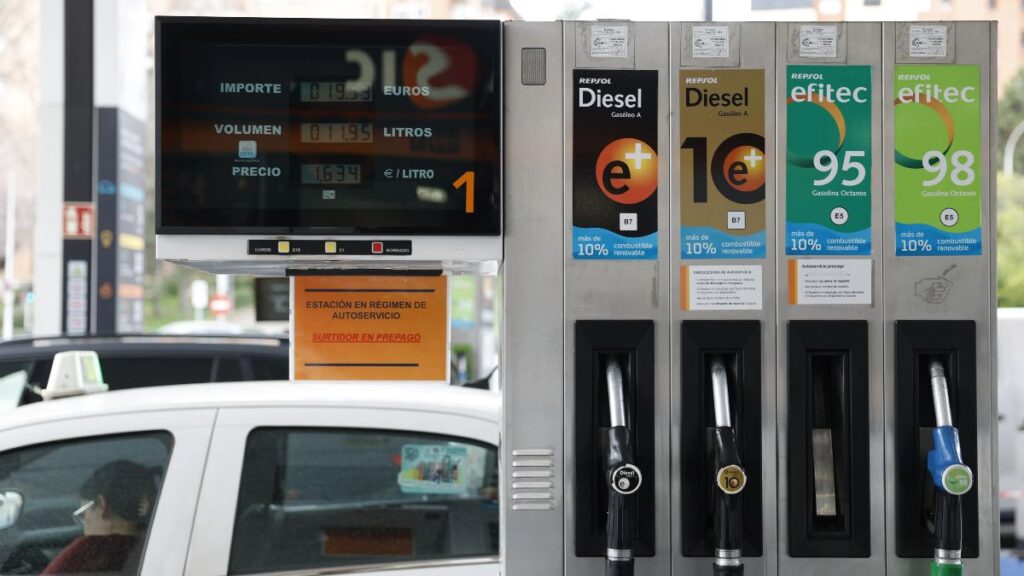
The war is affecting others too energy markets. The price of natural gas has risen sharply and the rise in oil prices is already beginning to be felt in the price of fuel for consumers in both the United States and Europe. In the United States, the price of gasoline has reached its highest level since August 2024.
The rise in oil increases economic and political tension
Rising energy prices may also have political consequences in the United States. President Donald Trump faces midterm elections in November, which could change the balance of power in Congress. Historically, the increase in the price of gasoline usually affects citizens’ votes.
Meanwhile, the conflict in the Middle East shows no signs of ending. In recent days there have been threats of attacks on oil facilities, increasing concern in the markets. In fact, as reported by TVE in its last hour, Israel has attacked several oil infrastructures in Tehran, the capital of Iran. The bombing has caused a large toxic cloud that has spread over the city.
For its part, Saudi Arabia has reported that it has destroyed several drones that were heading to the Shaibá oil field, one of the largest in the country and which produces close to a million barrels of oil a day. In addition, last week the country temporarily stopped production at the Ras Tanura refinery, the largest in Saudi Arabia. Given the risk in the area, the Saudi Government is studying exporting oil through Red Sea ports to avoid passing through the Strait of Hormuz.
The situation also worries large economies that depend on oil. China has ordered a halt to diesel and gasoline exports to ensure its own supply, while South Korea is considering capping fuel prices to protect consumers.
The evolution of the conflict and the security of the Gulf energy routes will be decisive for the behavior of the market in the coming weeks. The Strait of Hormuz usually channels about a fifth of the oil traded in the world, making any alteration in its traffic an immediate factor of tension for prices.