Creating a company in Europe could no longer be a complex and expensive process. And if there is something that all future entrepreneurs who are not yet entrepreneurs and are thinking about starting their own company fear, it is the long and tedious path from when they have the idea until their company is working. For this, the European Union has a plan and it is none other than to simplify this process as much as possible thanks to a new regulation that will allow you to establish a company in just 48 hours, completely online and for less than 100 euros. A new EU standard for companies across Europe that seeks to unify and improve business conditions in all member countries.
This is the proposal “EU Inc.” presented by the European Commission, a new legal framework that seeks to eliminate the current barriers of the single market and make it easier for startups to grow and operate in all member countries under the same rules. All in order to eliminate complications and interconnect the business fabric of the member countries without having to go through so many different laws and regulations.
Currently, European companies must face 27 different legislations and more than 60 legal forms, which complicates their expansion and increases costs. With this initiative, Brussels aims to end this fragmentation and accelerate the development of innovative companies throughout the EU.
Create a company in 48 hours, for less than 100 euros and without minimum capital
One of the most relevant changes in the proposal is the simplification of the business creation process.
With the new model:
- A company can be created in a maximum of 48 hours
- The cost will be less than 100 euros
- No minimum initial capital will be required
- The entire process will be completely online
In addition, companies will only have to submit their information once through a European system that will connect national registries. This will allow you to directly obtain the tax identification number and VAT without repeating procedures.
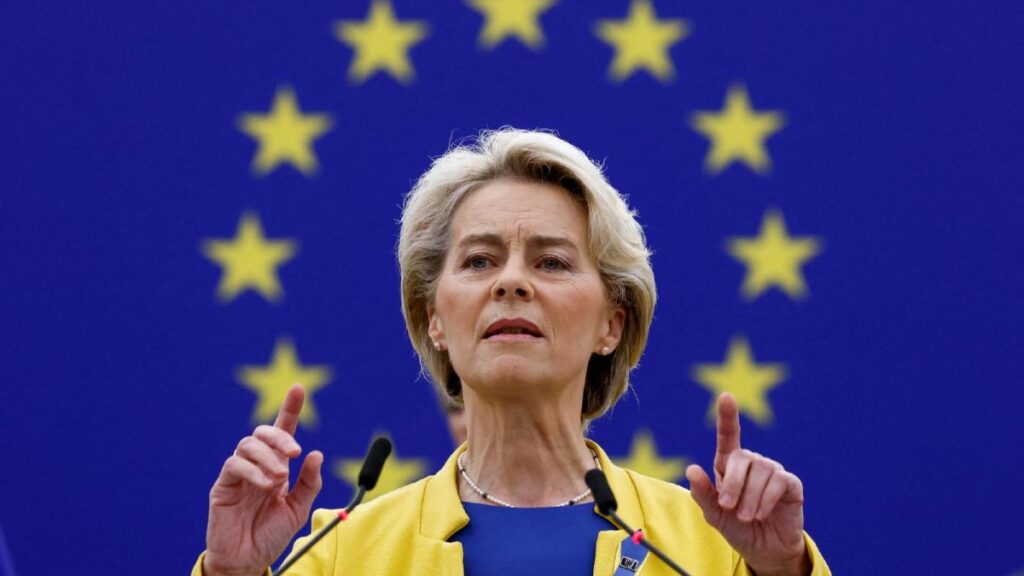
According to the President of the European Commission, Ursula von der Leyen, the objective is clear: “to dramatically facilitate the creation and growth of a business throughout Europe” and move towards a real single market before 2028.
Management, financing and closing of fully digital companies
The new framework not only simplifies the creation of companies, but also their entire life cycle, from their birth to their definitive closure.
Companies will be able to operate completely digitally, from daily management to financing or the transfer of shares, eliminating intermediaries and in-person procedures.
In addition, digital settlement procedures and simplified insolvency mechanisms are introduced. This will allow closing a company more quickly and economically, making it easier for entrepreneurs to try again with new innovative projects.
Fewer barriers to investing and attracting talent in Europe
The proposal also seeks to improve access to financing and make the European ecosystem more attractive for investors and skilled workers.
The measures include:
- Digitization of financing operations
- Simplification in the transfer of shares
- Possibility of listing on the stock market in certain cases
- Share plans for employees at European level
These initiatives aim to retain talent in Europe and prevent startups from seeking to grow outside the continent, a problem that Brussels considers key to economic competitiveness.
A common plan for all European companies
Another key point is that companies will be able to freely choose the EU country in which to establish themselves, but operate throughout the single market under the same rules.
This unified system aims to eliminate differences between national legislations and facilitate international expansion from the beginning.
Of course, the Commission also includes safeguards to prevent abuses. Labor and social standards will continue to depend on each country and will be applied normally, guaranteeing the protection of workers.
The objective is to promote startups throughout Europe
The proposal is part of the European Union’s strategy to improve its industrial and technological competitiveness against other powers such as the United States or China.
The objective is none other than to turn Europe into a more attractive environment to create companies, innovate and scale projects without the current administrative obstacles.
Now, the text must be negotiated by the European Parliament and the Member States, with the intention that it can be approved before the end of 2026.
If it goes ahead, this new model could completely transform the way of entrepreneurship in Europe, facilitating the creation of companies, reducing costs and accelerating the growth of startups across the continent.