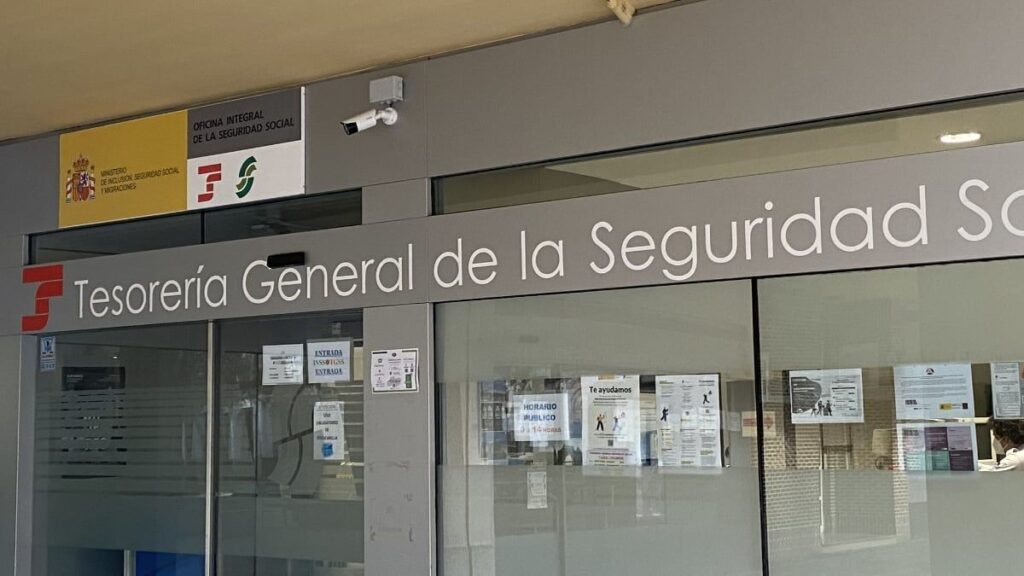
Social Security establishes that pensioners who collect a non-contributory retirement or disability pension must submit the annual income declaration before March 31 of this year. If you do not do so, Social Security will suspend the payment of the pension, but making it clear that this measure is temporary, so it can be collected again once the documentation is presented and it is demonstrated that the requirements continue to be met.
You must know that non-contributory pensions have a welfare nature, that is, they are aid that is granted to those people who have not contributed enough to be entitled to a contributory pension and who lack sufficient financial income.
Thus, to demonstrate this situation of vulnerability, Social Security, through the autonomous communities or IMSERSO, requires the presentation of an annual income declaration in order to verify that the beneficiary continues to comply with the income limit requirement.
The annual income declaration is mandatory
Articles 368 and 372 of the General Social Security Law explain that “the beneficiary must present, in the first quarter of each year, a declaration of the income of the respective economic unit of which he is a part, referring to the immediately preceding year.” Therefore, this rule affects both 2026 and future years.
This is because the amount of these pensions (which is not a fixed amount) and the right to receive them depend directly on personal income and the people with whom one lives. If the resource accumulation limit set annually is exceeded, the pension must be reduced or even extinguished. Therefore, Social Security needs this document to verify that the pensioner’s financial situation has not changed compared to the previous year.
This annual income declaration affects the types of non-contributory pensions, which are retirement pensions (people over 65 years of age who legally reside in Spain and are not entitled to a contributory pension) and disability pensions (people between 18 and 65 years of age with a degree of disability equal to or greater than 65%).
What happens if I don’t file the return?
In the case of not submitting the income statement before the end of the first quarter (March 31), the pension may be suspended. Now, you must know that the process does not imply an automatic and definitive loss of the right, but it is firm. That is, if the obligation to submit the declaration on time is not met, the managing body will proceed, as a precautionary measure, to suspend the payment of the pension.
It is very important to understand that this suspension does not mean that you lose aid for life, but rather that payment is interrupted until the situation is regularized. If the pensioner subsequently presents the documentation and demonstrates that he continues to meet the requirements for lack of income, the payment will be reactivated, and the arrears may be requested with a maximum retroactivity of 90 calendar days (three months).
That is, giving a practical example: if our pension is suspended on April 1 and we manage to reactivate it on October 1, we will not collect all the months in arrears, but only those corresponding to the last three months (July, August and September).
Update the amount
On the other hand, you should know that the government carried out an increase in pensions, benefiting non-contributory pensions, which is 2.7% plus an additional increase to bring it closer to the poverty threshold (regulated under Royal Decree 2/2023). For this reason, to regularize the amounts, it is necessary to submit the annual income tax return before March 31.
With this document and the information that Social Security and the Tax Agency already have, the managing body will review it and set the final amount to be received during this year. In this sense, any change in marital status, residence, family coexistence or economic resources must be communicated within a maximum period of 30 days; Otherwise, if after reviewing the data it is detected that an overcharge has been made, the pensioner will be obliged to return the amounts received unduly or, directly, will lose the right to the pension if he has stopped meeting the required requirements.