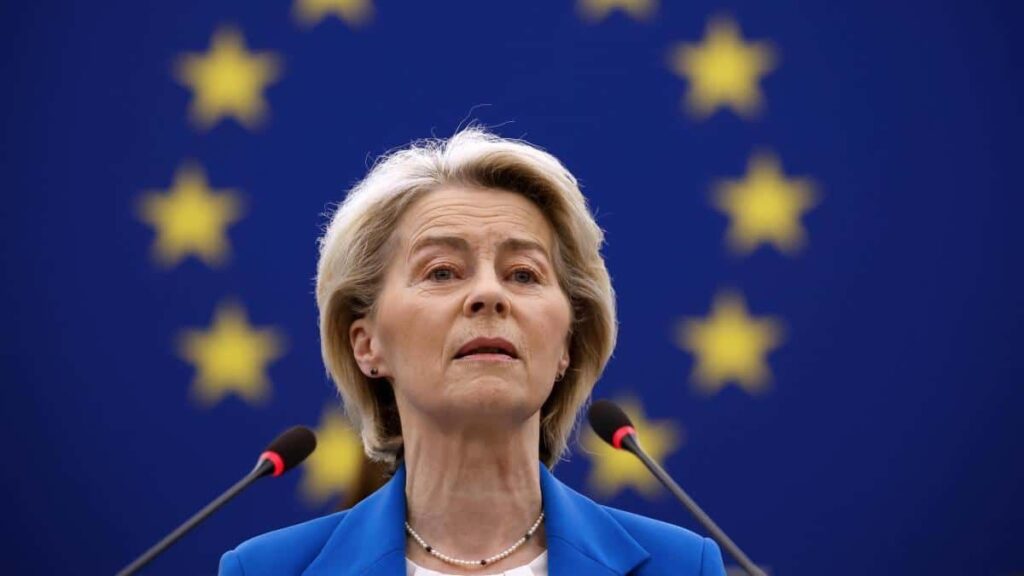
A group of 23 independent European experts has asked the President of the European Commission, Ursula von der Leyen, to correct “immediately” what they consider to be “false and misleading” statements attributed to Health Commissioner Olivér Várhelyi about products such as vaping, heated tobacco or nicotine pouches. The letter, dated February 25, 2026, warns that the issue goes beyond the scientific debate and has an institutional and public health dimension, due to its possible impact on regulation and the decisions of smokers.
All of this comes as a result of an interview with Euractiv, where Várhelyi was asked if he believes that vaping, heated tobacco or nicotine pouches are as harmful as smoking, answering “Yes, absolutely, 100%” and adding that they were “just as harmful.” For the experts who signed the letter, it was not an isolated comment, but another example of a message that the commissioner has repeated.
Experts call it misinformation
The letter also cites a previous intervention before the ENVI committee of the European Parliament, in which the commissioner went so far as to state that vaping had created risks “comparable or even greater” than smoking and mentioned the so-called “popcorn lungs.” In this sense, experts explain that the risks are not comparable and also add that there are no known cases of bronchiolitis obliterans caused by vaping.
The experts denounce in the letter that a difference is not made that is key and that they have erased. Just because a product is not safe does not mean that it is equally harmful. The main difference is in combustion, because almost all of the harm from tobacco comes from the smoke and the byproducts it generates. They explain that cigarette smoke contains around 7,000 identifiable chemicals and that at least 158 are toxic or carcinogenic. On the other hand, when exposure markers are analyzed, users of non-combustion alternatives have much lower levels than smokers.
Regarding “popcorn lungs”, the letter launches a dart at misinformation and explains that the compound historically associated with this problem in other contexts, diacetyl, is prohibited in vapes legally marketed in the EU under current regulation, according to the signatories. In this sense, the products sold in Spain through tobacco shops and official channels pass all health controls, while those sold on platforms such as Amazon, AliExpress, Temu and similar platforms do not.
“Smoking causes around 700,000 deaths a year,” experts say. That is why they warn that, if the idea that “everything is equal” is conveyed, the incentive for a smoker to replace cigarettes with alternatives with less exposure to toxins is diluted. In the European Union, around 90 million people still smoke and more than 700,000 premature deaths are recorded each year due to diseases related to smoking. But beyond taxation, this concerns the health of smokers, since the objective is that, if they have to consume nicotine, they do so in a safer and less harmful way, with the aim of quitting smoking.
Experts warn that if all nicotine products are treated as equal, the EU may end up approving taxes and regulations as if the risk were the same in all cases. That, they say, would influence key decisions that are already on the table, such as the review of the Tobacco Taxation Directive, linked to the COM(2025) 580 final proposal of July 16, 2025, and the future review of the Tobacco Products Directive, scheduled for 2026.
The letter ends with a warning about the Commission’s credibility. The signatories ask that you publicly correct those claims and improve internal controls so that health messages are evidence-based. At stake, they say, is avoiding damage and maintaining confidence that Europe legislates rigorously.