The price of gasoline has chained weeks of increases and it has been noticed both in the pockets of consumers and in the day-to-day life of gas stations. Not only has it impacted customers, but it has also steadily increased its own costs. To alleviate the impact, The Government has implemented measures such as a reduction in VAT on fuel to 10% or a discount of 20 cents per liter for farmers, ranchers, fishermen and transporters. In this way, after its application it has been possible to see a slight drop in fuel price in the last few days.
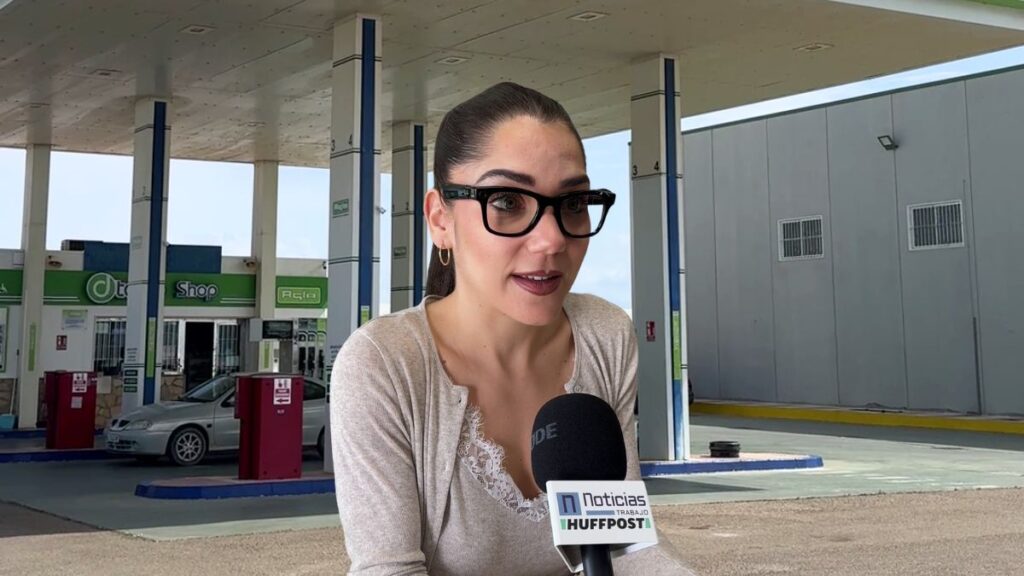
On the other side, there is María Yélamos, self-employed and manager of the Cebrián gas stations, in Roquetas de Mar (Almería), who in an interview granted exclusively to NewsWork describes the direct impact of this price increase on the day-to-day business. “Here it has also been crazy,” he says, referring to the increase in costs and changes in demand behavior.
Weekly increases in supply force prices to be adjusted upwards
María, whose gas station is located in an area with an agricultural profile, details how the increase in costs has been accompanied by changes in the behavior of her customers, mostly farmers. As he explains, the first large price increase translated into an immediate increase in supply, to the point that “in the first increase there was a difference in the supply truck of almost 7,000 euros.”
This direct increase in the purchase cost is what forces the stations to transfer the increases to the final price. “Every week we have to change prices,” he points out, since the fuel they purchase becomes more and more expensive. “We try not to reach 10 cents (increase), although from one week to the next we do raise it 7 or 8 cents,” he indicates. Even so, he assures that they try to stay below two euros per liter.
The economic impact is still quite notable. New increases have been added to the 7,000 euros more that the first increase already represented. “Now it is 2,000 or 3,000 euros more per truck,” he explains, in reference to the 32,000 liters they receive in each order. “In the end it is noticeable and has a serious impact,” he says.
The first price increase caused a wave of drivers who came to refuel. “It was all the trucks from the surrounding farms coming to fill their trucks because they said: ‘I need to keep working.’ It was incredible what was experienced here,” he says. However, that initial behavior has been losing strength and “right now things are more relaxed because people move less,” he adds, reflecting a change in habits marked by uncertainty.
Doubts about the impact of the VAT reduction and the need to reinvent the business
In parallel, the sector is cautiously looking at the VAT reduction on fuel. The measure, which had not yet been fully implemented at the time of the interview, raises doubts. “We don’t really know what impact it will have or what benefit it will generate for us, in about three weeks we will see,” María admits. Although he recognizes that in the short term “it may seem like a good solution,” he warns that “the most affected will always be us and there will always be others who profit.”
Outside of fuel, many gas stations are looking for new ways to stay in business. “Before, the store was a complement to the suppliers and now it is the suppliers that complement the store,” he explains. In their case, betting on different and local products has become a way to attract customers.
As a whole, the sector is going through a time of change marked by rising costs and uncertainty. “We are living in a moment in which we have to reinvent ourselves,” María summarizes, reflecting the situation of many small and medium-sized companies.