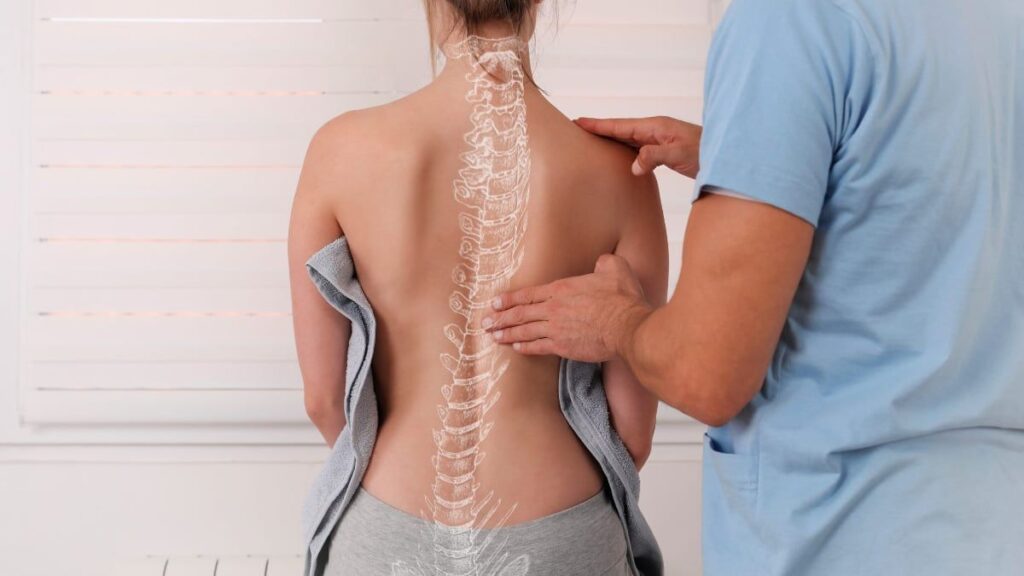


The Superior Court of Justice of Castilla y León has recognized the right of a worker to receive absolute permanent disability, after Social Security denied it despite suffering from what is known as “failed back syndrome.” Social Security considered that the worker did not present a sufficient degree of decrease in her work capacity, but the Court has confirmed that her condition is incompatible with any paid activity. In this way, you will have the right to collect a monthly lifetime pension of 100% of your regulatory base, established at 2,596.53 euros.
It all starts when the worker had to undergo spinal fusion surgery in 2021 due to spinal instability. Despite the intervention, it did not improve and after exhausting the maximum duration of temporary disability, he requested recognition of permanent disability in November 2022 because the pain does not subside, but it was denied. Social Security explained in the resolution letter that “the injuries did not reach a sufficient degree” to constitute a pension.
You may be interested

Table with the increase in retirement, widowhood and permanent disability pensions based on the payroll for 2026: this is how it looks according to your salary

Justice agrees with Social Security and denies permanent disability to a chemical sector worker with muscle pain and “probable fibromyalgia”
Given the refusal of the administration, the affected person resorted to judicial proceedings where, in the first instance, the Social Court number 1 of Segovia agreed with her, that is, that she had the right to disability. Although there was an initial correction in the ruling, the final ruling declared the woman to be in a situation of Absolute Permanent Disability. Social Security and the Treasury, in disagreement with paying the maximum pensionfiled an appeal before the Superior Court of Justice, but it once again ruled in favor of the worker.
Chronic pain that prevents standing or sitting
The Social Security appeal attempted to demonstrate that the worker was not barred from any profession. Despite this, the Court rejected these arguments based on the forcefulness of the medical report, which details a “failed back syndrome” with “definite chronic low back pain.” The magistrates emphasize that this pathology has no other treatment alternative and causes obvious limitations.
The sentence is very clear when describing the daily reality of the affected person. The court highlights that the woman suffers pain when “remaining standing, sitting or in semi-ventral flexion positions”, in addition to suffering a loss of strength in her right leg. These consequences make it impossible to submit to the discipline of a work schedule or maintain the pace required by any company.
Inability to carry out any job
The key to this ruling is that the court grants Absolute Permanent Disability, a degree higher than that usually discussed in these cases. For the magistrates, the plaintiff’s ailments prevent her from carrying out “any type of tasks, no matter how light or sedentary they may be.” The Chamber argues that the labor market requires “minimum requirements of capacity, performance, dedication and efficiency” that this worker, because she cannot sit or stand without pain, cannot offer.
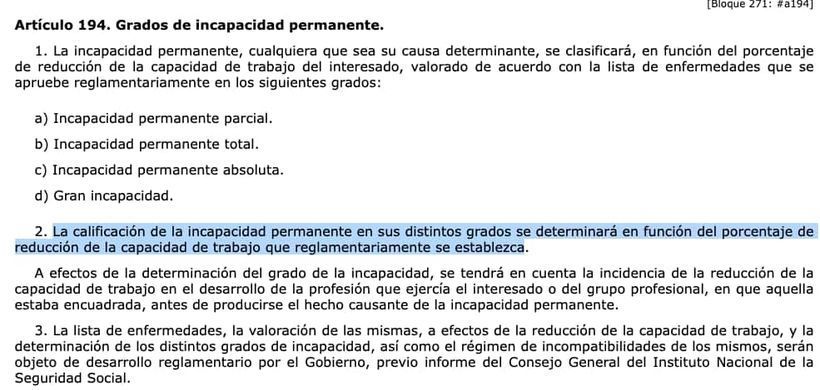
Thus and for all the above, the court concludes that Zaira’s chronic ailments prevent her from carrying out any work activity with the “capacity, performance, dedication and effectiveness” required in the professional field, which fully justifies the recognition of absolute permanent disability.