

Of all the challenges that Spain currently faces, one of those that worries citizens the most is housing, since prices do not stop rising while supply is scarce. The problem of access to housing in Spain is such that many experts and economists are coming forward with continuous reflections on the matter, such as the economist Gonzalo Bernardos.
And the housing problem has more edges than it seems or what they show us on television, since even those who achieved the long-awaited goal of buying a house and are owners could have problems in the future. This is because many old properties need urgent renovations to preserve their value and guarantee energy efficiency, which will mean a significant extra expense for thousands of owners if they do not want to see part of their investment lost.
You may be interested

María Cristina Clemente, notary, on the distribution of the house after the divorce: “The option that wins by a landslide is by regulatory agreement because this way the payment of the tax on documented legal acts is avoided”

A renovation expert makes it clear: “changing the electrical installation at home cost 2,000 euros and now they charge you 6,000 euros”
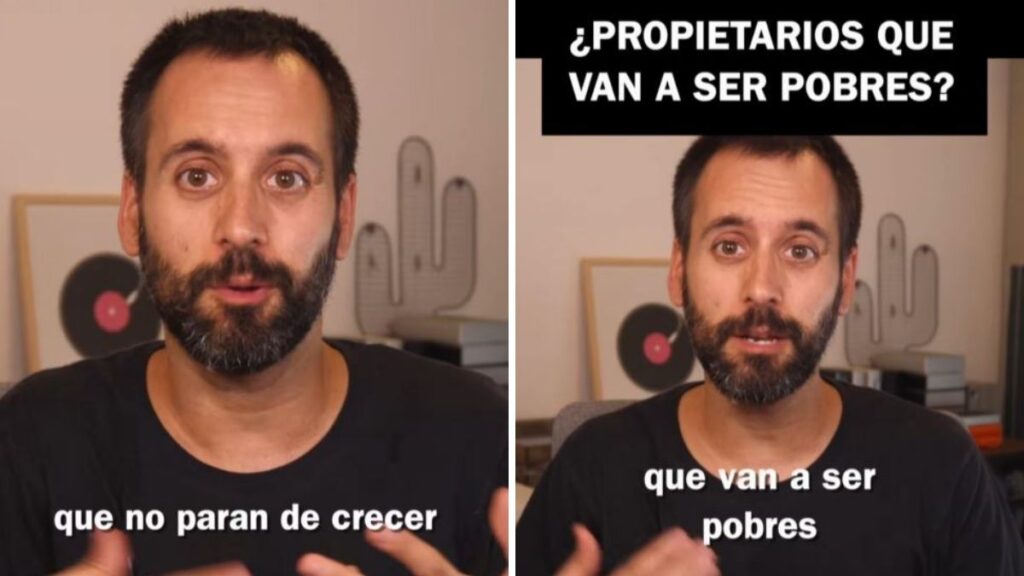
The architect Jordi Martí wanted to speak about this topic, warning about the lack of rehabilitation in Spanish buildings and the economic consequences that this will entail sooner rather than later. “In Spain there are many owners who are going to be poor because the time never comes, and I emphasize, there never comes to do a major rehabilitation of the building,” says Martí in a video broadcast on social networks. In his opinion, the difficulty in reaching agreements in neighborhood communities and the tendency to postpone this type of intervention are leading many properties to a state of deterioration that is difficult to reverse.
“There are many buildings that were built more than 50 years ago that are going to become a burden for families if they don’t do something now,” warns the architect, who emphasizes that it is not just about spending money, but about acting with foresight. “When I talked about investing, I was not referring to investing money but time and desire,” insists Martí, highlighting the importance of owners being actively involved in the management and maintenance of their properties.
Aid to rehabilitate buildings and homes
The specialist highlights the opportunities provided by European aid aimed at modernizing buildings and improving their energy efficiency. In particular, it mentions the residential rehabilitation program included in the Recovery, Transformation and Resilience Plan (PRTR), financed with NextGenerationEU funds. This plan, with a budget of 3,420 million euros, covers between 40% and 80% of the total cost of the works, and can reach 100% in cases of special economic vulnerability.
To access this aid, projects must guarantee a minimum reduction of 30% in energy consumption. Among the most frequent actions are the improvement of thermal insulation on facades and roofs, the replacement of windows, the renewal of heating or air conditioning systems and the updating of common elements in order to optimize energy consumption. Conservation and accessibility interventions are also included, as long as they contribute to greater efficiency.
Martí warns that many homeowners are watching their homes lose value while maintenance costs grow. “You try to be a homeowner to ensure a better future, but this can go very wrong if very high losses continue to appear, electricity and gas costs rise, and in the end the home loses value,” he explains. According to him, the key to preserving heritage lies in the ability to anticipate and act in time.
The autonomous communities are in charge of managing this aid through the Rehabilitation Offices, where owners can receive advice and technical support. In addition, these offices put citizens in contact with professionals or rehabilitation agents and offer a simulator that allows them to calculate energy consumption and the approximate amount of the subsidy. It should be noted that the aid is exempt from taxation and is not considered capital gain in personal income tax. Likewise, the non-subsidized part can benefit from tax deductions of up to 60% in the income tax return.