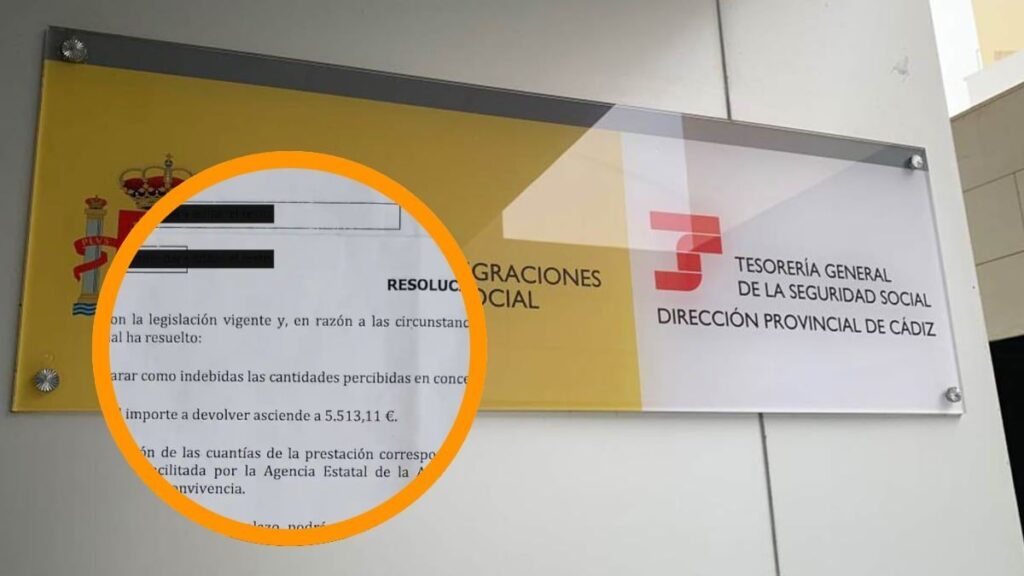
A beneficiary of the Minimum Living Income must return 7,850.25 euros, in addition to losing the benefit, for not having correctly declared to Social Security how many people actually made up their cohabitation unit. The Superior Court of Justice of Madrid agrees with Social Security, which, through the municipal registry, verified that the members of the cohabitation unit were more than those that appeared in the application, so it did not meet the requirements to collect the benefit.
The amount of the Minimum Living Income is not fixed, but rather works as a complement to the income that the applicant person or family already has. That is, it is the difference between the amount assigned and the income of the applicant or cohabitation unit. In Virgilio’s case, Social Security approved the benefit, declaring a cohabitation unit formed by him and his daughter.
After two years of collecting the benefit, Social Security cross-checked the application data with the municipal registry and saw that they did not add up, since other people registered at the applicant’s home included him and his daughter. For this reason, Social Security terminated the Minimum Vital Income upon understanding that it did not meet the requirements and requested the return of the amounts improperly collected.
Thus, at first they claimed a total of 8,438.25 euros, but later the Administration decided to deduct the amount that would have corresponded to him for the family allowance, so he finally had to return 7,850.25 euros. Not being satisfied with this decision, he decided to go to court.
Obligation to report the cohabitation unit
Upon reaching the courts, both the Social Court and later the Superior Court of Justice of Madrid dismissed his appeal. The TSJ explains that he did not meet the requirements, since Virgilio said that his unit was made up of him and his daughter, but the registry showed that there were more people living together at that address, which showed a “different coexistence unit” than the one declared.
Although this man tried to modify this fact, the Chamber remembers that article 36.1 of Royal Decree-Law 20/2020 (which regulates the Minimum Vital Income and can be consulted in this BOE) establishes that people who collect the IMV are obliged to report any variation in the cohabitation unit, something that this person did not do and therefore the termination of the benefit.
That is why the ruling STSJ M 706/2025 (can be consulted in this Judicial Branch Liaison) estimates the return of 7,850.25 euros in undue charges, in addition to the termination of the benefit.
In this sentence, the key is in two things. The first, that to collect the IMV it is mandatory to correctly communicate who is part of the cohabitation unit, since both the right to the benefit and its amount depend on it. The second is that, while suspension means losing the benefit temporarily until the problem that prevents its collection is resolved, termination means that it is lost for not complying with the requirements requested by Social Security.