Housing continues to be the great challenge for Spain in 2026, since far from improving the situation, it continues to worsen due to the lack of supply since the price of real estate is already at historic highs. And if we compare it with the rest of the European Union, we see how the price has increased in Spain almost three times more than in Europe, specifically 12.8%, in a country where salaries are stagnating more than ever despite the latest increase in the SMI.
If we look at young people and families with less income, the situation becomes even more complicated, seeing how a large part of the people who belong to these groups have to dedicate between 40% and 50% of their salary to rent (the price of rent has also increased without stopping). According to experts, the monthly mortgage payment or rent plus typical expenses (bills, internet, community…) should not exceed 30% or 35% of income, but this is not the case and in fact it is far from it.
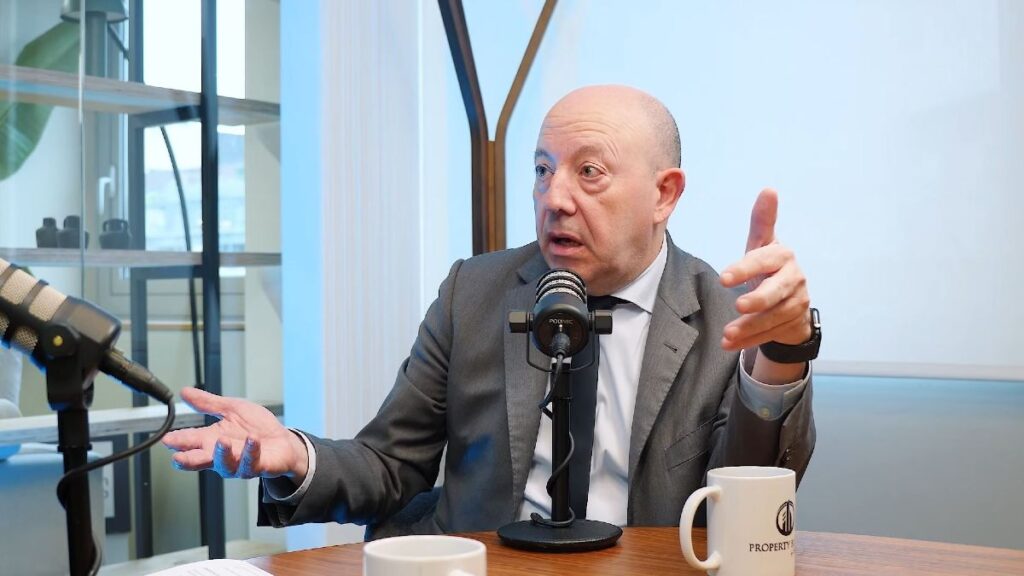
This is what Gonzalo Bernardos himself, an economic expert, denounces, who is clear about which group of people should actually be considered vulnerable: “Vulnerable is someone who earns 1,613 euros and dedicates more than 30% of their salary to paying rent and supplies,” declared Gonzalo Bernardos in his speech on the ‘Property Buyers’ channel. What alternatives exist in the face of the growing housing alert? Beyond increasing supply, the economist defends the position of the owners and questions the current housing law.
Prices continue to rise non-stop
Access to housing has become one of the main concerns in Spain, both for citizens and specialists. Nearly 1 in 4 households have had difficulties accessing or maintaining housing, that is, around 25% of the population since the beginning of the housing crisis. The evolution of the data is clear: prices have grown strongly over the last decade and in 2026 they will reach historical highs.
In large cities, renting a studio of about 30 square meters can cost up to 1,000 euros per month. Sharing a flat is not cheap either: a room ranges between 400 and 700 euros in cities like Madrid, Barcelona or Valencia, where demand continues to increase.
In the purchasing market, the situation is similar. The average price per square meter is around 2,200 euros for second-hand housing and around 3,300 euros for new construction. This implies that a used apartment of 95 square meters is around 209,000 euros.
With these levels, only those with greater economic capacity can access the purchase, especially if one takes into account that the minimum wage in Spain is 1,221 gross euros per month.
Although it is still unclear whether prices will stabilize after 2027, experts describe the scenario as “bleak.” Gonzalo Bernardos warns of a “spectacular rise” that, according to him, could be worsened by the current Housing Law.
“The owner is a person who, when he feels mistreated, runs away,” he points out when criticizing the current measures. The professor from the University of Barcelona believes that this situation causes many owners to withdraw their properties from the market, further reducing the available supply.
Regardless of the causes of the deficit, specialists agree that about 700,000 additional homes would be necessary to balance the market.
Young people are increasingly further away from buying a house
The lack of access to housing especially affects the youngest. According to Gonzalo Bernardos, “the only way for a young person to be a homeowner is for their parents to buy their home.” Furthermore, he regrets that “if before there was little chance of finding an apartment, now it is an almost impossible mission.”
In this context, many young people are forced to share an apartment, live in rent or stay in their parents’ home, since saving is increasingly complicated. Without family support, access to purchases can last for years.
The average age of emancipation in Spain is now over 30 years old, well above other European countries. In Finland it is 21.5 years and in Sweden it is 21.8 years, which reflects a difference of close to a decade compared to Spain.
The current outlook, especially for the new generations, is worrying and does not seem to be improving in the short term. For this reason, economics and investment experts demand urgent measures, although they warn that the solution will require time and resources.