The Spanish countryside faces one of its greatest challenges in decades: the lack of generational change. Fewer and fewer young people decide to dedicate themselves to agriculture and livestock, which aggravates the aging of a strategic sector for the economy and food supply. Added to this talent shortage are the difficulties that many professionals in the field denounce, such as insufficient aid, excess bureaucracy and unfair price competition.
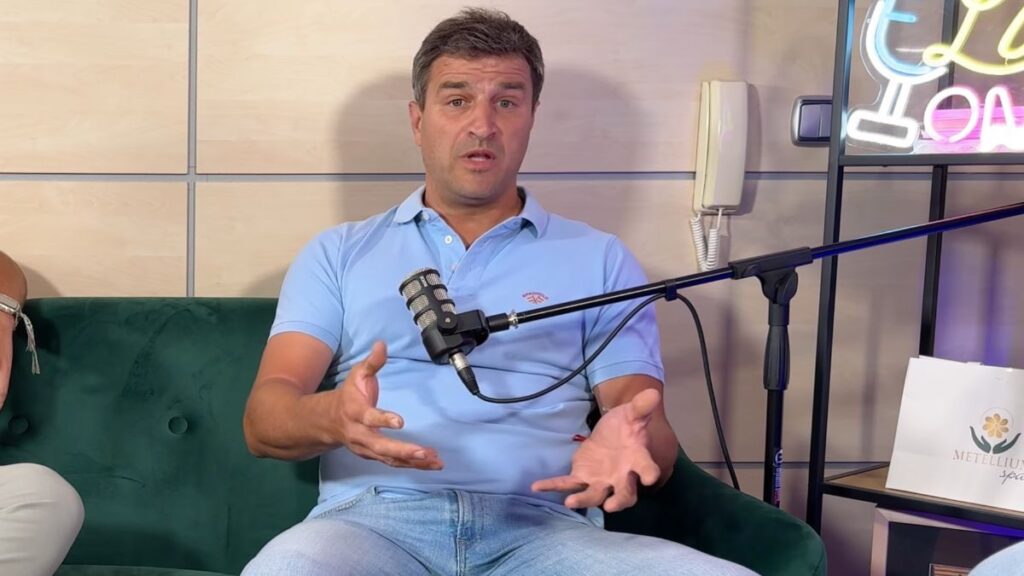
The Extremaduran farmer Francisco Rodríguez, better known as Chamorro, spoke about all this in the ‘Zona Regable’ podcast on CGU Canal Orellana. In this, first of all, he explained that, currently, “to be profitable” it is “necessary” to have significantly more hectares than before: “In the past, with just a few hectares, with 15 or 10, a house could be fed. A farmer planted 5 hectares of fruit trees and could feed his house. Today it is unthinkable.”
This indicates one of the reasons why “the small and medium-sized farmer is disappearing”, also because the prices that the farmer receives are stagnant or sunk due to competition from third countries, using rice from Myanmar as an example, making profitability minimal.
Added to this is also the scarcity of aid, stating that the CAP has fallen: “With higher production costs and more expensive living, they increasingly reduce that aid. It is unsustainable. Many people only have that aid left, which in reality was removed from the price so that people could eat more cheaply.” This, in turn, generates another problem and that is that, as he explains, when the time comes to distribute an inheritance, the brother who wants to keep the farm does not have the money to pay his share to the other brothers.
Since there is no financial availability or aid to facilitate this process, the land ends up being sold or leased to large investment funds, breaking the family chain.
The aid system, another problem
Rodríguez also identifies the aid system in Spain as a problem, which he considers defective. In this sense, he explains that, being the difference between unemployment or a subsidy compared to a minimum wage, it is not worth it for many people to work: “We find a lot of thousands of people enrolled in the INEM (the SEPE) and you are not able to find people to work.”
The reason, he insists, is that “they throw numbers”: “They pay me 500 euros in aid, 200 for diesel, I don’t have to work nor do I get bitten by mosquitoes or anything, in total, I earn 100 euros less than coming to work. And it is the sad reality, that they don’t come to work,” he denounces. Despite this, he clarifies that “there are good workers,” but that the majority are “placed in large places.”
As for why higher wages are not paid in the countryside, Chamorro is also clear: he cannot increase them precisely due to a combination of lack of profitability, unfair competition from third countries and the price structure of the food chain.
He explains that this combination is the “whiting that bites its tail”, a vicious circle. In his opinion, increasing salaries does not necessarily solve the problem of the worker’s purchasing power if the cost of living also rises. If a worker went from earning 1,000 to 2,000 euros, but the price of basic foods (such as fruit) remains unaffordable, the worker will continue to opt for cheap processed products instead of fresh and healthy products.
For this reason, he insists that it is not about not wanting to pay more, but rather that money “only generates wealth for everyone” if the system is balanced, and currently production costs suffocate the farmer.
Cultural change and social networks
Lastly, to respond to the problem of generational change, this farmer mentions the cultural change that exists among young people and the emergence of all social networks, which have established new forms of remuneration.
“As the years go by, the youth with Tiktok and these things, all the people think that they are going to be eating from social networks like YouTubers, they do not want to work, they do not want to be professionals in anything. Not in the field, in any sector there is a need for labor. And as for the older ones, I mean 50 years old and up, those people are retiring, there are not even people here to give you diesel,” he stated emphatically in the aforementioned podcast.
Thus, for Rodríguez, the shortage of talent is not due to a single reason, but rather responds to a “perfect storm” that makes young people not see the countryside as a viable life option.