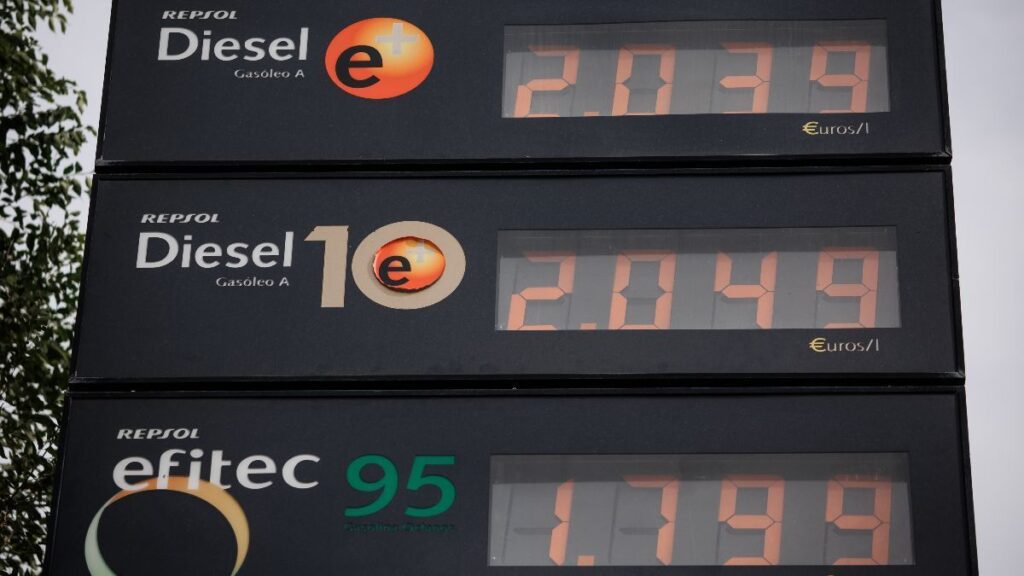
The recent VAT reduction applied to gasoline, approved by the Government as measure to alleviate the impact of rising energy priceshas had an uneven effect on the market. While the price of oil and the cost of fuel continues to increase since the beginning of March, consumer associations question the effectiveness of fiscal measures if they are not accompanied by control mechanisms over final prices.
FACUA-Consumers in Action reported this Monday that one in four gas stations in Spain took advantage of the VAT reduction to apply new price increases, partially or even completely neutralizing the effect of the tax reduction. According to data collected by the organization through its price monitoring platform, the phenomenon occurred on the same day that the tax reduction came into effect, that is, on sunday.
The VAT reduction is not reflected homogeneously in the market
FACUA’s analysis reveals that, of the 9,255 service stations that communicated their prices to the Ministry for the Ecological Transition, 2,337 (25.3%) did not fully transfer the VAT reduction from 21% to 10% on diesel. “In certain cases they did not apply any reduction in the price and even raised it,” the association says in a statement.
The organization details that 175 gas stations kept their prices unchanged, which represents, according to their interpretation, a “hidden increase” that completely absorbed the tax reduction. Another 54 stations set prices higher than those of the day before the measure.
In average terms, the price of diesel stood at 1.802 euros per liter on Sunday, after a drop of 16.1 cents compared to the previous day. However, FACUA maintains that, if the tax reduction had been fully transferred, the decrease would have reached 17.8 cents, placing the average price at 1.785 euros.
The situation is similar in the case of gasoline. According to the association, 1,837 gas stations applied increases coinciding with the VAT reduction, of which 177 maintained prices and 40 increased them directly.
FACUA places these data in a previous upward trend, since between March 2 and 22, diesel has risen an average of 34 cents per liter, compared to 11 cents for gasoline. The organization warns that, with this evolution and without controls, tax cuts can lose effect in a matter of days.
Criticisms of fiscal policy
The association questions the Executive’s strategy, based on tax cuts without direct intervention in prices. “Lowering taxes without establishing price ceilings is just the measure that speculators have been demanding,” maintains FACUA, which accuses the Government of allowing “companies to continue inflating their profits.”
The organization also questions the scope of the margin supervision mechanism approved by the Council of Ministers at the proposal of Sumar. In his opinion, “it will not have any downward impact on prices, since no limit has been set on these margins.”
Furthermore, FACUA regrets the lack of dialogue with the Executive in this area. “Neither Consumption nor Economy nor any other ministry has contacted FACUA to find out their demands regarding the escalation of prices,” he denounces.
As an alternative, the association defends the setting of maximum prices as a more effective tool to contain increases. According to a survey carried out in recent days, almost seven out of ten consumers support this measure, compared to 12% who consider tax reductions more useful.
In short, FACUA anticipates that the next increases in fuel prices will “completely absorb” the approved reductions, which calls into question the ability of current measures to sustainably alleviate energy costs for consumers.