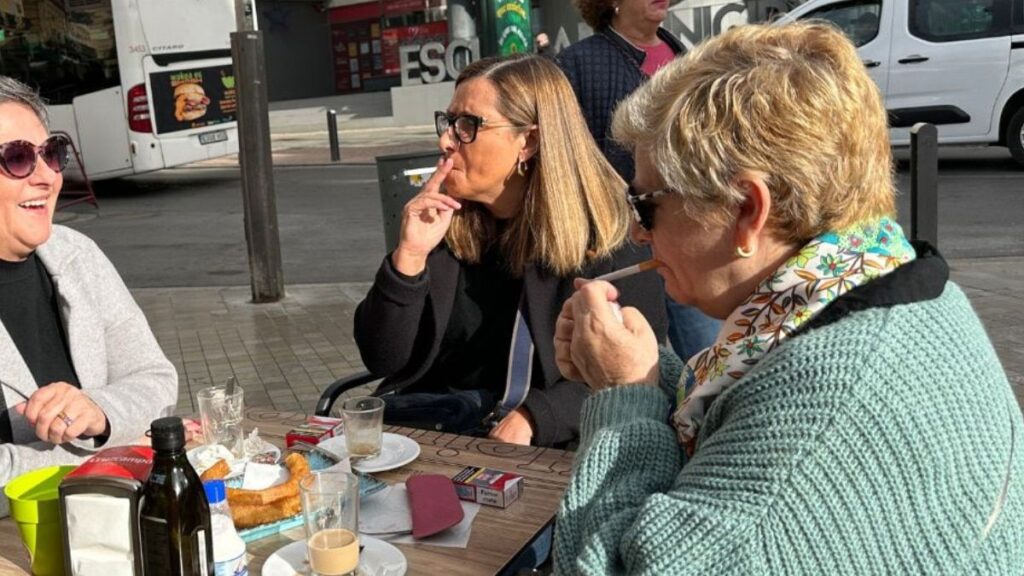
The Council of Ministers has approved the draft that reforms Law 28/2005 to expand smokeless spaces and equate the new devices (vapers, nicotine sachets, herbal and heating products) to conventional tobacco. The initiative has lit alarms in two of the main issuing markets, the United Kingdom and Germany, where traveler messages proliferate that they will choose other destinations if the restriction reaches the popular Spanish terraces. The text must now overcome the parliamentary process and can be amended.
The proposal details a battery of changes such as the prohibition of smoking and vaping on bars and restaurant terraces; enclosures of shows and concerts; sports facilities; Transport stations and marques; and exteriors of health, educational and university centers, among others. It also includes the prohibition not only of the sale but also of the consumption by minors, the veto to the single -use electronic cigarettes, the extension of the advertising restrictions and an updated sanctioning regime with a transitory period of twelve months. “We all have the right to breathe clean air and live more and better,” said Minister Mónica García.
You may be interested
The price of tobacco changes from this Saturday and affects dozens of brands: its new cost

Europe gives green light to the plan to raise the price of tobacco in Spain and some cajetillas will reach 7 euros
Spain aligns with the European tendency to shield open spaces, but takes a step more than France, which since July forbids smoking on beaches, parks, school environments, bus stops and sports venues, although it maintains the exception of the terraces and does not include electronic cigarettes. The comparison is key to tourism, due to the weight of outdoor life in Spanish hospitality.
Will affect tourism and hospitality
The possible blow to the sector arrives at a record of arrivals. In the first seven months of 2025, the United Kingdom was the main issuing country, with about 11.0 million tourists ( +4.3%year -on -year), followed by France (more than 7.1 million, +1.7%) and Germany (more than 6.9 million, +1.6%), according to the INE. Any friction in the British market (the most sensitive to tobacco restrictions, according to the operators) would have an immediate effect on sun and beach destinations.
In the United Kingdom, the announcement coverage has been immediate. Means like The Guardian and Reuters They explained that the Spanish plan reaches terraces and vapeo, unlike the French model. In social networks they proliferated messages of users who say that “they will go to another site” if they cannot smoke on the beach or at the bar table, and some British headers collected those reactions. In Germany, newspapers such as Berliner Morgenpost highlighted the scope of the measure and its impact on tourists.
The Employer Hospitality of Spain has “disproportionate” the prohibition in terraces and warns of a possible boomerang effect: more consumption in the vicinity, without specific bins and with added voltage for the workers who would have to mediate with the customers. The organization also warns of confusion among visitors and damage to the country’s international image, and invokes surveys that show preference for awareness campaigns against total vetoes. They ask for dialogue and reconsider the scope of the norm.
The vapeo sector shares criticism and predicts that the comparison with tobacco and restriction of flavors will open the door to the black market, with special risk for minors. The Union of Vapeo businessmen anticipates allegations in the public consultation.