In Spain, adult education centers have been consolidated in recent decades as a way to complete pending studies and combat social isolationespecially among the older population. These spaces also fulfill a key social function, offering an environment for coexistence at advanced ages.
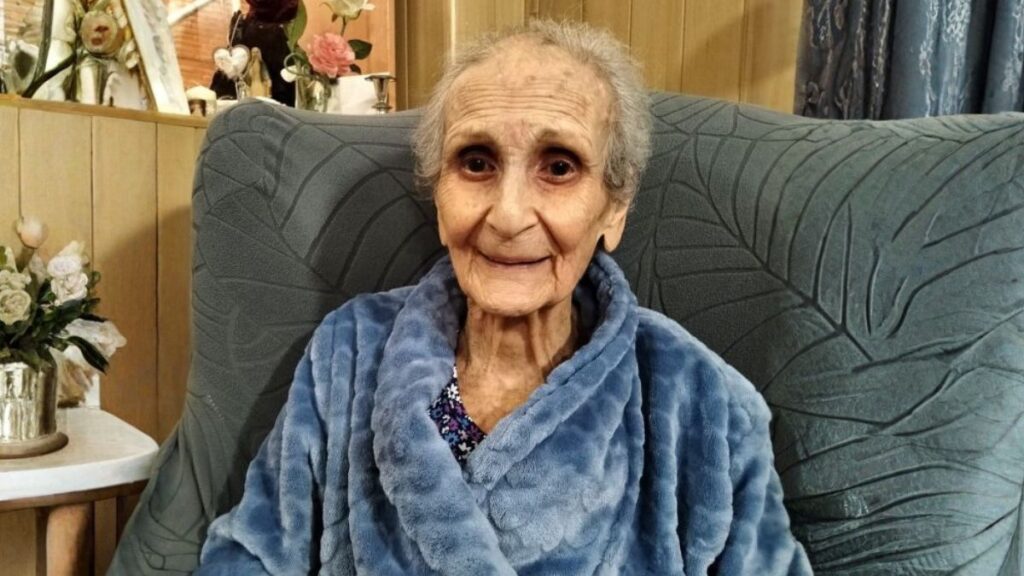
This is the case of CEPA Las Palmas (in Gran Canaria), which brings together people who were not able to complete their training at the time and who are now looking for a second opportunity. Dolores Campos Brito, known as Doña Lola, studies there. At 92 years old, she attends class twice a week.
Considered by the center itself as the oldest student in adult education in Spain, her presence has become a reference in the classroom, not so much because of her age, but because of the perseverance she has maintained since she decided to resume her studies in 2012.
For Lola it is never too late to learn
“I couldn’t stay at home doing nothing. I had to find a way for my head to work well and not stop,” he explains in an interview for the newspaper. ’65YMORE’ about a decision that came many years after having left school as a child, since at just eight years old she stopped going to class to take care of her godmother’s daughter and care for her sick mother. An interruption that, as in many cases of his generation, was never reversed until well into adulthood.
But the return to the classrooms has also brought with it some difficulties. Doña Lola barely has 20% vision in one eye and has completely lost the other. For this reason, the teachers adapt the materials, read the texts or draw numbers with a thick marker, but it is their attitude that sets the pace. “From day one I said I could do anything. And I continue to do it,” he says.
In the Risco de San Nicolás classroom, where Lola studies, the group is made up of between 15 and 17 people, with an average age of around 60 years, where there are currently no men. “I find the men sexist and, so that it is not known whether or not they know how to read or write, they do not go,” he points out, pointing out that “many do not come out of shame.”
Beyond the academic content, the classroom functions as a space for mutual support. Absences due to illness or death are becoming more frequent, but the center has chosen to maintain activity even with small groups. “That is appreciated,” says Lola, who especially highlights the treatment of the teachers. “It does not discriminate against anyone even if we have physical difficulties,” he says about the director, José Tacoronte.
His story, far from being an isolated case, illustrates the role that adult education plays in an aging society, not only as training, but as a mechanism of integration and well-being. “I never thought in life that I would have such a beautiful thing. Being loved is nice. And being able to do things even if we are older too,” he concludes.