Housing has become one of the great economic and social debates in Spain. While access to purchasing becomes more complicated, with housing prices at historic highs, more and more small owners see investing in real estate as an opportunity, in addition to being able to gain peace of mind for retirement.
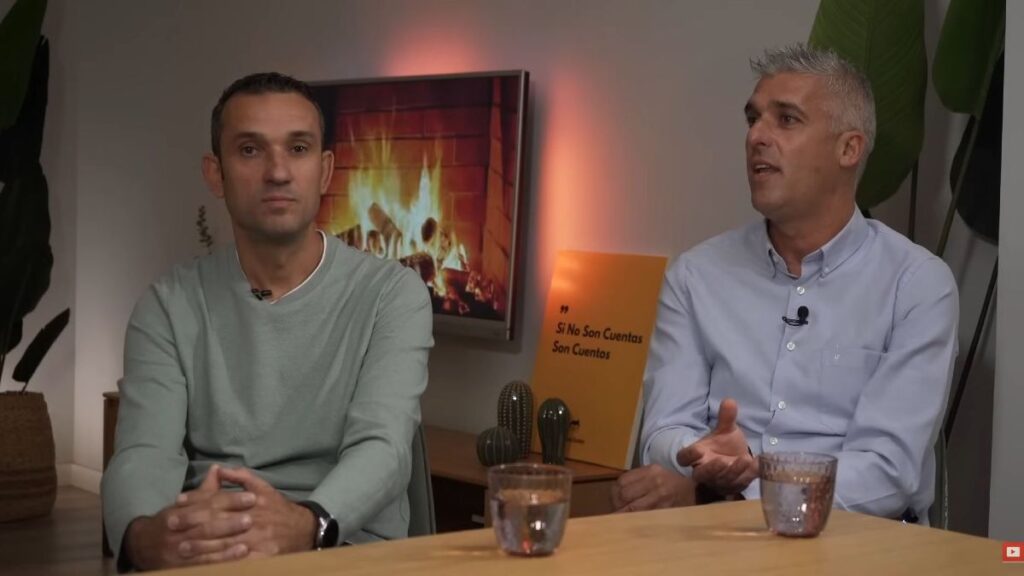
On the YouTube channel Real Estate Freedomthe Cuadrado Brothers, who are builders by profession, have told how they have managed to acquire 11 apartments in just 11 months and have the goal of obtaining 20 homes in 10 years. Everything comes from their profession, since as they have dedicated themselves to the work from a very young age, they have always had the issue of housing in mind.
From working from the age of 13 to seeking income that does not depend on physical effort
“From the age of 13 we were already on the construction site with my father,” remembers one of the brothers. The family business, founded in 1978 by his father and uncle, passed into his hands after the death of both. They are the second generation running the business.
For years, his routine was that of many self-employed workers in the sector: days from Monday to Saturday of 12, 14 and even 15 hours a day. “We saw that time was passing and we were enslaved working. The day we slowed down, the income would not arrive,” explains one of them.
The turning point was twofold. On the one hand, fear about the future of pensions. On the other hand, see firsthand what happens when the head of the family is missing. “When our father died, my mother was left with half of her pension. It’s ridiculous,” she laments.
There they decided that they needed to generate income that did not depend exclusively on their physical work.
“The first one cost 130,000 euros and now it is rented for 400”
Their first real estate experience dates back to 2006. They bought a villa in a town in Ávila “without understanding much.” “We said ‘let’s buy a little chalet’ and well, I think it was also the worst investment. Even so, it is still profitable,” he recalls.
After this they bought a place to put the tools but, as they declare, “always investments for us.” That is, they were not really thinking about investing in renting real estate. “The business, for our particular business, not with vision… since we do not have financial education, buying to rent was a world for us,” he admits.
“The chalet was for rent. It cost 130,000 euros I think and was rented for 400, I think later. We didn’t even know how to negotiate with the banks,” remembers one of the brothers.
“We were losing money for seven years. It was rented for 400 euros and now we are renting it for 950 euros,” says one of the brothers after converting the property.
Professionalization came in November 2023, when they decided to train in real estate investment. A month later, in December, they bought their first two homes with an investment focus in a town in Toledo. They were two-bedroom apartments, with an elevator and a garage, purchased from an investment fund and without the need for renovation. Today they are rented for 460 euros per month each.
Since then, the growth has been impressive, as they have achieved 11 apartments in 11 months.
They were “afraid” of financing
One of the main fears was financing. “It was the only thing that kept us a little afraid,” admits one of them.
They have chosen to buy through the company. This implies more difficulties: “The company is financed between 50% and 60%,” they detail. They even had to remortgage a home in Fuenlabrada with a 20-year loan to obtain liquidity.
Regarding past mistakes, one of the brothers is clear: two years ago he bought a home in one of the most expensive areas of Fuenlabrada and now he believes that with that money he could have acquired “five, six or seven properties” in the areas where they currently invest.
Even so, they consider it learning.
The worst of the reforms
Their construction experience gives them a competitive advantage. When they visit a flat, they know exactly where to look.
“In the basement we look at capillarity and humidity. If it is lower than the street, there will almost certainly be problems,” explains one of them. On the last floors they check covers and condensation. They also detect structural cracks and check if the plumbing is lead or copper.
“The biggest problem for a reform is water,” emphasizes one of the brothers. “Lead breaks and the one you have to organize is good.”
In electricity, the key indicator is the table: “If you only have one or two differentials for the entire home, you must change it no matter what.” They usually divide the installation into five or six independent lines.
In terms of prices, a basic bathroom can cost between 5,000 and 7,000 euros, while a more complete one for a private client ranges between 10,000 and 12,000 euros.
Exchanges and collaboration with funds
One of the most striking movements was the purchase of an apartment in a vandalized building where the rest belonged to a fund. They bought one of the ten properties and subsequently reached an agreement.
“The idea was to make an exchange: we carry out the renovation and keep some of the properties,” explains one of the brothers. Finally, that’s how it was.
Its current strategy is clear: traditional rental and convenience. “We want comfort, we have enough with our business,” they point out.
20 floors for financial freedom
If they repeat something during the interview, it is the importance of “why”. “You have to have a very strong reason,” says one of them. Yours is clear: gain time and freedom. “We set out in writing 20 apartments in 10 years. And we don’t even believe it: in 11 months we already have 11.”
Among their references they cite classics such as Rich Dad, Poor Dad by Robert Kiyosaki, Think and grow rich by Napoleon Hill, books that, they say, made them “click” in their heads.
For them, the difference between those who achieve it and those who abandon it is clear: “Consistency, insistence, patience and sacrifice.”
Two brothers, a lifetime in the work and now a new stage as investors who, as they recognize, do not only seek profitability, but something they consider even more valuable: time.