The price of oil experienced a very unstable day this Monday. At the beginning of the day it rose strongly and then fell sharply after statements by the president of the United States, Donald Trump, who assured that the conflict in the Middle East could be close to ending.
The barrel of Brent, which serves as a reference in Europe, stood around 87.8 dollars around 10:00 p.m. (Spanish time) after his intervention. However, during the day it came close to $120, a level not seen since the moments of greatest tension after the Russian invasion of Ukraine in 2022. Currently, at 7:30 a.m. the price has been around $93.80.
This price drop shows how quickly oil markets react to any political or military news, especially when it affects the Middle East, a key region for global energy supplies.
Trump’s statements calm oil markets
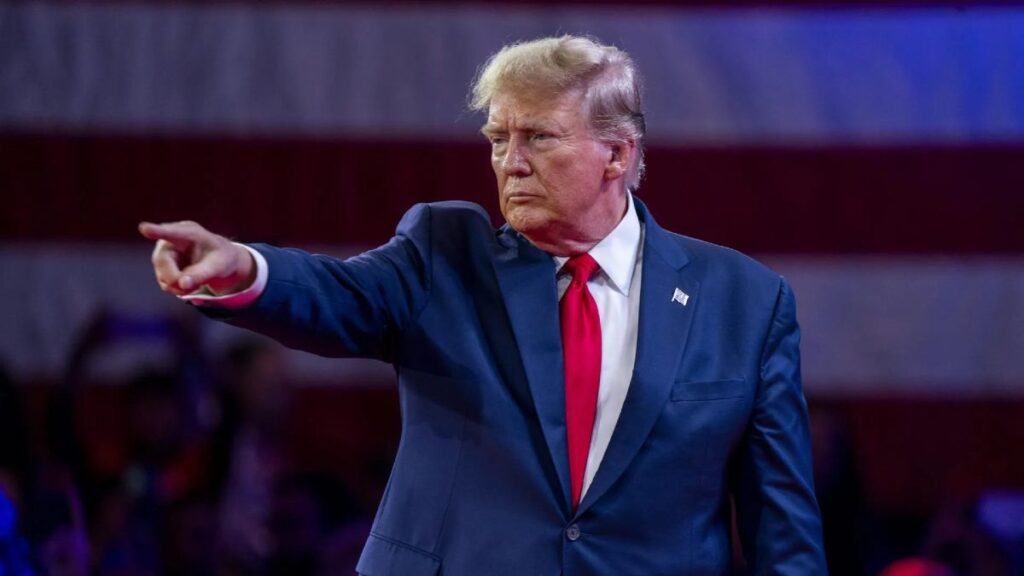
In an interview with the American network CBS, the president of the United States, Donald Trump, assured that “the war is practically over” and affirmed that the military operations that his country is carrying out together with Israel are advancing faster than expected.
He also noted that the conflict could last between four and five weeks, although he admitted that there is still uncertainty about its duration. In the same interview he stated that the Iranian army is very weakened, ensuring that it has lost a large part of its military capacity: “They have no navy, no communications or air force. Their missiles are dispersed and their drones are being destroyed in many places.”
Until then, oil markets reacted with concern about the possibility that the conflict would affect global crude oil supplies. The closure of the Strait of Hormuz, one of the most important sea routes for transporting oil, along with the announcement by Iraq, the United Arab Emirates and Kuwait that they would temporarily stop producing crude oil due to storage problems, had driven the price of oil above $100 per barrel.
This level also began to be reflected in the price of fuel. In Spain and other European countries, fuel prices have risen in recent days and at some gas stations a liter of gasoline or diesel is already close to two euros (you can consult the today’s gasoline price here).
International measures seek to stop tension in the oil market
The tension in the markets began to reduce when the G7 countries (United States, Canada, Japan, United Kingdom, Italy, France and Germany) proposed releasing part of their strategic oil reserves to stabilize prices. Added to this were statements by Trump, who stated that the conflict could be close to ending and that his government is studying temporarily lifting some oil sanctions to guarantee supply.
Even so, the evolution of the war remains key for the energy market. The Strait of Hormuz, through which about a fifth of the world’s oil passes, is a key route for crude oil and gas trade. Therefore, analysts believe that as long as uncertainty continues in the Middle East, oil prices will remain very unstable.