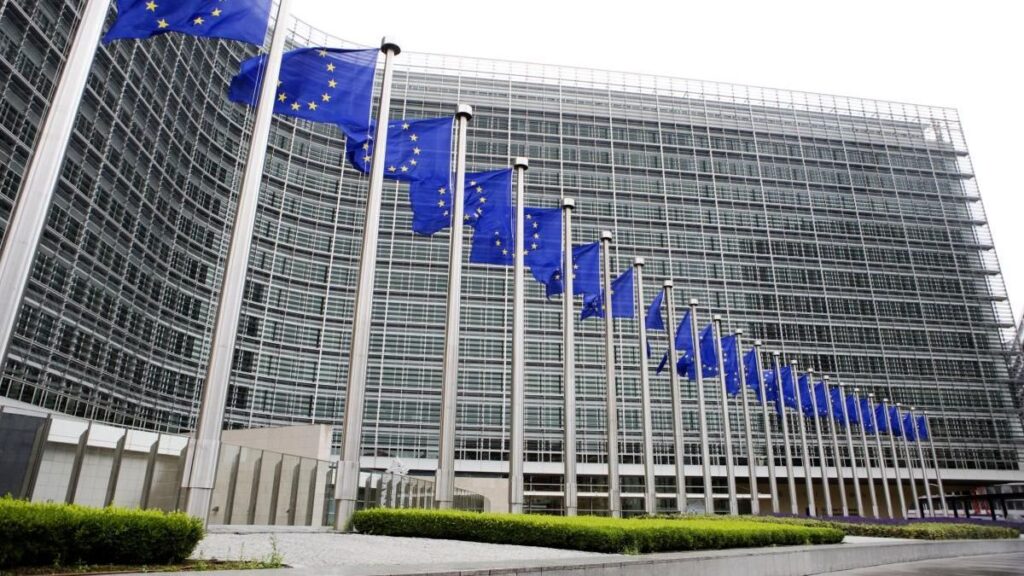


The debate on tobacco is moving again in Brussels and it does so at a particularly delicate moment. The European Commission has taken an important step to review the Tobacco Products Directive (TPD), a key rule for deciding how cigarettes, vapes, heated tobacco or nicotine pouches will be regulated in the coming years.
The topic is giving rise to talk. In the midst of a discussion about the health expenditure caused by smoking, and about the possible saving millions of euros for Health If some adult smokers switch to alternative non-combustion products, the European Union wants to update its rules to adapt them to a market that has changed a lot in recent years and has therefore decided to open a public consultation to adapt the aforementioned TDP to the arrival of new products such as electronic cigarettes or nicotine pouches.
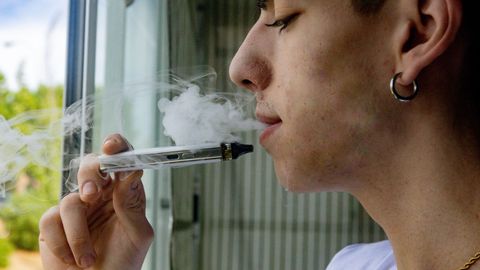
Illegal vaping soars in Spain and puts 1,000 jobs in check: the rise of an uncontrolled market that sneaks into bazaars and gas stations

The use of alternative products to tobacco could save millions of euros for Health
The Commission defends that the objective is to especially protect young people by responding “quickly” to the new market that arises, all within the challenge of achieving a smoke-free generation in 2040. Of course, the reform is already surrounded by controversy, because part of the scientific community questions whether Brussels is moving forward with a sufficiently solid database.
The EU wants to regulate the entire nicotine ecosystem
Until now, a good part of European anti-smoking policies have revolved around traditional cigarettes. But the change that is proposed now goes further. Brussels wants to move from a regulation focused mainly on combustible tobacco to one that covers practically the entire ecosystem of nicotine products.
This includes electronic cigarettes, nicotine pouches, heated tobacco and other products that have gained popularity among adult consumers. The big question is whether all of them should be treated in the same way as the usual cigarette or if, on the contrary, a distinction should be made between combustion products and non-combustion alternatives.
This point is the one that is generating the most noise. Because for many experts it doesn’t make sense to put everything in the same bag. Traditional cigarettes involve combustion, smoke and exposure to toxic substances associated with serious diseases. On the other hand, other products are not risk-free, but have different profiles.
Brussels’ own internal controls question the data
Doubts have increased after criticism of the evaluation report that serves as the basis for the future reform became known. According to the Slovak media Trendthe European Commission’s own internal control body, the Regulatory Scrutiny Board, would have pointed out serious deficiencies in the document that accompanies the review.
Among the problems detected is the lack of ability to clearly determine what has really caused the decline in smoking in Europe. Limited, fragmented and inconsistent data are also noted, as well as extrapolations to the entire European Union made from partial information.
Simply put, Brussels admits that it cannot know precisely to what extent improvements in public health are due to its current regulatory framework. And yet the Commission is pressing ahead with a reform that could completely change the way nicotine is regulated in Europe.
This is one of the most sensitive points of the debate, because a poorly focused rule could end up punishing conventional cigarettes equally and products that some experts consider useful tools to reduce harm among adult smokers who cannot stop smoking.
Doctors and scientists call for evidence-based regulation
The scientific answer has also come through a letter addressed to the European Commission. A group of 113 European doctors, scientists and public health experts have called on Brussels to review its approach and for future tobacco and nicotine regulation to be based on available scientific evidence.
Those who formed the letter say that the evaluation report would not have taken into account 131 scientific studies on electronic cigarettes, heated tobacco and nicotine pouches. According to these experts, this omission weakens the diagnosis on which Brussels intends to build the new regulations.
The letter, published by the Platform for Smoking Harm Reduction, warns that not all nicotine products present the same level of risk. They recognize that they must be regulated, especially to prevent their use among minors, but they reject that they be compared in danger to combustible tobacco.
The central idea of experts is that the main damage from smoking is associated with the combustion of tobacco, not nicotine alone. Nicotine is addictive, but doctors and scientists remember that cigarette smoke releases many of the toxic substances linked to cancer, cardiovascular disease and lung problems.
That is why they ask that the comparison be made not only against total abstinence, which would be the ideal scenario, but also against the reality of millions of adult smokers whose immediate alternative is not to quit everything at once, but to continue smoking cigarettes.
The protection of young people is the focus of the debate
Brussels justifies much of the review by the need to protect young people and prevent new products from acting as a gateway to nicotine consumption. It is a concern shared even by those who defend more differentiated regulation.
The difference is in how to do it. For some experts, protecting minors should not mean ignoring the differences between products. That is, strict limits can be placed on advertising, access by minors or certain flavors, but without presenting all products as if they were just as harmful as smoking.
This nuance is important because regulation that is too flat can have undesirable effects. If an adult smoker perceives that vaping, using heated tobacco, or consuming nicotine pouches is virtually the same as continuing to smoke, he or she may see no reason to change.
And that is where the health debate intersects with the economic debate, because each smoker who continues with the traditional cigarette also maintains an important part of the health cost associated with smoking.
Europe remains far from the goal of a smoke-free generation
The European strategy wants to achieve, without a doubt, a tobacco-free generation in 2040, understood as a prevalence of less than 5%. But the reality is that much of Europe is still very far from that figure. In many countries, tobacco consumption continues at levels close to 20%.
This gap is fueling an uncomfortable question: if traditional policies based almost exclusively on restrictions have not managed to reduce smoking at the expected rate, perhaps the debate needs to be opened to other strategies.
Sweden usually appears in this discussion as the most cited example. The country has managed to reach very low levels of smoking, in a context where alternatives such as snus and nicotine bags have had weight. For advocates of harm reduction, this shows that it is not enough to prohibit or restrict cigarettes, but that we must also offer realistic solutions to those who do not quit smoking.
A reform that can mark the future of tobacco in Europe
The review of the Tobacco Products Directive therefore comes at a key moment. It’s not just about deciding what products are sold or how they are labeled. What is at stake is the entire approach of European smoking policy.
Brussels wants to update the regulation of new nicotine products, but does so with doubts about the solidity of the data it handles and with part of the scientific community asking for more rigor. The challenge is to find a balance between protecting young people, not normalizing nicotine consumption and, at the same time, not closing the door to alternatives that could reduce harm among adult smokers.
Because total abstinence is still the best option for health. But for those who cannot quit smoking, treating all products the same may end up being an unhelpful policy. And in a context of pressure on health spending, this difference not only affects public health, it can also end up weighing on Health accounts.