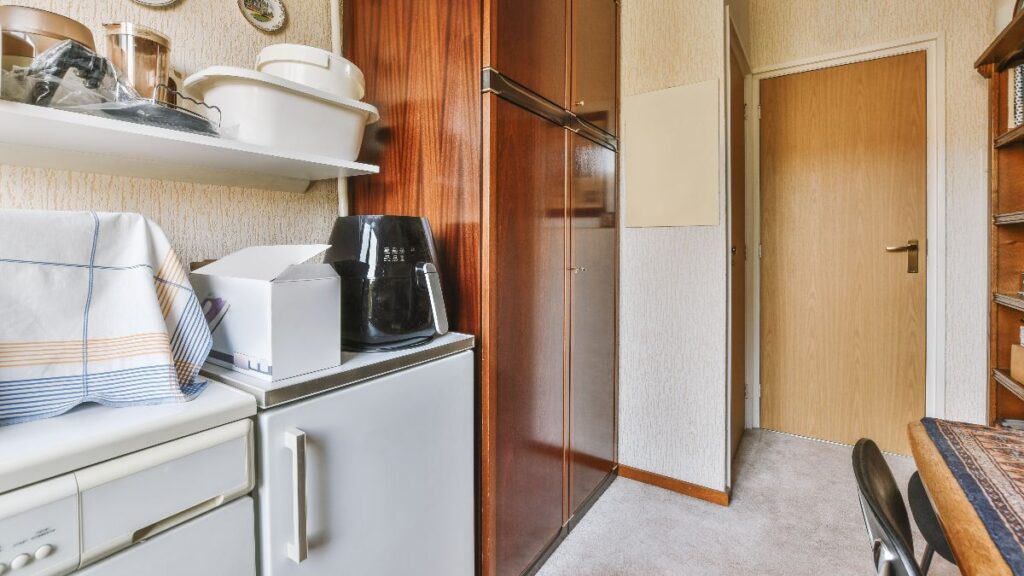
The Provincial Court of Madrid has sentenced a seller to return 180,000 euros to the buyer of a home, considering that the property did not meet the minimum legal conditions to be considered habitable. The court understands that the apartment, the result of the housing segregation older, was conveyed as if it were fully suitable for living when in reality it presented urban planning irregularities and serious deficiencies in the sanitation network.
According to the ruling of December 22, 2025, the sale of the apartment was formalized in March 2018. The home had arisen from the division of an original apartment into two independent properties. However, the segregation was carried out without requesting a planning license and no first occupation license was obtained either. Despite this, it was sold for a real price of 180,000 euros, although a lower amount appeared in the public deed.
The problem arose after the delivery of the home. The buyer began to detect significant structural deficiencies and commissioned expert reports. They confirmed that the real useful area of the property was 22.64 square meters, even lower than the exceptional minimum allowed by Madrid urban planning regulations. Furthermore, the apartment lacked a direct exit to a common element of the building, since to access the stairs it was necessary to cross a landing belonging to the other home resulting from the segregation.
The Court of 1st Instance No. 98 of Madrid dismissed the claim, considering that the defects were not sufficient to terminate the contract.
The housing did not meet the legal minimums
However, the Provincial Court of Madrid revoked that decision, understanding that these were not simple defects, but rather a substantial inability of the property to fulfill the purpose for which it was acquired.
As indicated in the ruling, the General Urban Planning Plan of Madrid requires a useful surface area greater than 38 square meters when the home has a living room, kitchen, bedroom and bathroom, and only allows it to be reduced to 25 meters when it is a single multifunctional space.
In this case, the property had a separate bedroom and an accredited useful area of 22.64 square meters, so it could not be classified as a minimum dwelling in accordance with the regulations. The court also stressed that the segregation was carried out without a license and that a first occupation license was never requested, a procedure that guarantees compliance with the technical and hygienic-sanitary conditions required by law.
Special importance is also given to problems in the sanitation network. An expert report described pipes without sufficient slope, continuous blockages, backflows into the bathtub and persistent bad odors. It was also found that the evacuation system was poorly installed and that the toilet with a disposal aggravated the situation. The unblocking company itself stated that there was a structural installation problem and that it could not guarantee a definitive solution.
Precisely because it understood that these deficiencies made the property unsuitable for use as a home, the Court applied the doctrine of “aliud pro alio”, which allows the sale to be resolved when something other than what was agreed upon is delivered or when the property cannot fulfill the purpose provided for in the contract.
It was therefore concluded that the buyer cannot remain bound to a contract when the home does not meet the minimum conditions of habitability, neither legally nor physically. For this reason, the matter was declared resolved and the seller was sentenced to return 180,000 euros, plus legal interest from the signing of the deed in 2018. In addition, she must pay 10,082.27 euros for the accredited notary expenses, property transfer tax, registration, IBI and repairs to the sanitation network.
However, the sentence was not final and, although ordinary appeals could not be filed against it, an extraordinary cassation appeal could be filed.