


The Provincial Court of Jaén has refused to recognize the absolute permanent disability to a woman who suffered a traffic accident, after detectives hired by the insurance company recorded her outside her home talking to neighbors, standing without support for much of the time, sweeping, going up and down steps and entering through the driver’s door of a vehicle. The court concludes that these images do not eliminate her injuries or her right to compensation, but they do prevent her from being considered incapacitated for any activity.
According to the ruling of January 9, 2025, the accident took place on November 6, 2015 and the affected person claimed compensation from the insurance company for the injuries suffered. The Court of First Instance and Instruction number 1 of Villacarrillo partially upheld the claim and ordered the insurer to pay 29,433.99 euros, plus the interest of article 20 of the Insurance Contract Law from the date of the accident.
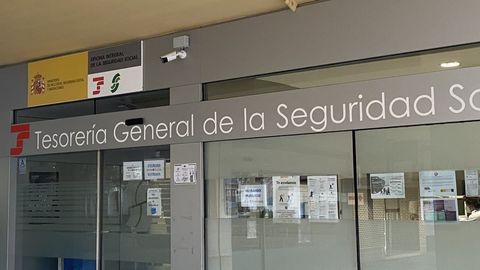
Social Security refuses to recognize permanent disability due to a work accident for employees who suffer injuries resulting from reckless negligence.

He claims 12,185.24 euros in arrears of 20% of his permanent disability pension, Social Security only pays him three months and the court denies it for requesting it late
The woman appealed when she understood that her consequences should be classified as absolute permanent disability, which would have increased the compensation. Specifically, he requested that compensation of 143,794.01 euros be recognized for this concept, compared to the 80,000 euros set by the court when considering that it was a total permanent disability.
Detectives recorded her sweeping, climbing stairs and getting into a car
The Provincial Court of Jaén dismissed his appeal and confirmed the previous sentence. The court considered that the affected person was incapacitated to carry out a work activity, but not to carry out any occupation or daily activity, which is what absolute permanent disability requires.
The most striking part of the case is in the detective report provided by the insurance company. The woman maintained that this evidence was illicit because, in her opinion, her right to privacy and self-image had been violated, since it was recorded around her home and her minor son also appeared.
The Court, however, rejected this argument. To do this, it relied on the Private Security Law, specifically articles 48 to 50, which allow private detectives to carry out investigations to obtain evidence on private events related, among other areas, to personal, family or social life, as long as the intimate life developed within the home or in reserved places is not investigated. He also cited article 265.5 of the Civil Procedure Law, which admits the reports of private detectives as evidence in a trial when they are prepared by legally authorized professionals.
In the recordings, according to the sentence, the woman appeared outside her home, talking to neighbors, standing and without support for much of the time, sweeping, going up and down the steps leading to her home and entering through the driver’s door of a car parked next to her house. Although she was not recorded driving, the court noted that shortly afterwards the vehicle was no longer in the same place.
For the Court, these images were decisive in ruling out absolute permanent disability. The ruling explains that total disability occurs when the consequences prevent carrying out the usual occupation or activity, while absolute disability requires that the person be disabled for any occupation or activity. In this case, the court understood that the woman retained the capacity to perform acts of daily life, even though she had relevant physical limitations.
The Chamber also took into account that, by administrative resolution of June 3, 2021, the degree of disability of the woman went from 44% to 34%. The affected party alleged that this reduction was due to an error, but the Court considered that she did not provide sufficient evidence to prove it.
For all these reasons, the Court concluded that the consequences were compatible with a total permanent disability, but not with an absolute one. Even so, the court did not deny the seriousness of the injuries, it recognized that the lumbar sequelae were “quite disabling”, that it prevented him from leading a normal life from a physical point of view and that he needed strong pain medication. Precisely for this reason he maintained the compensation of 80,000 euros for total permanent disability.
However, the sentence was not final and an appeal could be filed against it before the Supreme Court.