
The Superior Court of Justice of Asturias accepts that a retiree has to return 42,047.67 euros to Social Security, after for almost five years he was collecting the full pension when, in reality, 50% corresponded to him by continuing to work as administrator of his company. The Court recognizes that the ruling was the agency’s and not its own, but considers that it cannot escape paying because it is not in a vulnerable situation.
The man requested active retirement on May 28, 2020 and announced that on June 1 he would start working “as managing partner” of a limited company. That same day it was recognized “for an amount of 100% on a regulatory basis of 1,346.78 euros”, according to the ruling (available at this link).
The problem is that the active retirement of that time (the reform of April 2025 later changed the percentages) only gave the option of collecting the full pension in one case, as explained in the form that he signed: “During compatibility, 50% of the amount of the pension is received; however, the amount of the pension will reach 100% if the activity is carried out on a self-employed basis and it is proven that at least one employee has been hired.” He had only hired a part-time domestic worker, something that, according to the Court, “has no impact in this case.”
Social Security did not realize this until February 2025, when it decided to review this retiree’s pension, “given that he received 96,989.56 euros for 100% of the active retirement and should have received 50%.” Since the mistake was his, he had to claim the money in court, and since the law only allows the last four years to be recovered, he asked for 42,047.67 euros, those overcharged between February 16, 2021 and February 28, 2025, in addition to what he continued to collect until the sentence. The Gijón court ruled in favor of Social Security and the retiree decided to appeal.
You have to return the part of the pension improperly collected
Regarding this claim, the retiree relied on the Cakarevic doctrine of the European Court of Human Rights that the Supreme Court has applied so that some people do not have to return benefits they received due to an error that was solely the Administration’s. And the Court does not discuss it, since it was an error by Social Security “to which the defendant worker did not contribute at all”, who also committed “a second error” by not later reviewing the pension.
But this doctrine asks for something more, which is that returning the money puts the person who received it in trouble. For the TSJ, this is not the case, because he could have requested the entire pension without working and preferred to “lose half of the retirement pension in exchange for being able to continue exercising his role as managing partner of a company.”
In addition, remember that the law requires the return of the overcharged amount for four years, “including cases of review of benefits due to an error attributable to the managing entity” (article 55 of the General Social Security Law).
From January 2027, Social Security will remove 10% of the maximum pension, instead of 8.5%, from those who retire two years earlier with 40 years of contributions and exceed the limit
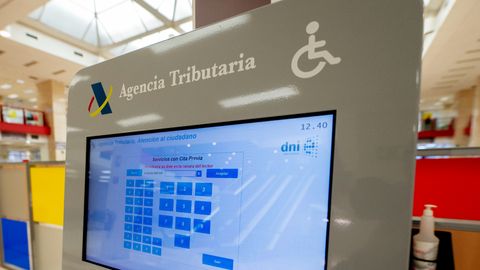
The Treasury can seize the retirement pension above 1,221 euros per month, but it will not be able to keep the money that the retiree saves from the protected part, even if it has been in the bank for months.
Nor does the Court believe that he thought he was charging the right amount. If the 1,346.78 euros had been half, the entire pension would have been 2,693.56 euros, an “amount high enough to at least intuit that some error had occurred in its calculation.” For all these reasons, the TSJ dismisses the appeal and confirms that it must return everything overcharged since February 2021.