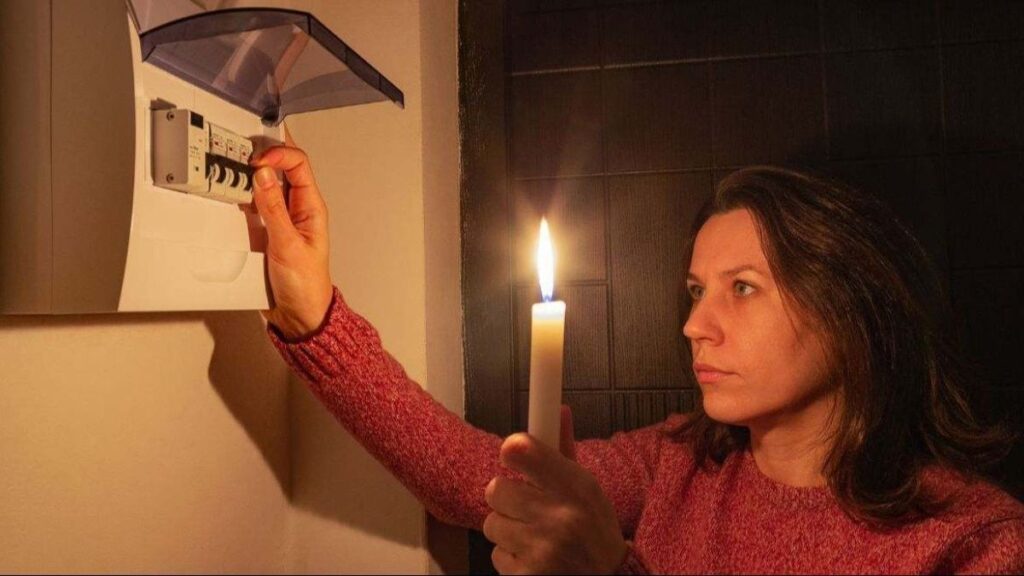
The great blackout of April 28 (the largest registered in the Peninsula) was due to the absence of sufficient synchronous generation centrals in the south of the system, according to an academic report prepared by the Technological Research Institute of the Pontifical University Comillas for Iberdrola and Endesa. The authors, Luis Rouco, Enrique Lobato and Francisco Echevarren, explain that, with more combined cycles available in that area, the network would have supported the disconnection of three units that triggered the peninsular “zero”.
The document, referred to the Entso-E expert panel, describes an “uniformly distributed inertia” and a “weak” network in the center and south, with 35% of the out-of-service connection capacity, and recalls previous episodes of tension instability (April 22 and 24) and the morning of the own 28-A. For the authors, these signs had to activate a more robust operation before collapse.
You may be interested
Several retirees older than 80 years speak clearly: “I was widower 3 years ago and now you realize what you lack and how you look now”

The price of light today, October 2, 2025: the cheapest hours and faces within the PVPC
The report also questions the maneuvers that Red Eléctrica executed in the previous minutes (openings in the transport network and changes in the interconnection regime with France), which “weakened the system,” according to the presentation. Ree defended his performance in June and presented his own technical analysis with recommendations, in which he details the replacement of the supply with the support of interconnections and autonomous starters.
The study of the study at the instances of two large electricity adds an element of controversy in a “report war” that lasts since May. The Government attributed the incident to a waterfall of technical factors, including an insufficient calculation of thermal generation and voltage control deficiencies, and ruled out any cyber attack.
On the other hand, published information pointed out that Ree placed the origin of the disturbance in a photovoltaic installation in Extremadura; That hypothesis is rejected in the work of Comillas, which links it to a variation at European scale.
European research is still underway. ETSO-E has confirmed that this Friday, October 3, will disseminate the factual report, with the chronological reconstruction of the facts, and that the final report, with the analysis of root causes and recommendations, will arrive in the following months. Preliminarily, the panel considers an unpublished phenomenon of “cascades of voltage increases” as a dump of the blackout.
Since April 28, the system operates under more conservative criteria. The sector acknowledges that Ree has increased the number of combined cycles scheduled to strengthen stability, which has raised the cost of technical restrictions and has tensioned marketers. The Employers of Independientes Acie has claimed the miteco mechanisms to absorb that extra cost.