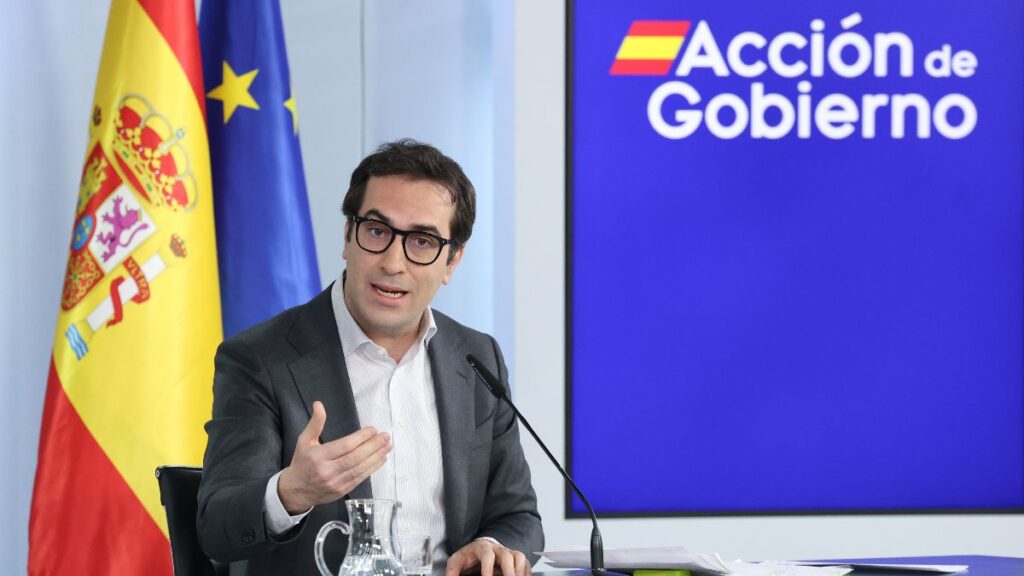
The Council of Ministers approved this Tuesday a royal decree that requires the use of electronic invoices between companies and professionals (B2B), which must be implemented progressively over a period of one or two years depending on the size of the company, with the aim of promoting digitalization and reducing late payments.
The standard establishes that companies with a billing exceeding 8 million euros must be adapted within a period of one year, while the rest will have two years. These deadlines will begin to count from the publication of the ministerial order that will regulate the public platform, scheduled before July 1, 2026.
According to Europa Press, the Minister of Economy, Carlos Body, has indicated that the objective is to “facilitate the adoption of this measure”, especially in the case of SMEs, through a transitional period adapted to their size.
A new digital billing model and differences with Verifactu
The royal decree defines the electronic invoice as a structured file that can be read automatically, which means leaving behind formats such as paper, PDF or Excel. In addition, it introduces the obligation to report the status of each invoice, including its acceptance and payment date.
Companies will be able to exchange invoices through interconnected private platforms or through a free public solution developed by the Tax Agency, also accessible to self-employed workers with low billing volume.
The approval of this standard coincides with the development of Verifactu, a system promoted by the Ministry of Finance to combat tax fraud, although both projects have different objectives.
While Verifactu focuses on fiscal control and avoiding invoice manipulation, the B2B electronic invoice develops the Create and Grow Law and seeks to improve efficiency in commercial relations between companies.
Economic impact and savings for companies
According to the Government, the implementation of electronic invoices will allow significant savings in time and costs, thanks to the automation of accounting processes. Currently, in Spain more than 550 million electronic invoices are exchanged per year, with an estimated saving of more than 2.7 billion euros.
The Executive has indicated that, if a volume similar to that of countries like Italy, where more than 2,000 million electronic invoices are managed annually, is reached, the savings could exceed 8,000 million euros.