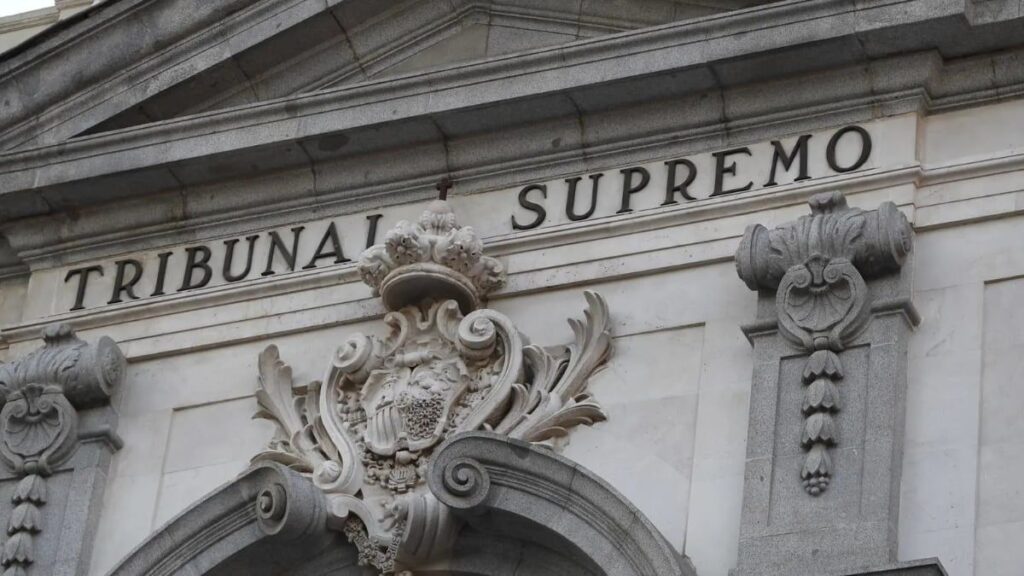
The Supreme Court agrees with Social Security to deny the widow’s pension to people who are not formally registered as a de facto couple in an official registry or through a public document, even if they have been living together continuously for years and have children in common. The High Court explains that the law requires coexistence and registrationwhich means that it is not enough to prove that they were a real and stable couple, but that they must have been established at least two years before death.
Article 221 of the General Social Security Law (available in this BOE) allows access to the life pension to those who are united to the deceased as a de facto partner. The Supreme Court explains that this provision imposes the unavoidable obligation to prove the existence of the couple through a certification of the specific records of the autonomous communities or town councils, or through a public document.
The sentence STS 136/2026 describes the situation of a woman who lived with her partner stably. They had both been married, divorced, but later resumed their relationship and had a child together. When he died, the widow requested a widow’s pension, but the Social Security (INSS) denied it because they were not formally registered as a de facto couple.
He went to court and the Superior Court of Justice agreed with him, arguing that the Recent regulations exempt couples with children of the registration requirement for other aid, and applying a gender perspective to adapt to social reality. Finally, Social Security appealed to the Supreme Court.
Minimum income or widow’s pension, the Supreme Court’s response is not the same
The Supreme Court explains that the regional court was wrong to use a recent legal change (Royal Decree-Law 2/2024) as a reference. It is true that this rule establishes that the registration requirement will not be required if you have children in common, but the Supreme Court clarifies that this only applies to access unemployment benefits and the Minimum Living Income.
The High Court confirms that the widow’s pension and these other aids respond to totally different logics. While the subsidy and the minimum income are benefits of a “welfare nature” created to protect vulnerable groups with non-contributory aid, the widow’s pension responds to the contributory aspect of the system, that is, it is granted “as a consequence of a previous contribution.” For these reasons, justice considers that the legislator was fully aware of the difference and decided not to extend this exemption for having children to the widow’s pension.
The Supreme Court agrees with Social Security and points out that its doctrine requires two different requirements that must be met at the same time. The court insists that, although cohabitation can be proven in many ways, the existence of the couple requires the “formal – ad solemnitatem – requirement of verification that the couple has been established as such before the Law.”
Thus, the ruling establishes as a doctrine that “the widow’s pension that the norm establishes is not in favor of all ‘de facto’ couples with five years of proven cohabitation, but rather for the exclusive benefit of ‘registered’ de facto couples.” For this reason, the Supreme Court annuls the ruling of the previous court, dismissing Estela’s claim and confirming that she does not have the right to collect the widow’s pension as she did not formalize the papers on time.