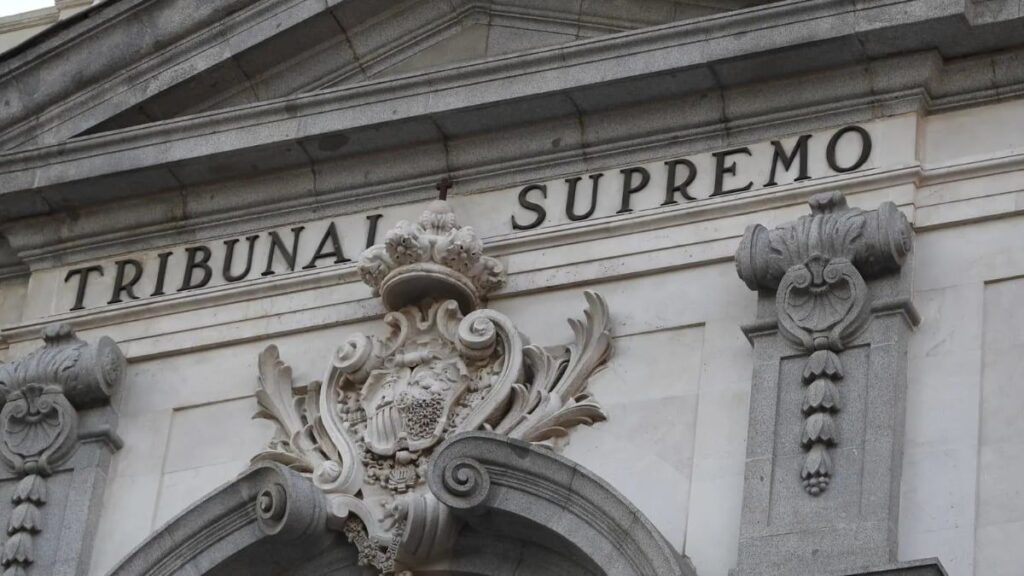
Widowhood pension beneficiaries in the passive classes regime should know that they have the right to recover 100% of the benefit when the former spouse dies with whom they shared the amount. The Supreme Court has set doctrine in this regard, clarifying that it is not an extraordinary “increase”, but the restitution of the original right of the supéstitite spouse (survivor).
It must be said that although the General Directorate of Personnel Costs and the Superior Court of Justice of Madrid had been denoting these increases in understanding that the law did not expressly provide for this assumption, the Supreme Court explains that the Widow’s pension It is unique and complete from the beginning, and is only distributed among several beneficiaries while everyone is alive, since when one of them disappears, the survivor goes on to collect the whole.
You may be interested
A woman achieves the widow’s pension, but Social Security denies her collection because she already charged a retirement of 1,915 euros

A woman loses the widow’s pension for not being able to collect it with the retirement by being incompatible with a divorce prior to 2008: Justice supports the Social Security decision
A right that derives from the unique widow’s pension
If we look at the regulations, the Passive Classes Law does not literally establish what happens when one of the beneficiaries who attend the same widow’s pension dies. Before that lagoon, the Supreme Court interprets the norm according to the Constitution and the Charter of Fundamental Rights of the European Union, giving more strength to the principle of social solidarity and protection of the elderly.
Thus and for everything explained, it fixes that, extinguished the participation of the former spouse due to death, the widow or widower that survives recovers the full right. That is, it is not about adding percentages, but about restoring the 100% that corresponded from the origin to the main beneficiary.
A real example: to charge less than 50% to 100%
The case that has resulted in this sentence (which can be consulted in this link of the Judiciary) is that of a woman who charged only 48.8% of the widowhood pension, because the other party was attributed to the ex -wife of the deceased. After the death of the latter, he asked the administration to recognize the totality, that is, 100%, but the petition was denied.
First, the General Directorate of Personnel costs denied the increase and then, the Superior Court of Justice of Madrid confirmed the refusal, arguing that the law did not contemplate an assumption of accrection, except in exceptional cases, such as situations related to terrorism.
However, the Supreme Court has corrected this criterion and in its judgment (ATS 6689/2023) explains that the pension corresponds entirely to the supéstitite spouse (the one that survives of the two widows) and that the initial distribution only operated while the other beneficiary was alive. From the moment of his death, the appellant has 100% of the amount, thus consolidating a precedent that benefits many other similar cases.