When looking at the work life report With the Social Security retirement simulator (the retirement information), it is possible to find that they are not contributed every day and without there being an error. This is because the working life of the General Treasury of Social Security (TGSS) is different from the simulator of the National Social Security Institute (INSS), which is the one who recognizes the retirement pension and, therefore, the one who says how much time you really count towards retirement. Where it can be most noticeable is in part-time work, since working life reduces the days in proportion to the working day and the INSS counts each day of registration as full.
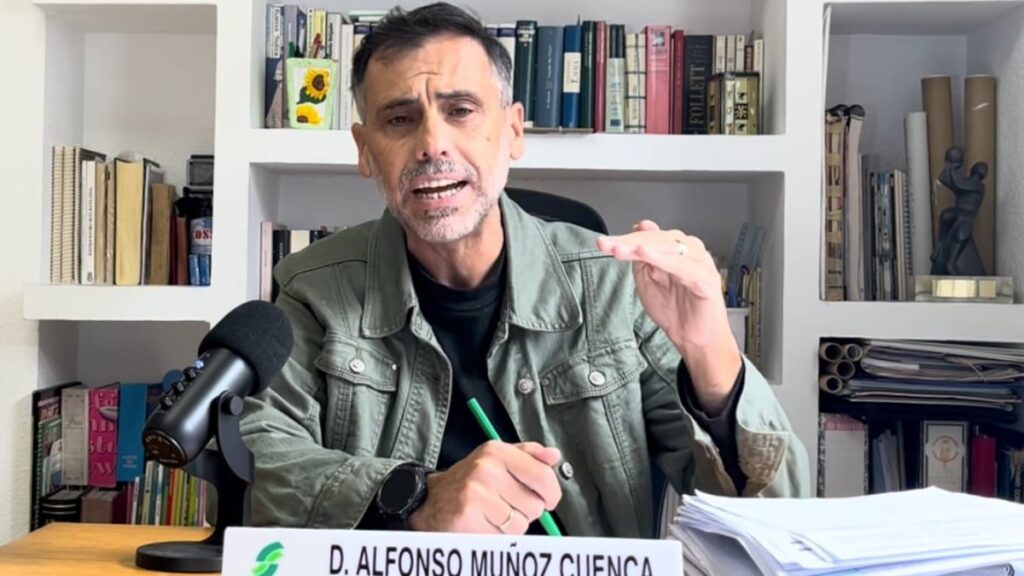
To those who believe that they are taking away contribution days, Alfonso Muñoz Cuenca, a Social Security official, explains that “in most cases no, it is not an error, it is simply that they are looking at two documents that measure very different things.”
The TGSS collects and keeps records of registrations, cancellations and contribution bases, and work life, which Muñoz calls “a photo of our work history”, serves to verify that each company registered and dismissed the worker when appropriate.
The periods that work life and INSS are different
The first confusion is in multiple employment and multiple activity, when one has worked in two places at the same time or as an employee and self-employed at the same time. Working life shows each registration separately, which may lead one to believe that there are more days contributed, but this is not the case, since the INSS corrects this overlap. For the official, “a calendar day can only be quoted once, that is, you will never have more than 365 days quoted in a year,” something that he already explained in another video when talking about the overlapping periods.
Other periods count towards retirement without there having been a contract or contribution, so they never appear in working life. This is the case of compulsory military service or substitute social benefit, where Social Security adds a maximum of one year only to reach the minimum years for early and partial retirement.
The INSS also adds 112 days for each birth (it is included in article 235) to the mother for the retirement pension and the permanent disability pension. “However, these contributions do not appear in your work life report,” warns Muñoz. The law only rules them out if, because you were a worker or civil servant at the time of childbirth, you contributed during the entire 16 weeks.
The same occurs with the childcare benefit of article 236 of the LGSS, where it grants up to 270 days for each child who is considered to be contributing when contributions were stopped because a contract or unemployment ended between the nine months before birth and the six years after. “This benefit can only be obtained by one of the two parents,” recalls the official. This time is valid for all purposes except to reach the minimum contribution period, which in ordinary retirement is 15 years.
The unemployment does appear in both documents, because while the contributory benefit is being collected, the SEPE contributes for retirement. The same does not happen with subsidies and, although they may appear in working life, Muñoz clarifies that “that period of time does not count for retirement purposes, except for the subsidy for those over 52 years of age.” These contributions increase the pension, but article 280 prevents them from being used for the minimum 15 years, which must be completed before requesting the pension. subsidy for those over 52 years of age.
Part time is where the two documents differ the most
According to the official, in working life “the period of part-time contributions is computed proportionally”, so that 30 days part-time work out as 15, while “in the retirement information, each day of contributions, even if it is part-time, will be counted as a full day.”
This is established in article 247 of the General Social Security Law, which states that to credit the years of retirement, all registration time counts, “whatever the length of the day” (valid from October 1, 2023).
In this way and to understand it, someone who has worked 10 days part-time sees 5 days in their working life, but for the INSS it is still 10, so another 5 are enough to reach the minimum of 15 years, as long as two of them are within the last 15 years.
Furthermore, as established in article 248, those days also count as whole days for the percentage of the pension. The amount comes from what was actually contributed, that is, part-time contributions are based on the salary of the hours worked, and with these bases the regulatory base is calculated, the average of the contributions to which the percentage is applied.
There are periods that do not appear in either document. The simulator “still does not allow us to incorporate the reducing coefficients” for the age of arduous and dangerous jobs, nor the years of contributions in other mutual societies, such as Passive Classes. In those cases, and when the simulator warns of incidents and cannot calculate the pension, Muñoz advises going with prior appointment to one of the Social Security attention and information centers (CAISS), with the certificate from the company or the mutual insurance company, and request a handmade information, which arrives by mail.
The minimum pension for retirees under 65 years of age without a spouse will rise to around 953 euros per month in 2027, but to retire earlier on their own a pension of more than around 1,018 euros will be required.

The permanent disability pension would rise by an average of 45 euros per month in 2027 and the maximum of the new ones would reach 3,484 euros per month
With work done in another country in the European Union or with a Social Security agreement, “those years will not appear in your work life report or in the retirement simulator,” and they cannot be simulated by hand either. The solution is to report this work when requesting the pension, because “at that time we will take into account the periods worked abroad,” explains Alfonso Muñoz Cuenca.