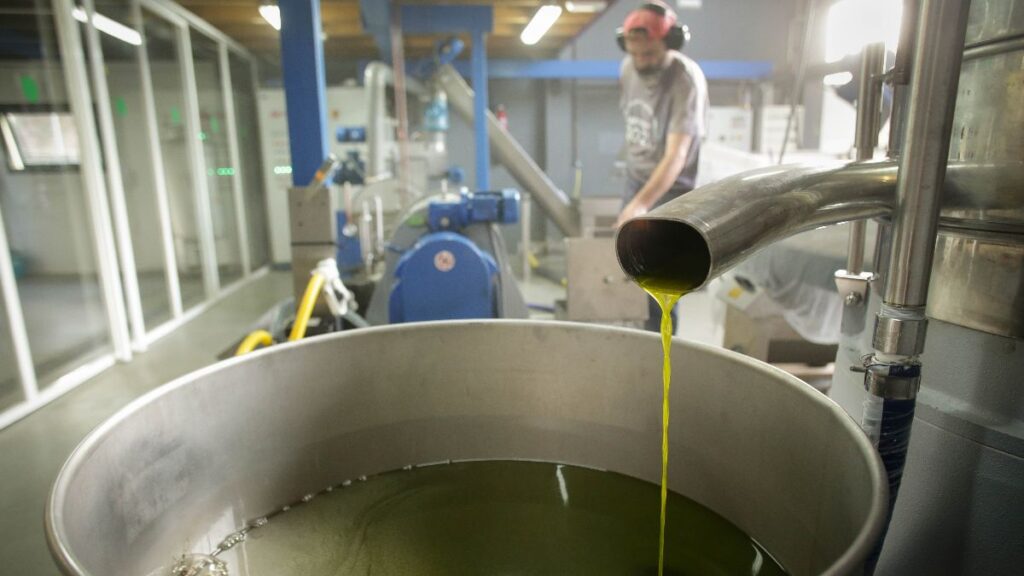
The Ministry of Agriculture, Fisheries and Food has given the order to Spanish oil mills to remove 188,000 tons of olive oil until, predictably, September 2027. A measure that the sector considers inefficient and that does not satisfy either producers or farmers despite the fact that, as the well-known Tommy Rohde denounces, it is an idea that emerged from the environment of rural employers.
Now it is the technical secretary of the Union of Extremadura, Luis Cortés, who has analyzed the situation and the complexity of this rule that should not be analyzed lightly. To begin with, the fact that 12% of production does not go on sale is not an “effective” measure if it is not accompanied by the imposition of certain obstacles to imports.
And these do not refer only to Morocco. Data from the Ministry of Industry, Commerce and Business indicated that in the first half of 2026, foreign purchases of oil and fats increased by 23.6% compared to the same period in 2025 and exports fell by 6.5%. The total increase would be 83.9% when only imports from third countries, which total 73,400 tons, are considered.
There is a relevant trade agreement between the European Union and Tunisia that includes a tariff-free quota (taxes) of 56,700 tons of oil from this country destined for the entire continent.
Cortés, given this panorama, has explained that the storage measure is taken in view of a production forecast that will exceed last year’s by 23% with an expectation of 1.6 million tons to which we must add the surpluses of 357,000 tons. Therefore, the forecast is that prices at origin will collapse.
Last season the price of oil at source dropped by 20%
Last season, 1.3 million tons were produced and the price at origin of olive oil fell by 20%. In this case, with an existence of 1.9 million tons, a collapse is expected that cannot be assumed.
The measure, he assures, “will not be effective if at the same time obstacles are not placed on massive imports of oil without tariffs from other countries” so “safeguard clauses should be approved to maintain oil prices at origin.”
He has harshly criticized the statements of those responsible for the CNMV who assured that this measure by the Ministry will result in an increase in the price of the product for consumers.
EVOO prices between 2.83 and 2.93 euros per kilo
Extra virgin olive oil (EVOO) is currently priced between 2.83 and 2.93 euros per kilo “well below” the production costs of farmers without the drop of more than 20% in the cost at origin being reflected in what consumers pay, so “ensuring that storing 12% will mean an artificial increase in price can only come from an organization serving the agribusiness that must be investigated for this reason.”
Tommy Rohde, farmer, proposes an alternative to the withdrawal of 188,000 tons of olive oil: “they should temporarily restrict imports”
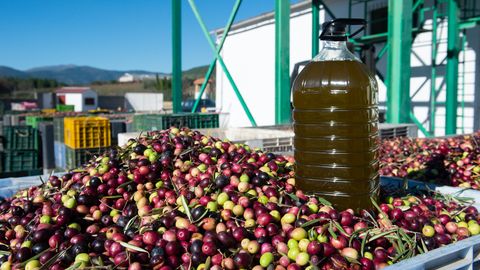
The price of extra virgin olive oil today in supermarkets: Mercadona, Dia, Carrefour or Alcampo
He lamented that this campaign farmers expect “significant” losses due to the price at which their olives are going to be sold and the “last thing” that is expected is that institutions like the CNMV “come to try to sink us further into our economies.”