The Government has given the green light in the Council of Ministers this Tuesday to a royal decree law to extend protection to single-parent families, large families that do not have sufficient income and those of people in whom one of the two parents has a disability and more than one child. This means that a special title will be created for single-parent families in which it will be recognized that they are especially vulnerable and at the same time, “specific protection” will be guaranteed, granting them the benefits of large families.
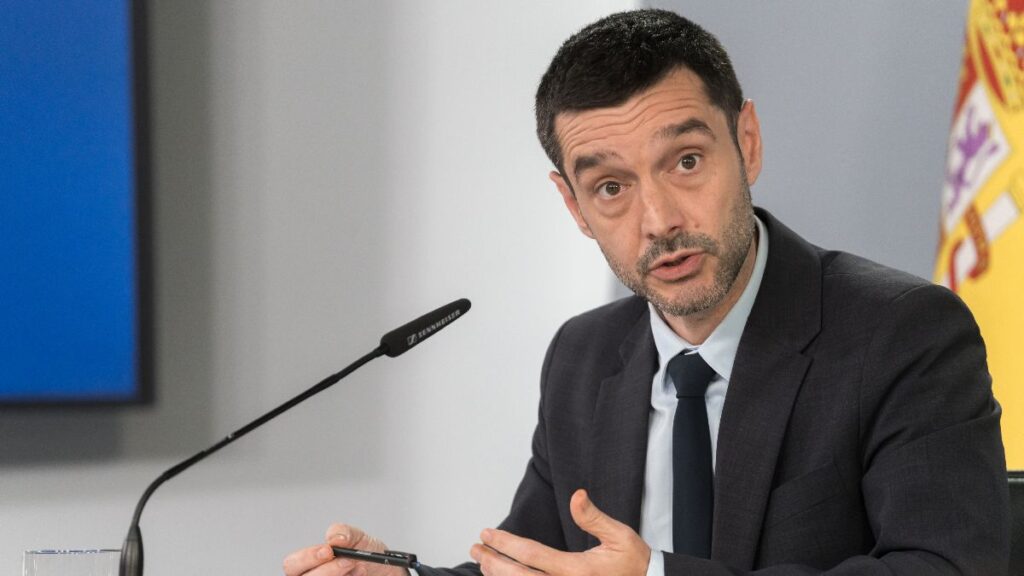
This norm has been promoted by the Ministry of Social Rights, Consumption and Agenda 2030 of Pablo Bustinduy, who has indicated that more than 760,000 families, 3 million people, will benefit and for which 820 million euros will be invested annually.
Pedro Sánchez has shown his satisfaction with the measure in a publication n “Raising alone should not mean doing it without support,” she has written, “it is a step of justice for those who give everything every day for their children.”
Bustinduy, for his part, has endorsed that single-parent families finally have their own “official title.” “We have achieved it,” he added.
Mothers who raise alone have a high risk of social exclusion
Bustinduy has emphasized the importance of this rule, especially when the one in charge of the family is a woman. “They are the ones who have a greater risk of poverty or social exclusion.” The latest living conditions survey published by the INE in 2025 indicates that households that are made up of an adult with children have a risk of poverty or social exclusion rate of 50.6%, which is double that of the population as a whole (25.7%).
The Royal Decree Law establishes which family units can be single-parent or single-parent, including those who raise alone and those who have exclusive custody, are victims of gender violence or have the prolonged absence of one of the two parents.
For this reason, the creation of an official title is established for this type of families that can be used before any administration or entity and that will give priority access to benefits, aid and public support measures in terms of employment, housing, conciliation or social protection or to exemptions by public administrations.
Thus, they will be able to see their benefits equal to those currently enjoyed by large families since, for the Government, parents who have more than one child in their care assume more care and parenting responsibilities.
Deduction of up to 1,200 euros per year
This move by the Executive may be applied in cases of new homes, single-parent families with two children and those in which there are two minors and one of the two parents has a disability equal to or greater than 33%. It will allow tax benefits to be achieved such as a deduction of up to 1,200 euros per year in addition to significant discounts on scholarships or transportation.
There are changes in the requirements to access the category of large family, which now includes families with four children instead of the 5 that were previously required, and is extended to those with three children and an income per member of less than 150% of the IPREM (Multiple Effects Public Income Indicator).
Another novelty affects the Food Payment Guarantee Fund, which expands its protection when one of the parents fails to pay child support. The advances will cover minor children and older children with a disability of at least 65% or in a situation of dependency. An urgent procedure is also established for families with special economic needs or victims of gender violence.
The Government approves a decree that allows drivers to stop trains in situations of serious risk or not to start moving
The Permanent Deputation will vote this Thursday on the housing decrees with measures on rentals, evictions and property purchases
Finally, the reform includes measures to support conciliation, training and employment, along with bonuses and exemptions in public services, cultural, sports and leisure activities. It also reinforces the protection of women victims of gender or sexual violence who face raising their children alone.