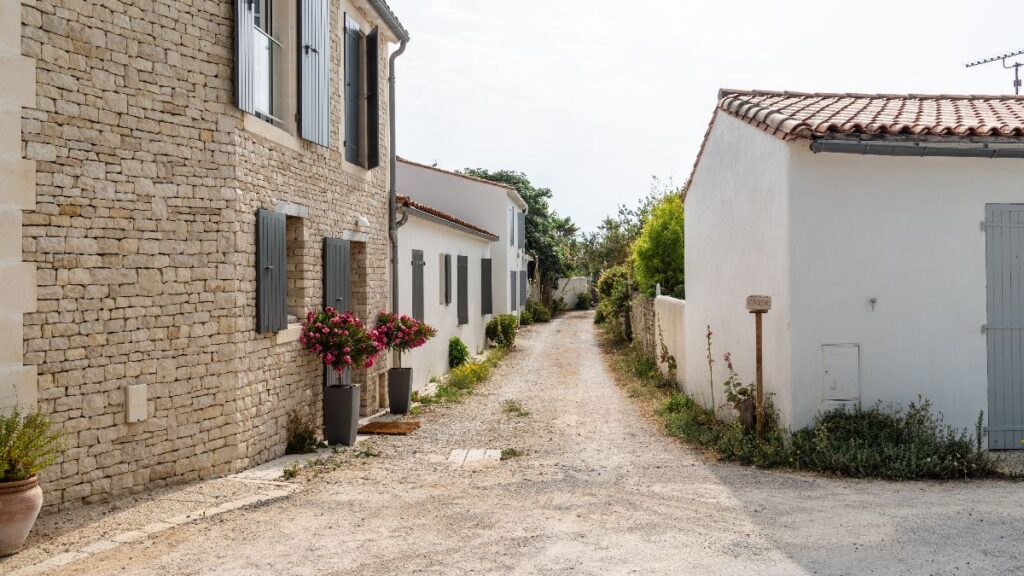
The Provincial Court of Tarragona has confirmed that the owner of a property will have to let his neighbor pass through his land in order to access his. And, although he refused to recognize your neighbor’s right of way and he defended that he could enter through another place, the justice system has considered that the property was located and that the alternative he proposed was not an adequate exit.
According to the ruling of January 15, 2026, the neighbor who claimed the passage had a recognized disability of 82%, moved in a wheelchair or car and needed permanent help from a third person. In order to enter his land, he claimed an easement through the neighbor’s property, which would allow access for people, animals and vehicles.
The neighbor objected and because in his opinion he could enter his property through another area, avoiding the so-called “barranquet”, a small ravine through which a water course passed and which was on land owned by the Generalitat of Catalonia. Although the Court of First Instance number 4 of Amposta recognized the easement for which it would have to pay compensation to the other owner, both appealed the ruling and finally the Provincial Court confirmed that it had to allow the passage.
The other exit required crossing a slope and crossing an area through which water flows.
The key fact in this case was to determine whether or not the property had an adequate exit to the public road. And according to 566-7 of the Civil Code of Catalonia, an easement can be required when a property has no exit or the one that exists is insufficient and, furthermore, it must be set at the least harmful point for the property that has to support it.
The Court remembers that this need to transfer to a neighboring property must be real and cannot respond solely to the comfort or whim of the owner. In this case, it was understood that it did exist because the property did not have direct access to a public road.
The alternative proposed by the neighbor required them to overcome a difference in level of between 1.5 and 2 meters and cross an area through which water flows. The owner’s expert considered that this access was not adequate and warned of the problems it could cause during times of heavy rain.
Although technically works could be done to build an exit, the ruling states that the expert graphically pointed out that “a highway can also be built,” to explain that the fact that something is possible does not mean that it is a reasonable solution.
Furthermore, another of the accesses that the owner was using depended solely on the tolerance of the neighbor, who had even sent him a burofax to demand that trucks and heavy machinery stop passing through. For this reason, the Court understood that it could not be considered a stable solution either.
Disability is taken into account, but it is not the reason why the step is recognized
Another important point is that the owner had an 82% disability and moved around in a wheelchair. The neighbor even maintained that this circumstance was being used to impose the path that best suited him, but the Court rejected that argument.
The Chamber explained that the easement is not recognized because of the disability, but because the property is located and needs an exit, although this situation must be taken into account to decide what access is appropriate.
Furthermore, the path chosen was flat, practicable and took up less surface area of the neighbor’s land than other alternatives, and another owner had been using it for about 40 years, so the Court considered that it was the least harmful route.
Social Security denies absolute permanent disability to a 58-year-old crane operator with breast cancer and justice gives it to him with 100% of its base

A seamstress receives 25,146.24 euros for permanent partial disability after being on sick leave for 545 days due to osteoarthritis in the thumb
For this reason, it confirmed the right of way, although the owner would have to pay the neighbor 7,813.38 euros in compensation, as generally required by article 566-10 of the Catalan Civil Code for forced easements. However, the ruling (SAP T 181/2026) was not final and could be appealed against.