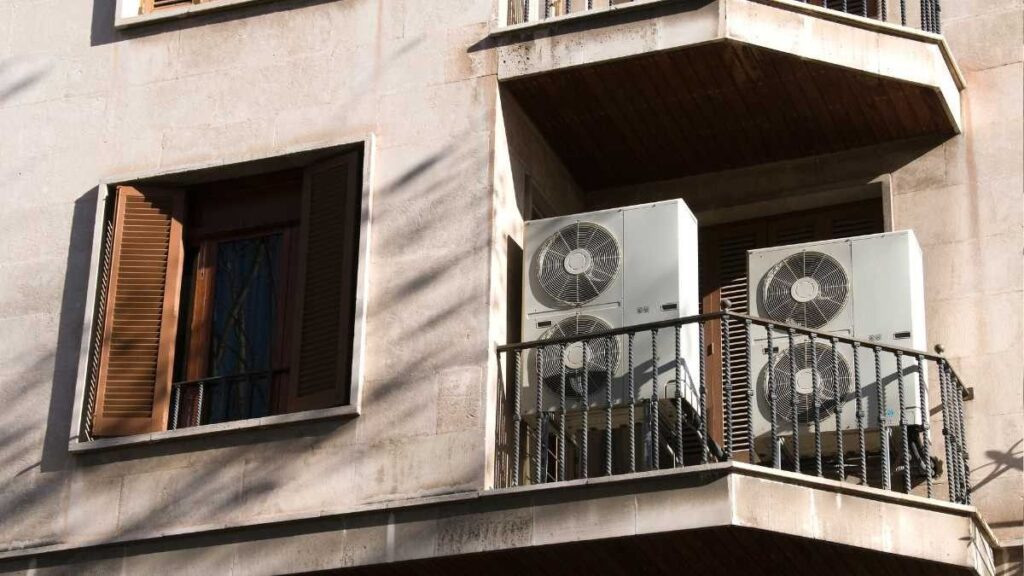
The Provincial Court of Barcelona has allowed the owner of a home to keep the air conditioning installation pipes that passed through the railing of the terrace that another owner had used for more than 40 years. And the fact is that, although the device was located on the community roof, the tubes passed through the area of use of its neighbor, but despite this, this part was still a common element and the community of neighbors had authorized it.
The ruling of April 30, 2026, explains that the owner had permission from the community to install the air conditioning and, after approval by the neighborhood meeting, it was authorized that he could do so. To do this, ducts could be attached to the railing of the terrace used by the other neighbor, as long as that solution was viable.
The problem was that the part through which the tubes passed was used by the other neighbor, and to access it he did so using a ladder from his own terrace, so he filed a lawsuit asking that those tubes be removed, which also bothered him to be able to access the roof. The Court of First Instance rejected his claim and the owner appealed.
Using that part of the deck for 40 years did not give him an exclusive right
In this case it was important to determine whether the fact of having used that terrace for more than 4 decades gave him some type of exclusive right over it. As noted by the Court in its ruling, article 553-43 of the Civil Code of Catalonia establishes that the exclusive use of terraces or roofs that are common elements must be stated in the constitutive title or have been approved by unanimous agreement of the community.
In this case neither of the two things was evident, and although he had been using it for decades and had access to it from his home, the mere tolerance of the community during that time was not enough to create that right.
The community had authorized the passage of the tubes
On the other hand, the community had approved that the conduits be attached to the terrace railing, giving two options: one of them, which was done as long as this option was viable, and another, passing the tubes through an aerial tray along the stairs. The owner who asked for them to be removed had opposed the tray option, but not this one, which was how they were finally installed.
Another point that was noted is that the agreement was never challenged, so it was considered valid and binding, although the community later requested that the tubes be removed when they understood that the viability of the installation had not been confirmed.
However, for the Court, this feasibility did exist because it referred to it being able to be carried out technically and not to having to obtain a new authorization. The technicians confirmed that it was possible, the air conditioning worked and there was no evidence that any regulations had been violated or that access to the deck was prevented.
A 76-year-old retiree asks to install air conditioning due to health problems and her community of neighbors refuses because the outdoor unit alters the aesthetics of the building.
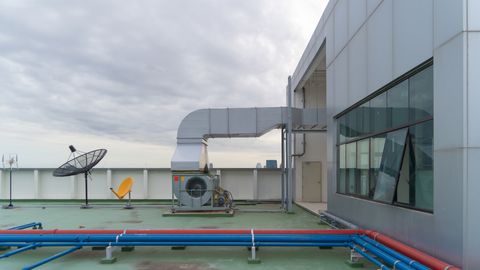
A community prohibits a neighbor who does not have a balcony from installing the air conditioning machine on the roof because they use it for hanging and it can be a nuisance: justice supports it
Therefore, the installation was valid because it had been executed in accordance with a current community agreement, while the neighbor who had been using that part of the roof for 40 years did not have legally recognized exclusive rights over it. However, the ruling (SAP B 3531/2026) could be appealed in cassation.